Wheels, Mountains & Magic — A Family Campervan Journey Through Slovenia and Tuscany
Two families, four adults, our children buzzing with anticipation, and two campervans packed to the brim with hiking boots, cooking provisions, and cameras. What began as an ambitious Easter holiday road trip evolved into an unforgettable 13-day odyssey across four countries—Germany, Austria, Slovenia, and Italy. Over 2,500 kilometers, our rolling homes carried us from glacial alpine waterfalls to subterranean dragon caves, through Venetian waterways, golden Tuscan cypress ridges, and into the soaring limestone amphitheatres of the Dolomites.
The Route at a Glance
- Duration: 13 Days (Easter 2026)
- Distance: ~2,500 km
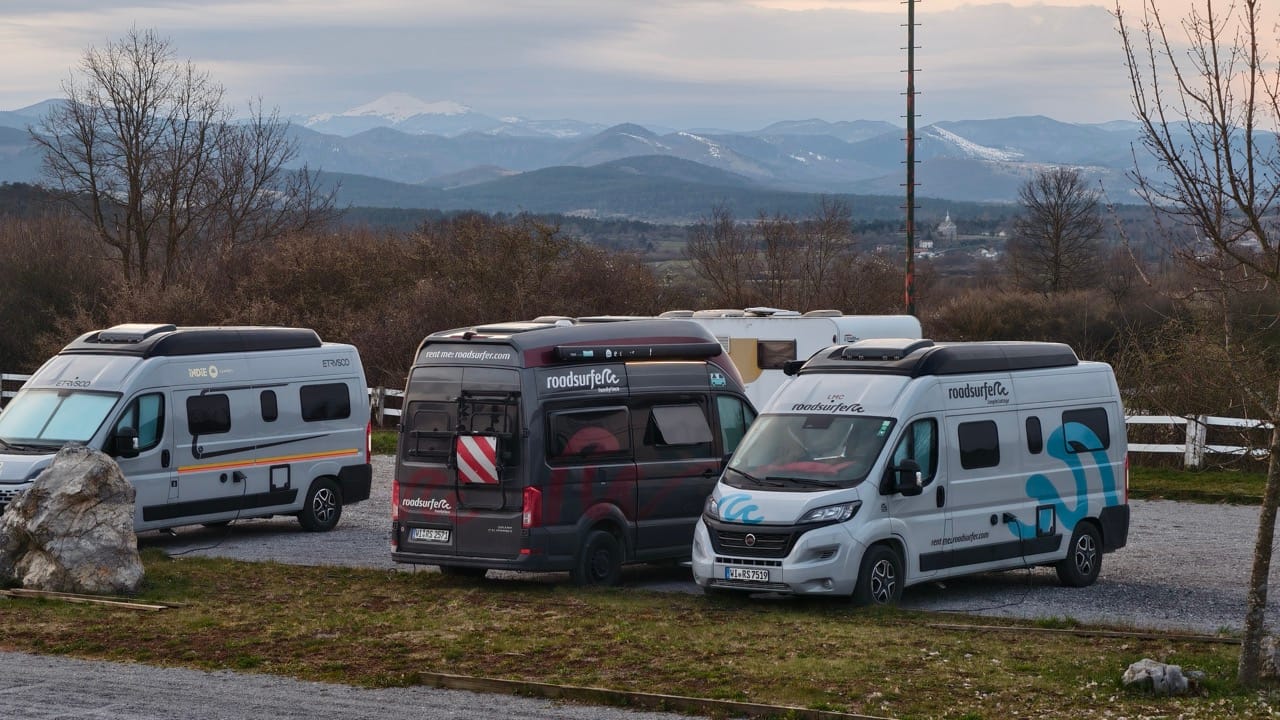
- Vehicles: 2x Roadsurfer Campervans
- Crew: Two families traveling together
- Highlights: Laghi di Fusine • Lake Bled & Bohinj • Ptuj & Jeruzalem • Ljubljana & Škofja Loka • Postojna & Predjama • Soča Valley • Venice • Brisighella • Val d'Orcia • Siena • Florence • Lake Garda • Dolomites (Passo Sella, Val di Funes, Lago di Carezza)
Part I: The Call of the Julian Alps (Days 1–3)
Day 1: Picking Up the Vans & Crossing into the Alps
Our journey began on a crisp spring morning in Gersthofen near Augsburg, picking up our rolling homes for the next two weeks. Rolling south past Munich and the shimmering Chiemsee, we made our first alpine stop at Johanneswasserfall in Austria, stepping behind the thundering veil of mountain meltwater. By late afternoon, we crossed the Italian frontier to Laghi di Fusine, two pristine glacial lakes nestled directly beneath the colossal north face of Mount Mangart, where we spent our first quiet night in the campervans.
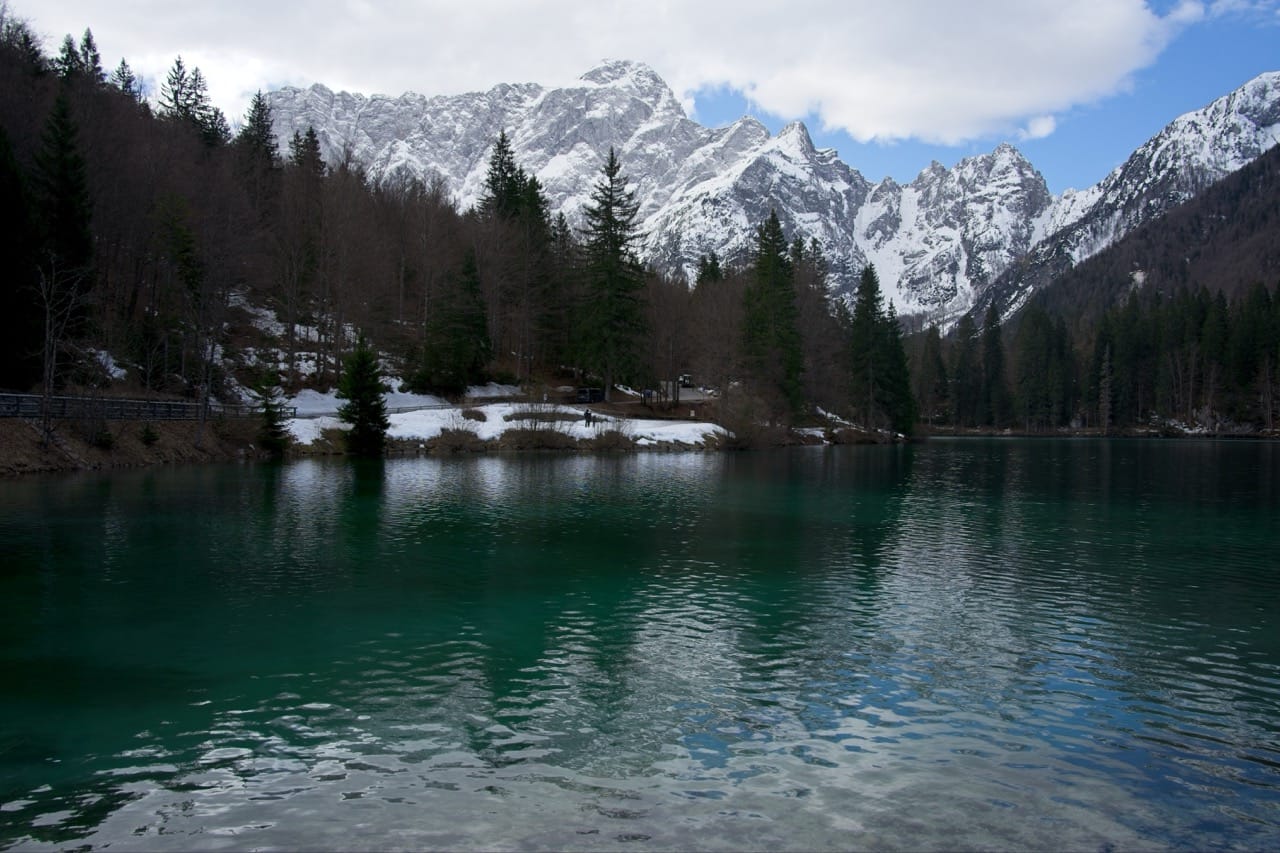
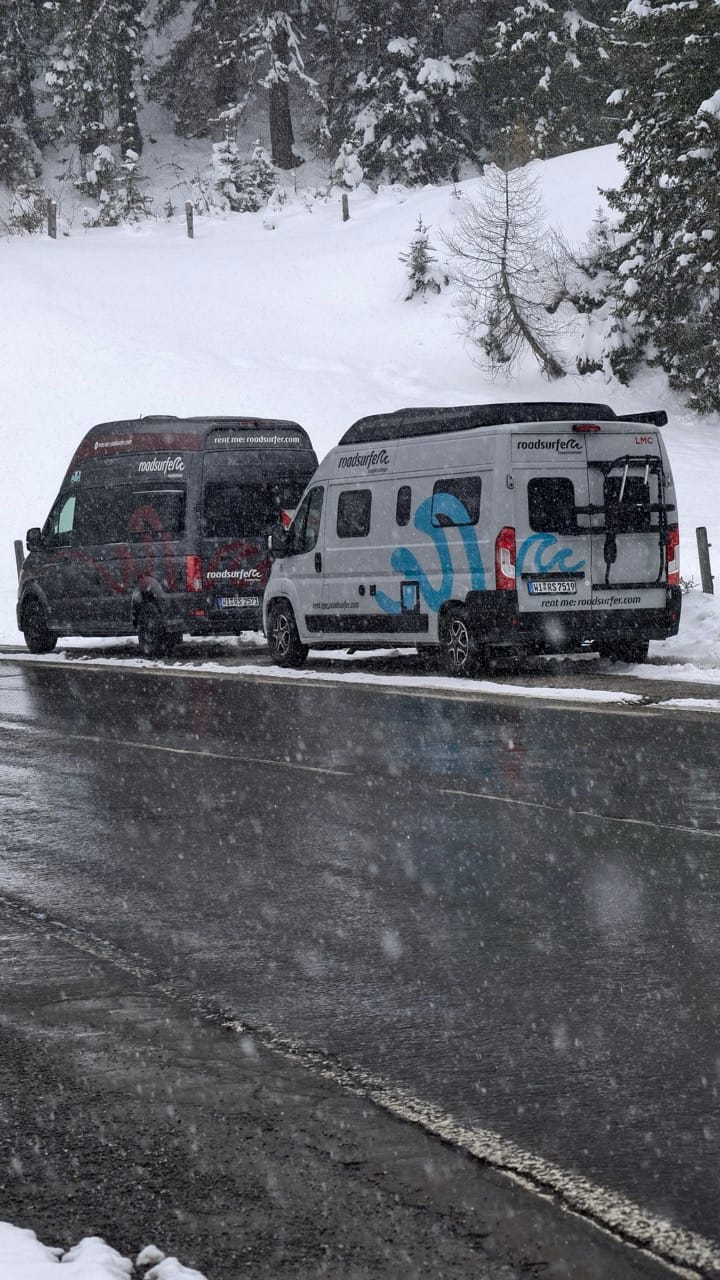
En route through Austria into the mountain valleys.
Day 2: Emerald Waters & the Postcard Perfection of Lake Bled
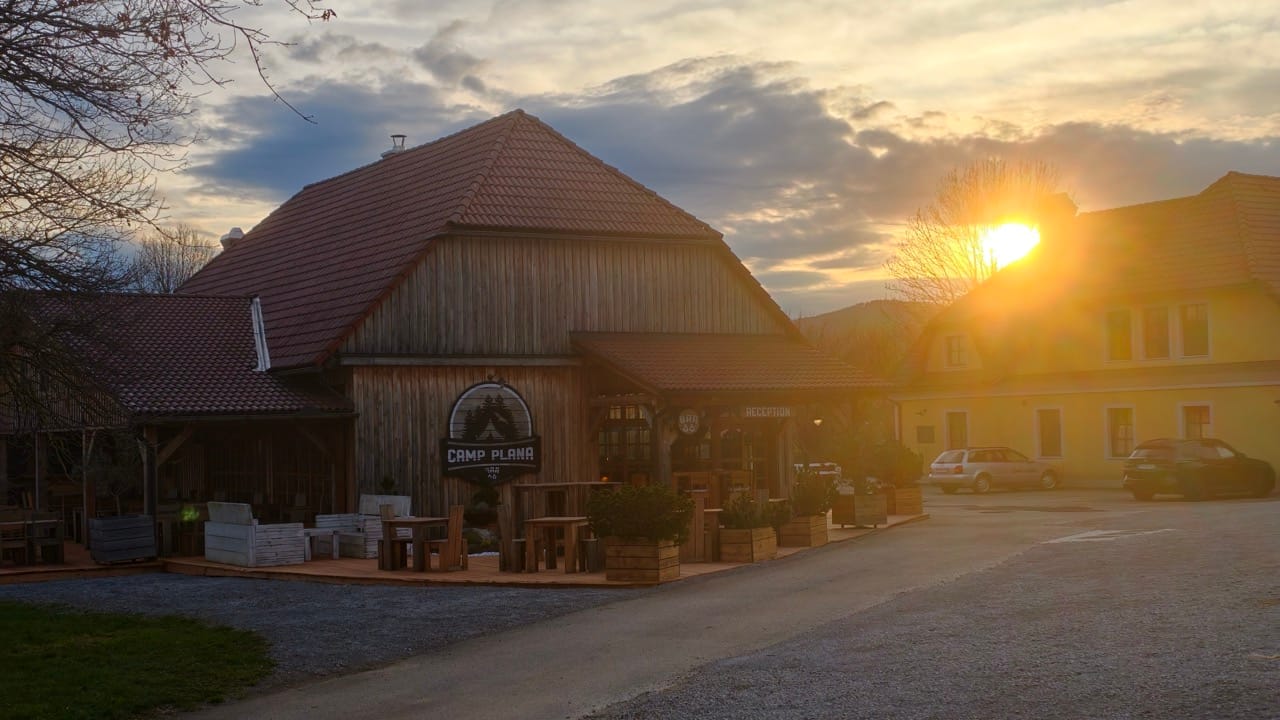
Crossing into Slovenia's Triglav National Park, we paused at Lake Jasna near Kranjska Gora to admire the bronze statue of Zlatorog mirrored in turquoise waters, followed by an exhilarating trek behind Slap Peričnik, one of Europe's most dramatic waterfalls you can walk behind. In the afternoon, we reached Lake Bled. Skipping the busy lakeshore promenade, we climbed the steep rocky trail up to Ojstrica for the world-famous panorama: the teardrop island church, medieval clifftop castle, and snow-capped Karavanke peaks stretching into the distance. We rewarded the kids with warm slices of traditional Bled cream cake (Blejska kremna rezina) before settling into Camp Bohinj.
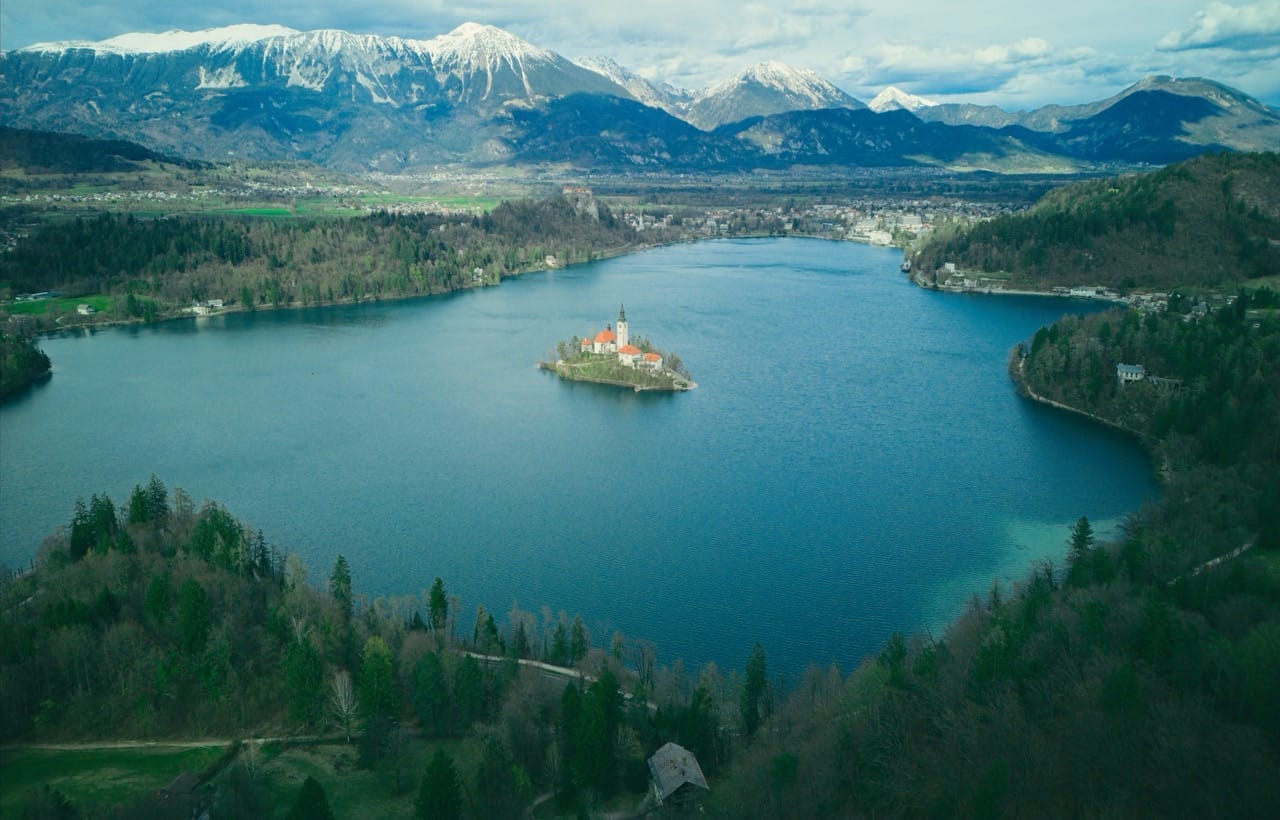
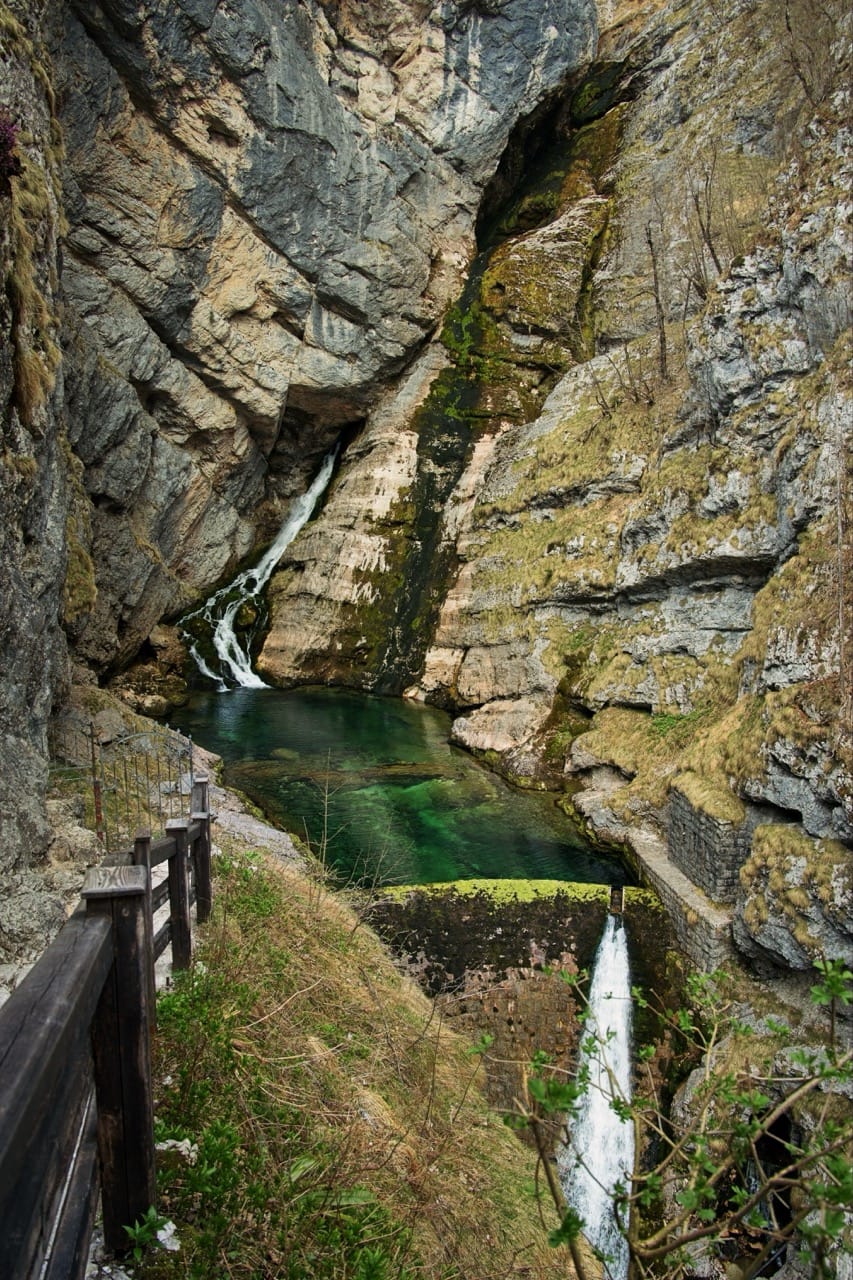
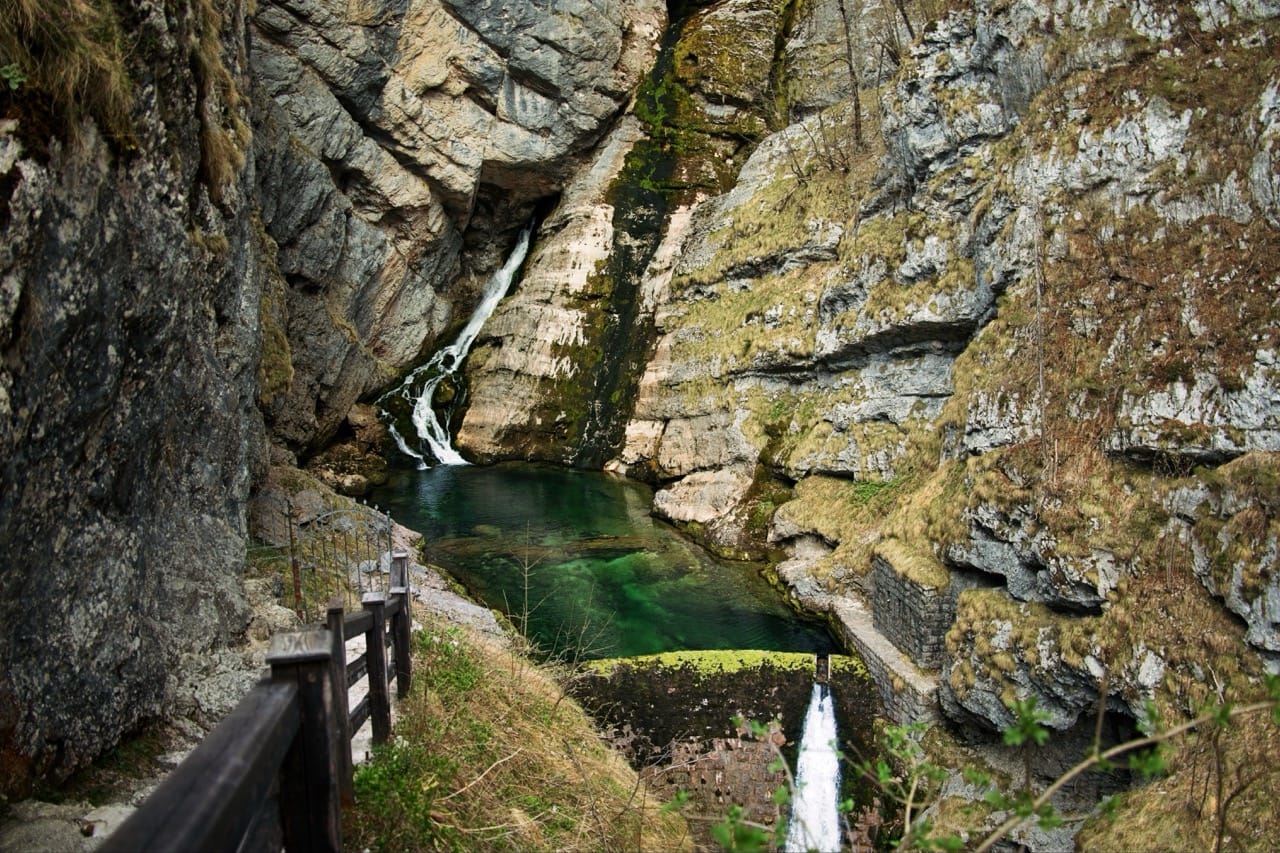
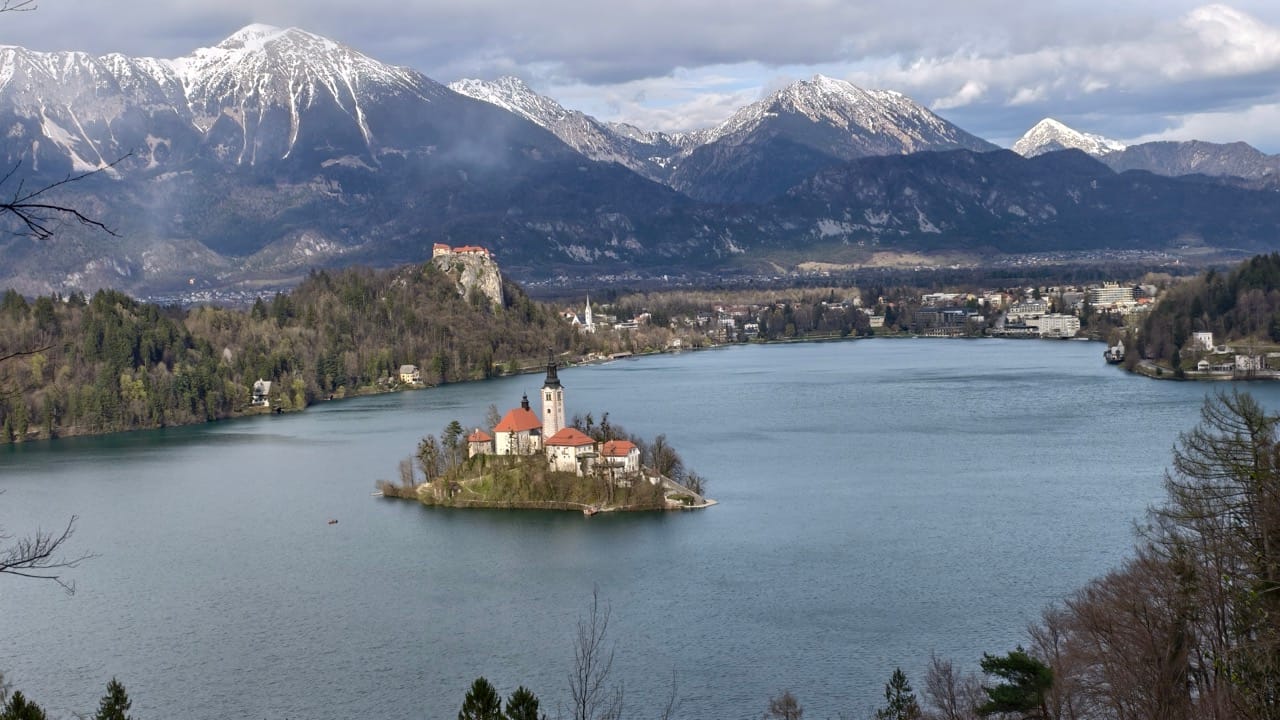
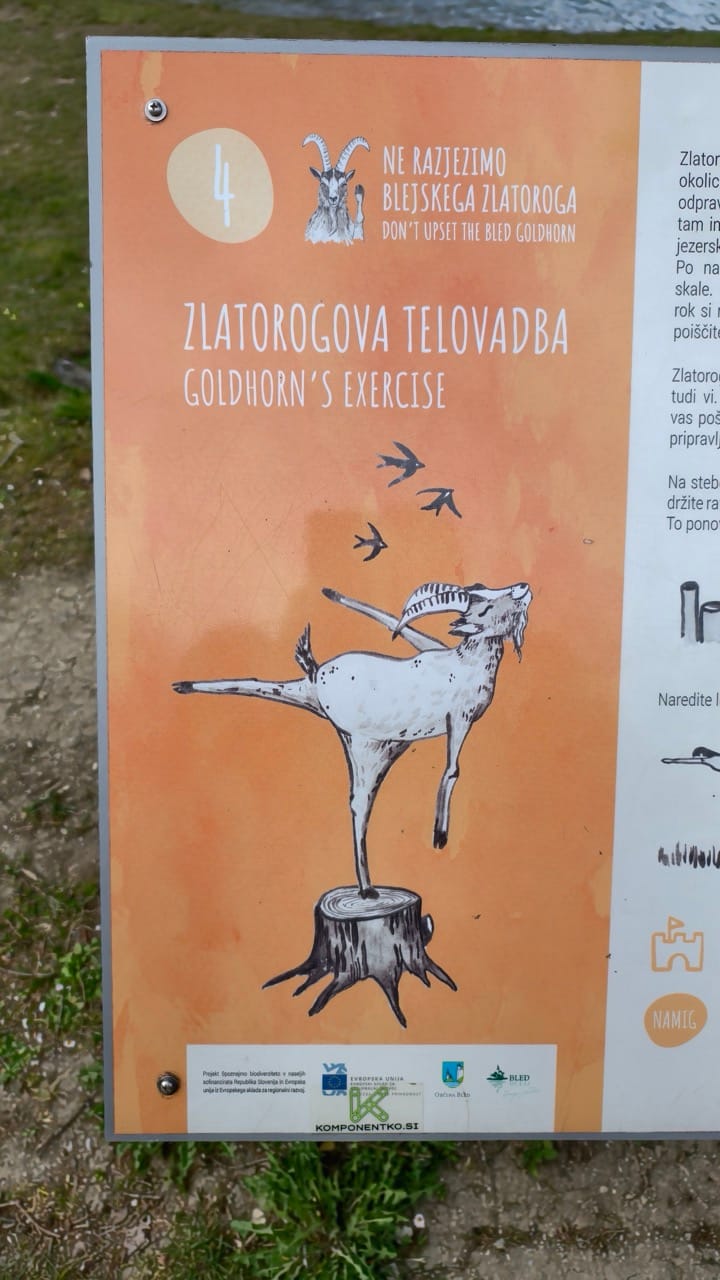
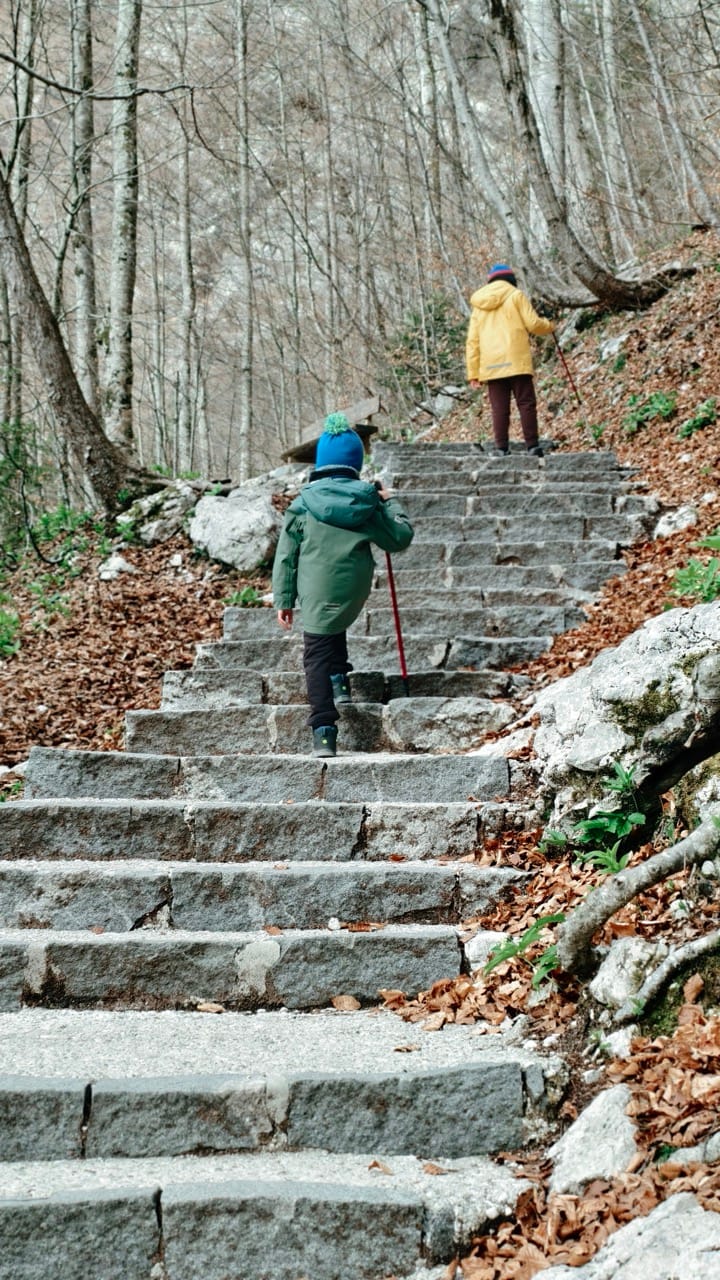
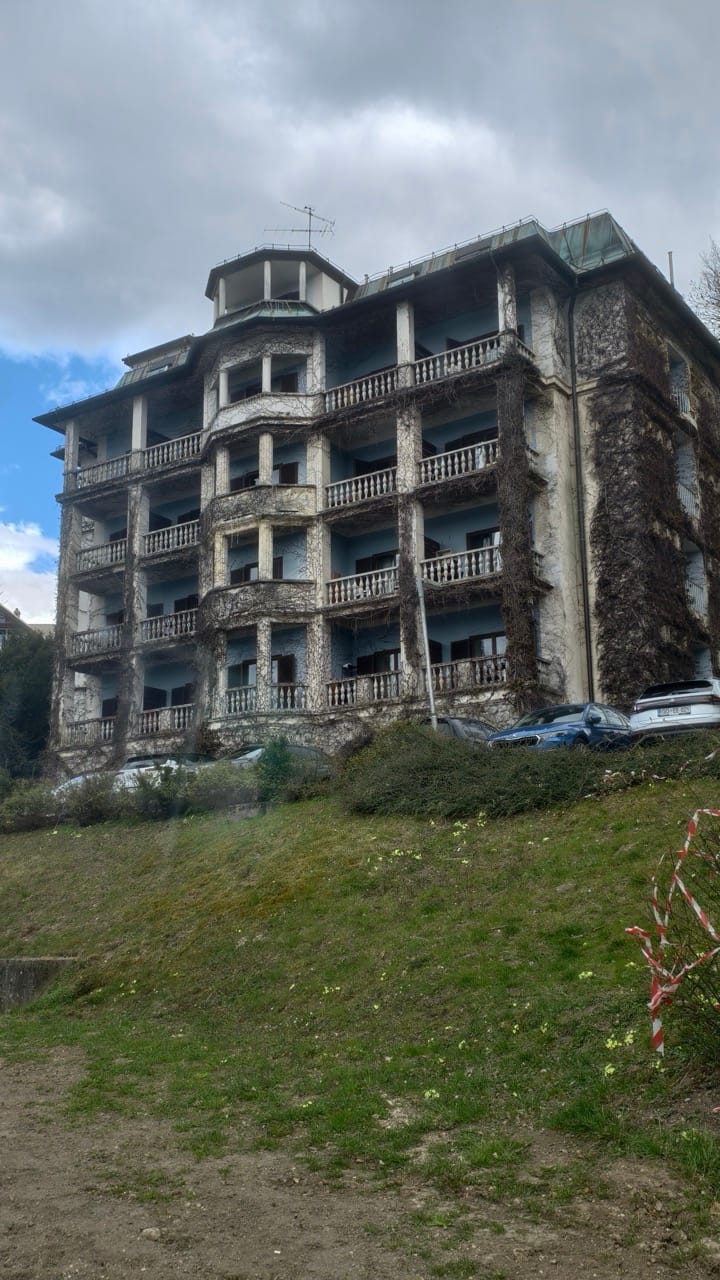
The postcard beauty of the Julian Alps and Lake Bled.
Day 3: Vogel Summit, Savica Waterfall & Traversing to Ptuj
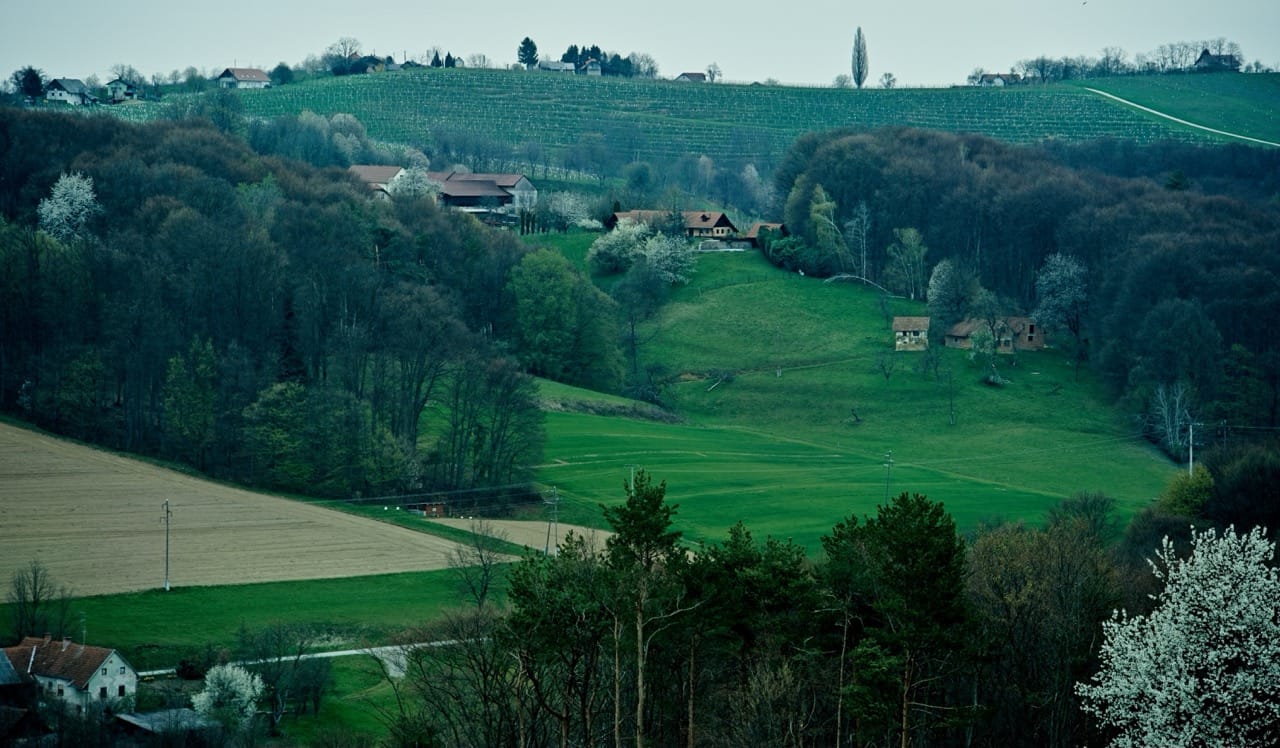
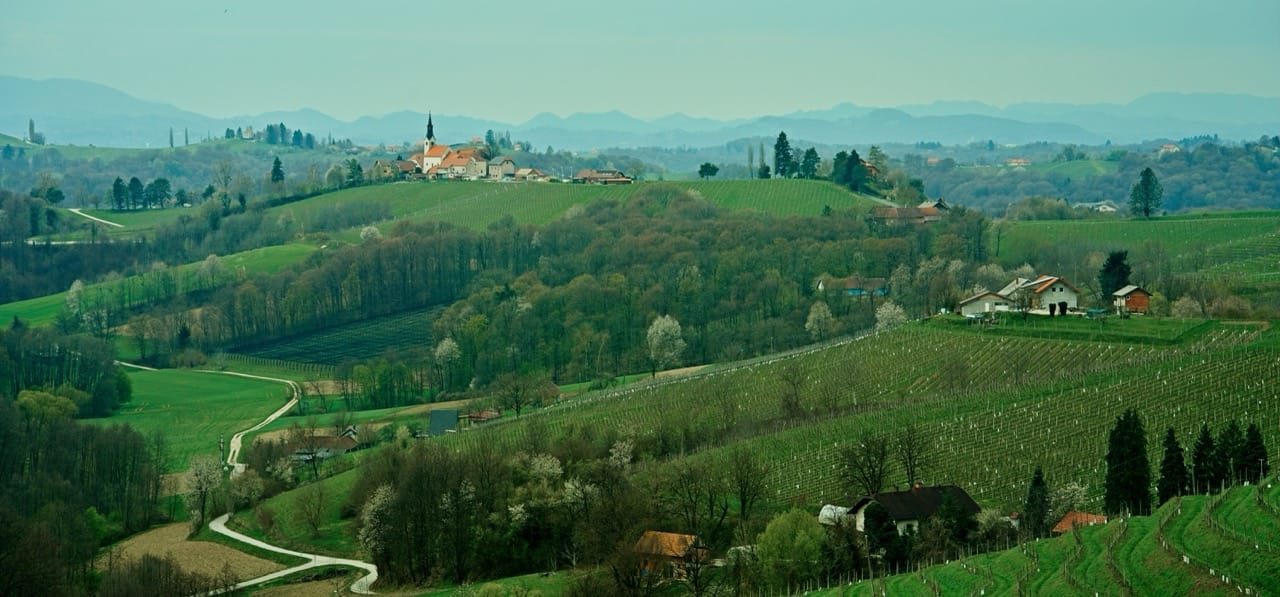
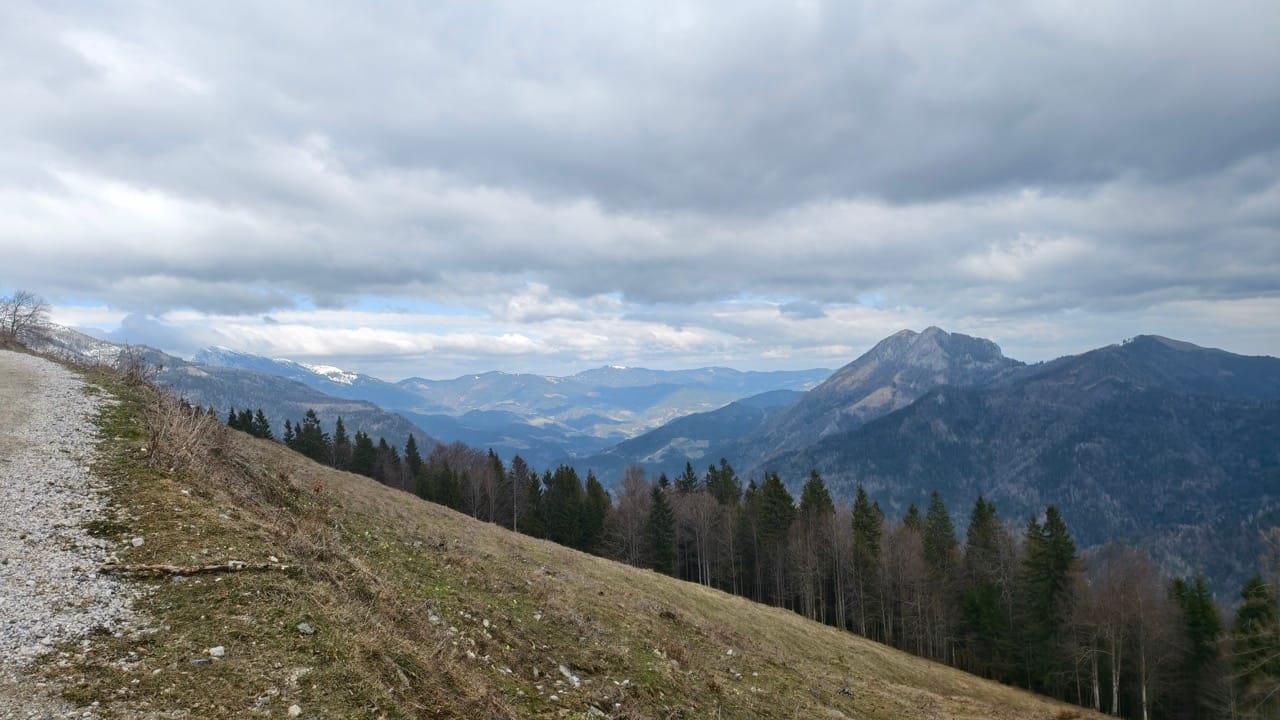
At Lake Bohinj, Slovenia's largest natural lake, we soared via the Vogel Cable Car from the lakeshore to 1,535 meters in minutes, stepping out into lingering spring snow beneath Mount Triglav. After hiking to the karst cave spring of Slap Savica and exploring the carved limestone pots of Mostnica Gorge, we steered our vans eastward across the rolling hills of Lower Styria to Ptuj, the oldest recorded town in Slovenia.
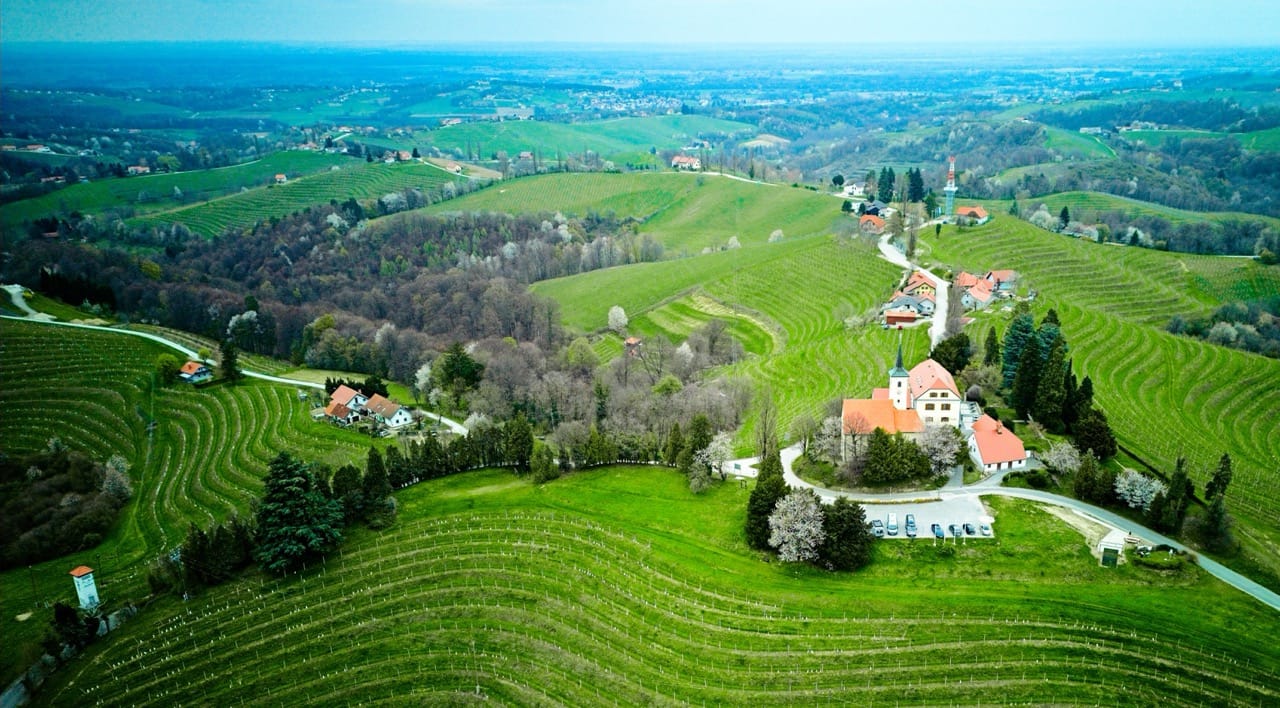
Part II: Wine Hills, Dragon Bridges & Cave Fortresses (Days 4–5)
Day 4: Ancient Ptuj, Jeruzalem Vineyards & Medieval Škofja Loka
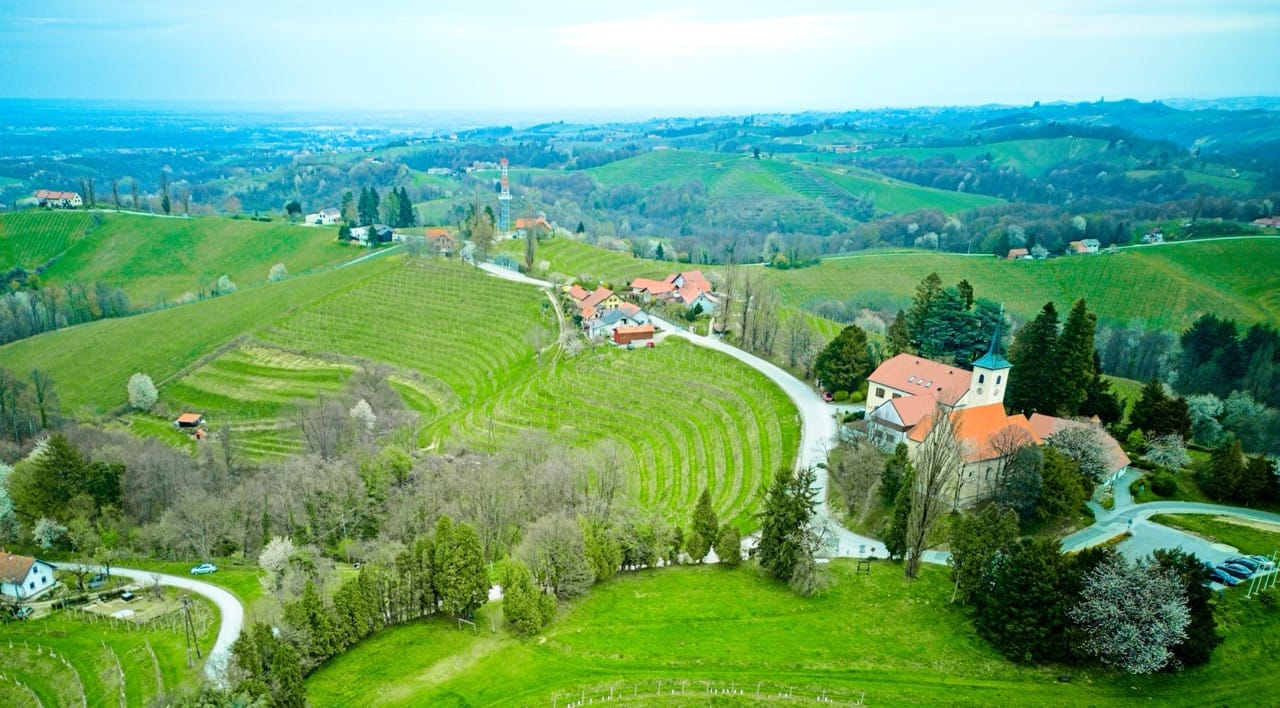
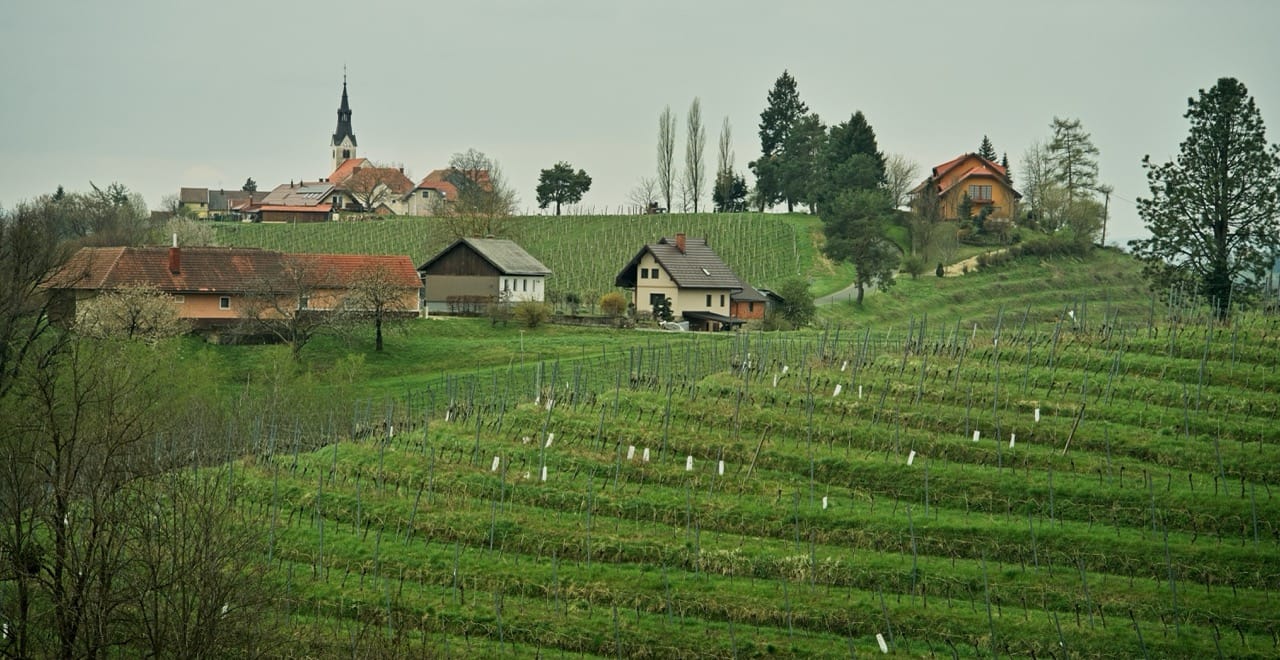
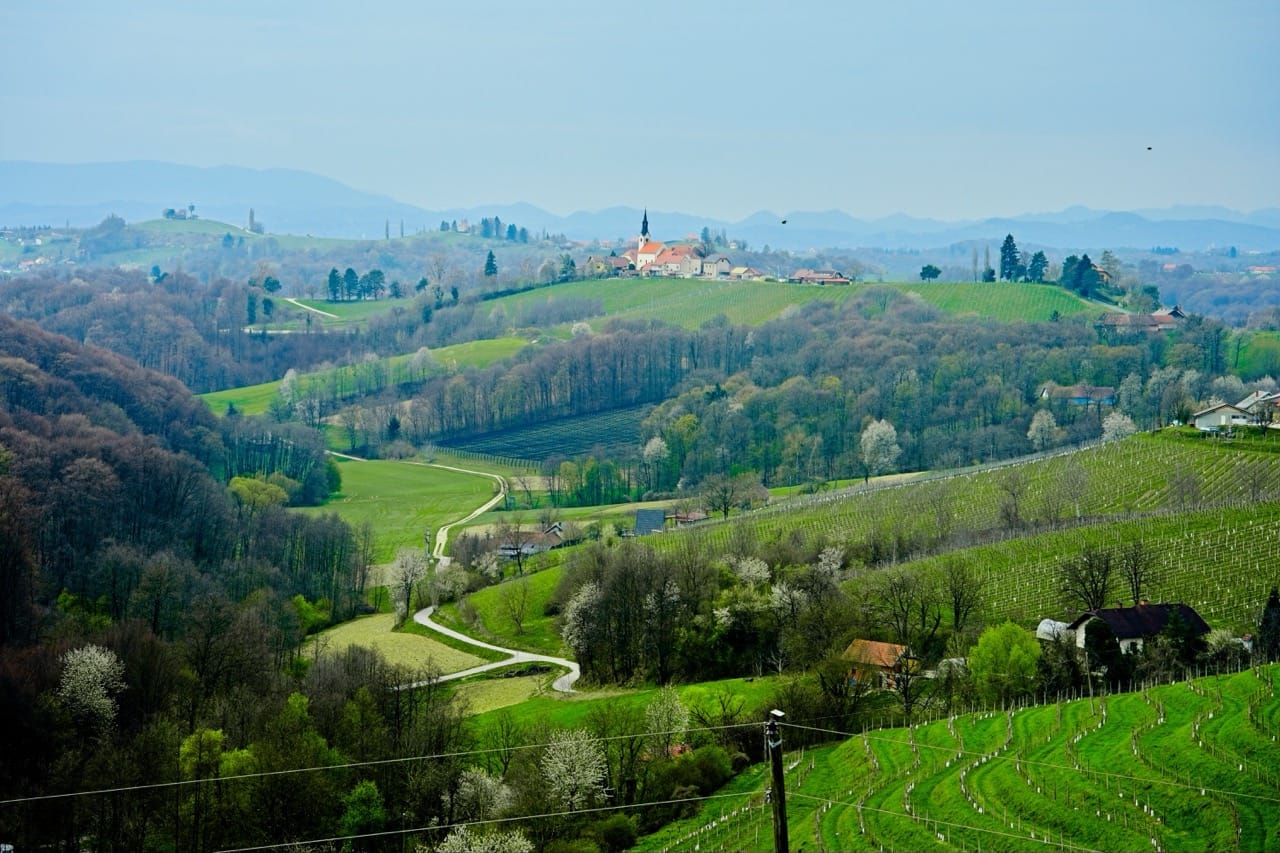
Ptuj Castle provided stunning views over the Drava river plain before we meandered through the terraced amphitheatre of the Jeruzalem wine region, named by 13th-century crusaders who believed they had found paradise on earth. Turning west, we explored Ljubljana, crossing the Triple Bridge and Dragon Bridge while enjoying riverfront gelato. In the golden afternoon light, we navigated to Škofja Loka, flying the drone above its 10th-century stone bridges and castle, followed by a sunset pilgrimage to the solitary hilltop church of Sveti Tomaž.
Day 5: The Postojna Underground & Predjama Cave Castle
Day 5 plunged us deep into the karst underworld at Postojna Cave. Riding the vintage open-top electric cave train through glittering stalactite halls and spotting the rare 'baby dragons' (the blind subterranean olm) was a massive highlight for the kids. Nearby, we stood in awe before Predjama Castle, the world's largest cave castle, built halfway up a 123-meter vertical cliff face. Leaving the karst plateau, we climbed into the upper Soča Valley past the roaring 144-meter Boka Waterfall to camp in Bovec.
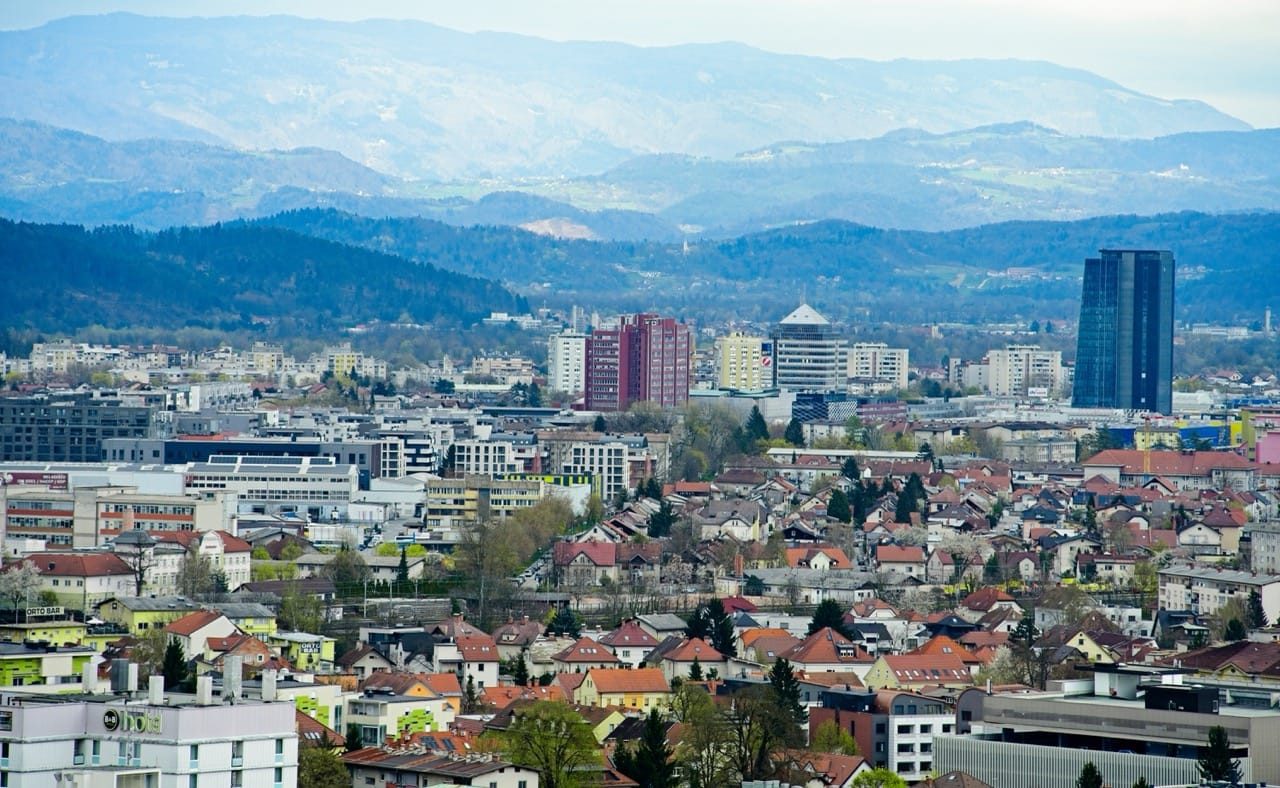
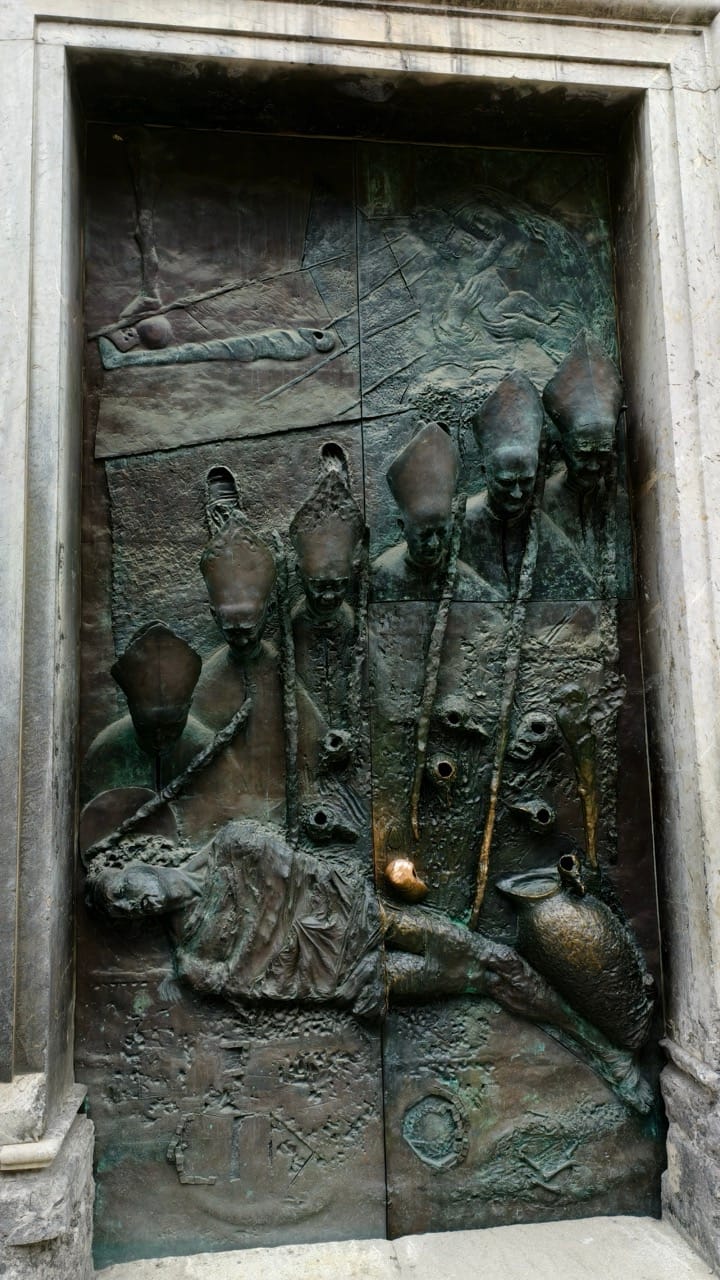
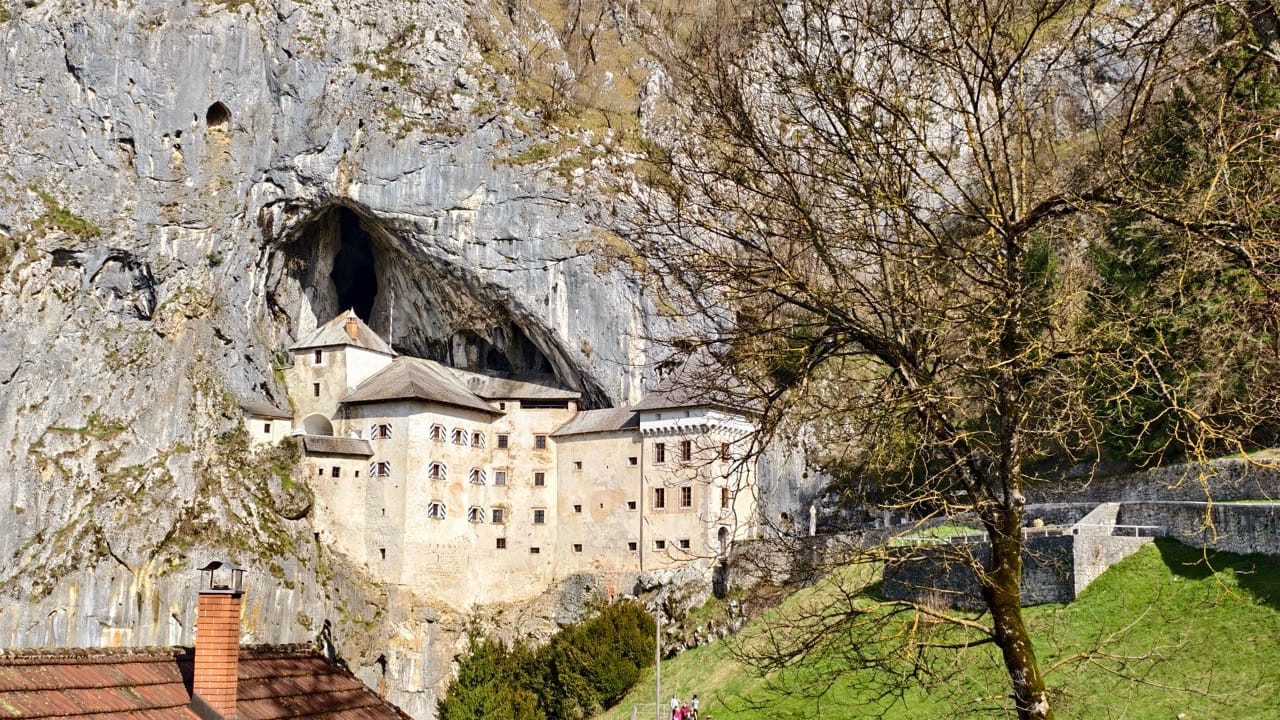
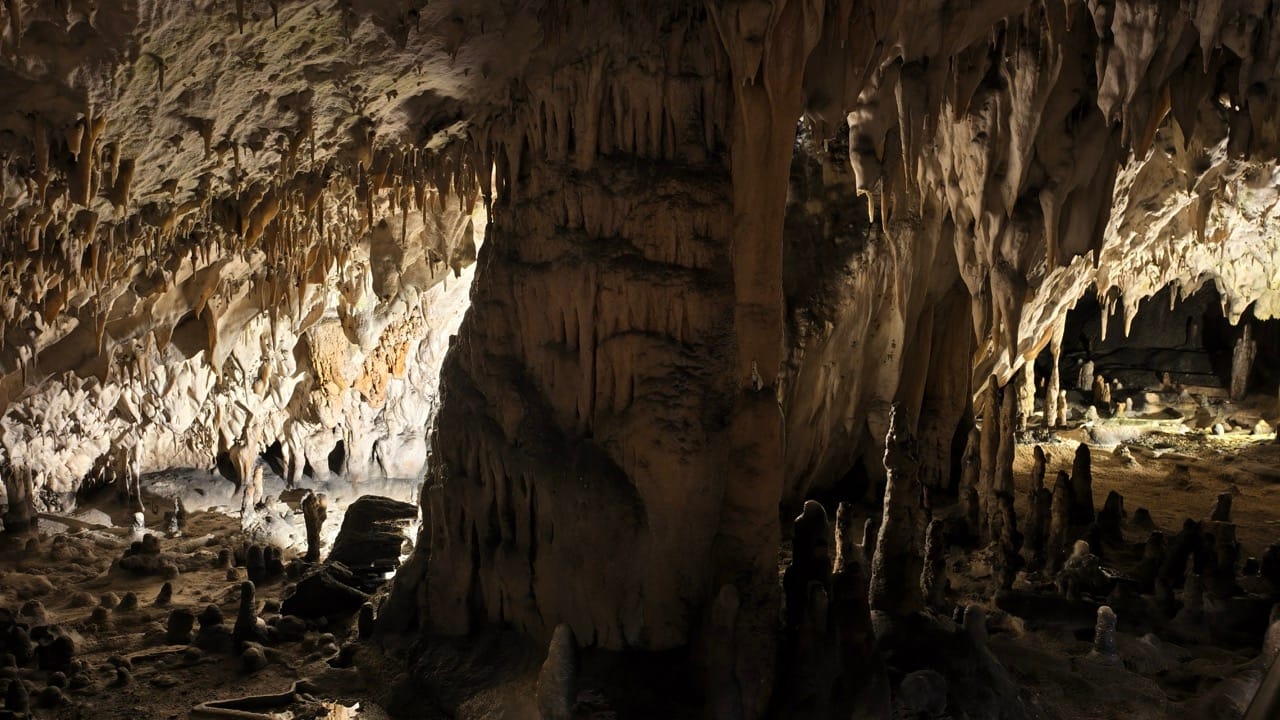
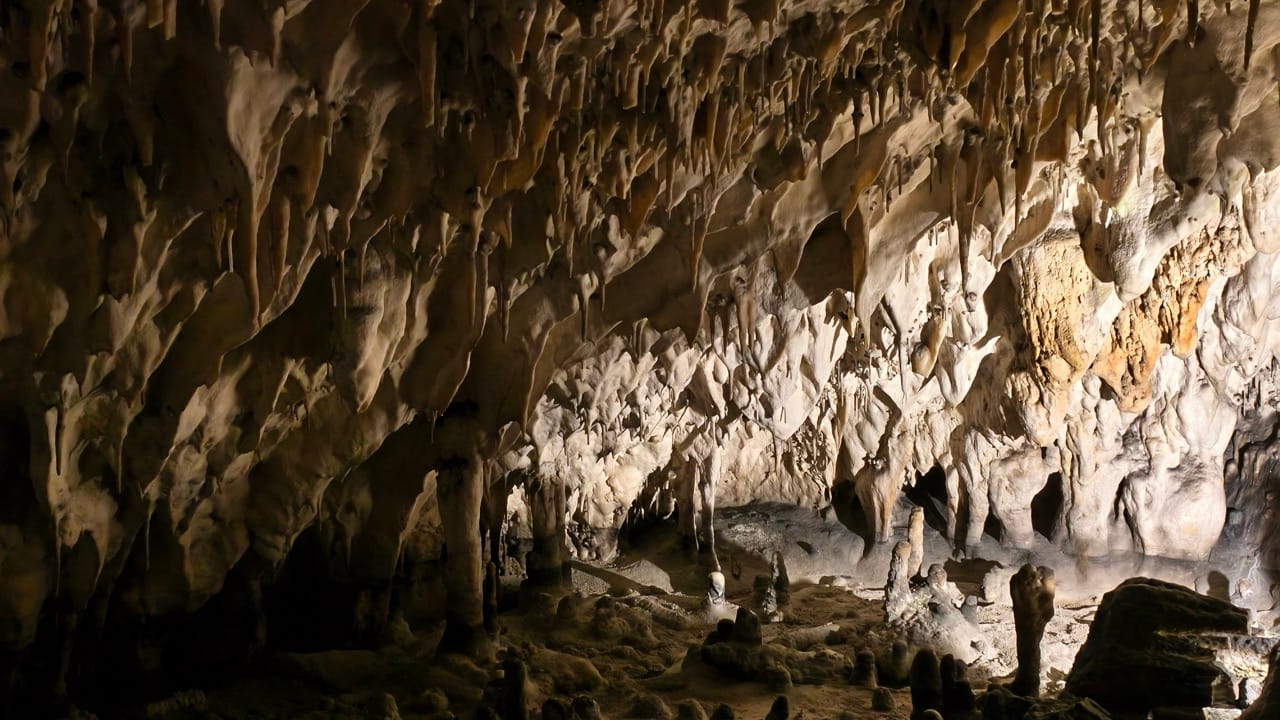
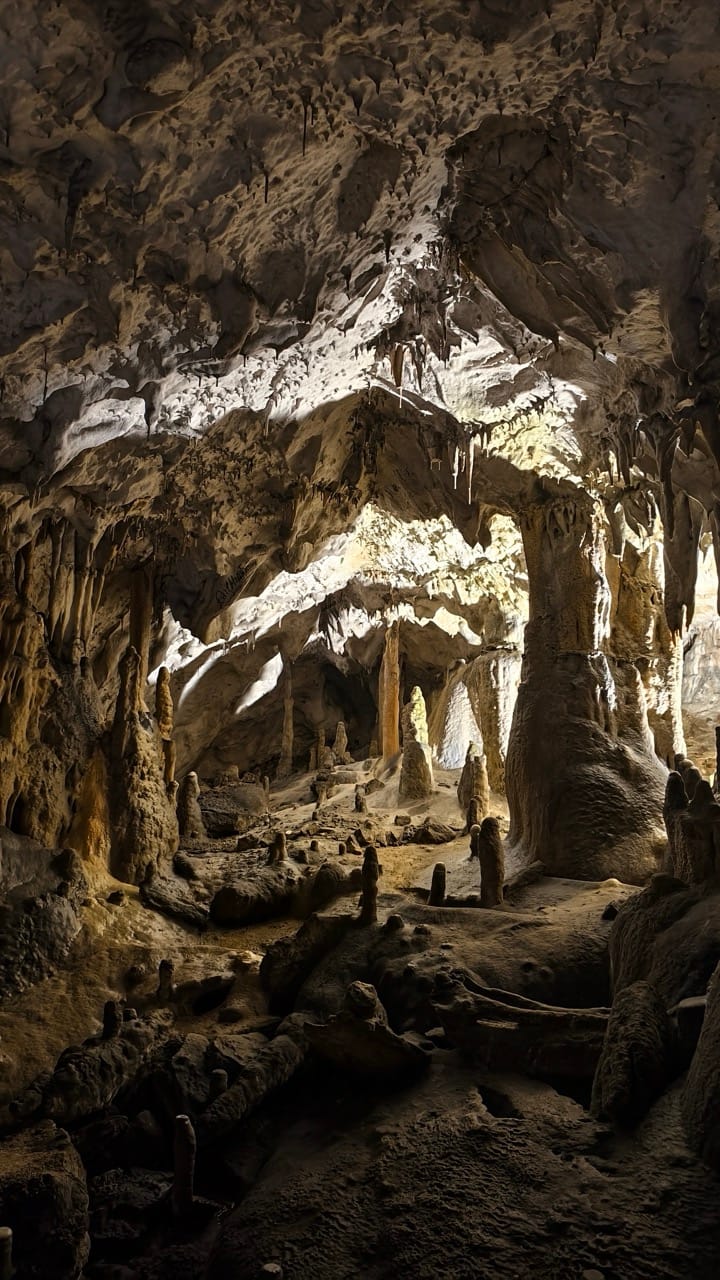
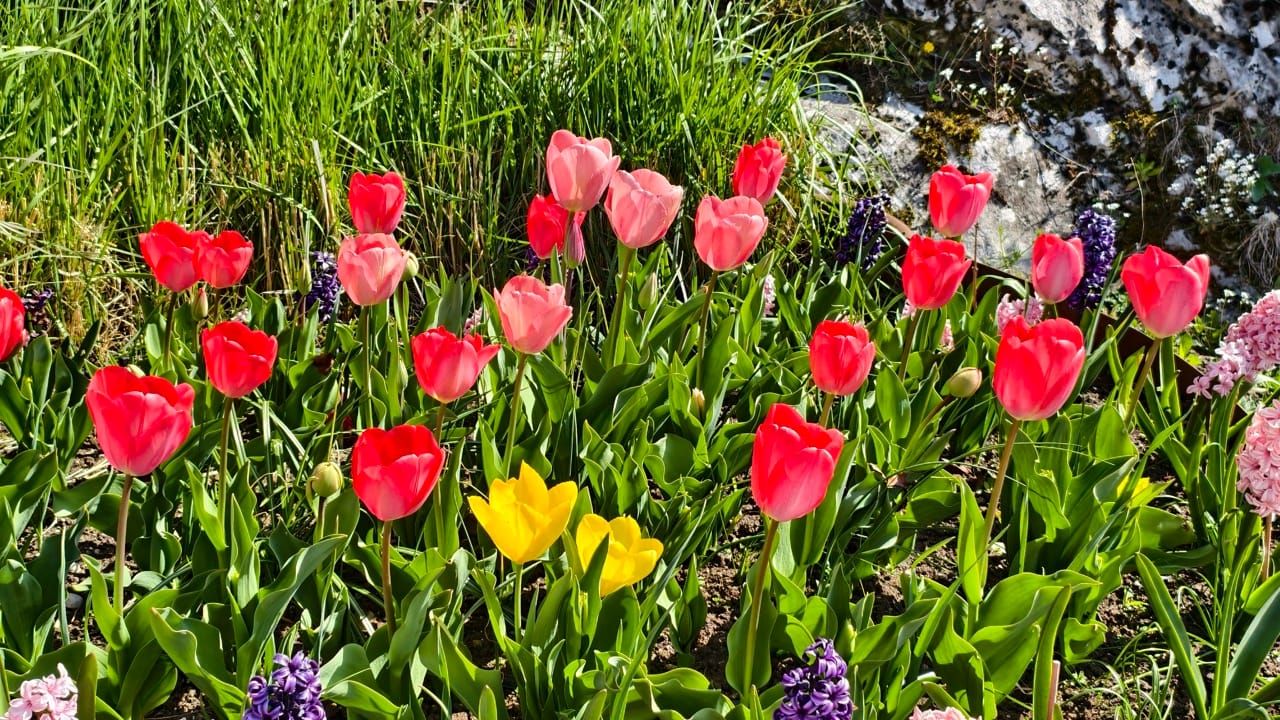
Marveling at the centuries-old architecture of Slovenia's karst country.
Part III: Emerald Soča, Venice & the Tuscan Dream (Days 6–8)
Day 6: The Turquoise Wonder of Soča & Crossing to Venice
The Soča River Valley was pure visual poetry. We began at Slap Virje, an ethereal emerald pool surrounded by mossy limestone springs, before walking the hanging bridges of the Great Soča Gorge (Velika korita Soče), where the river squeezes through a chasm over 15 meters deep. After exploring the hidden cavern cascade of Slap Kozjak in Kobarid, we embarked on a long afternoon sprint across the Italian border, arriving on the Venetian lagoon at Punta Sabbioni just in time for bed.
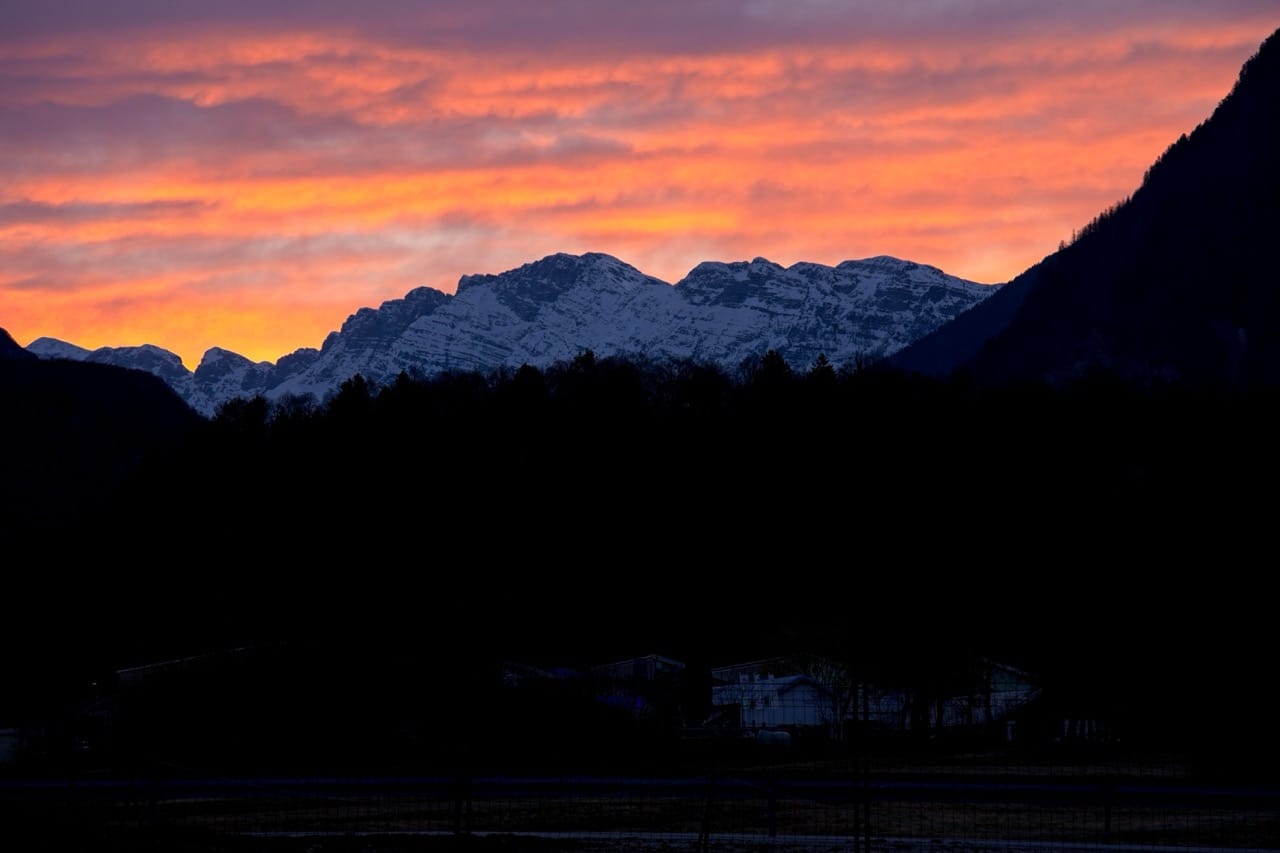
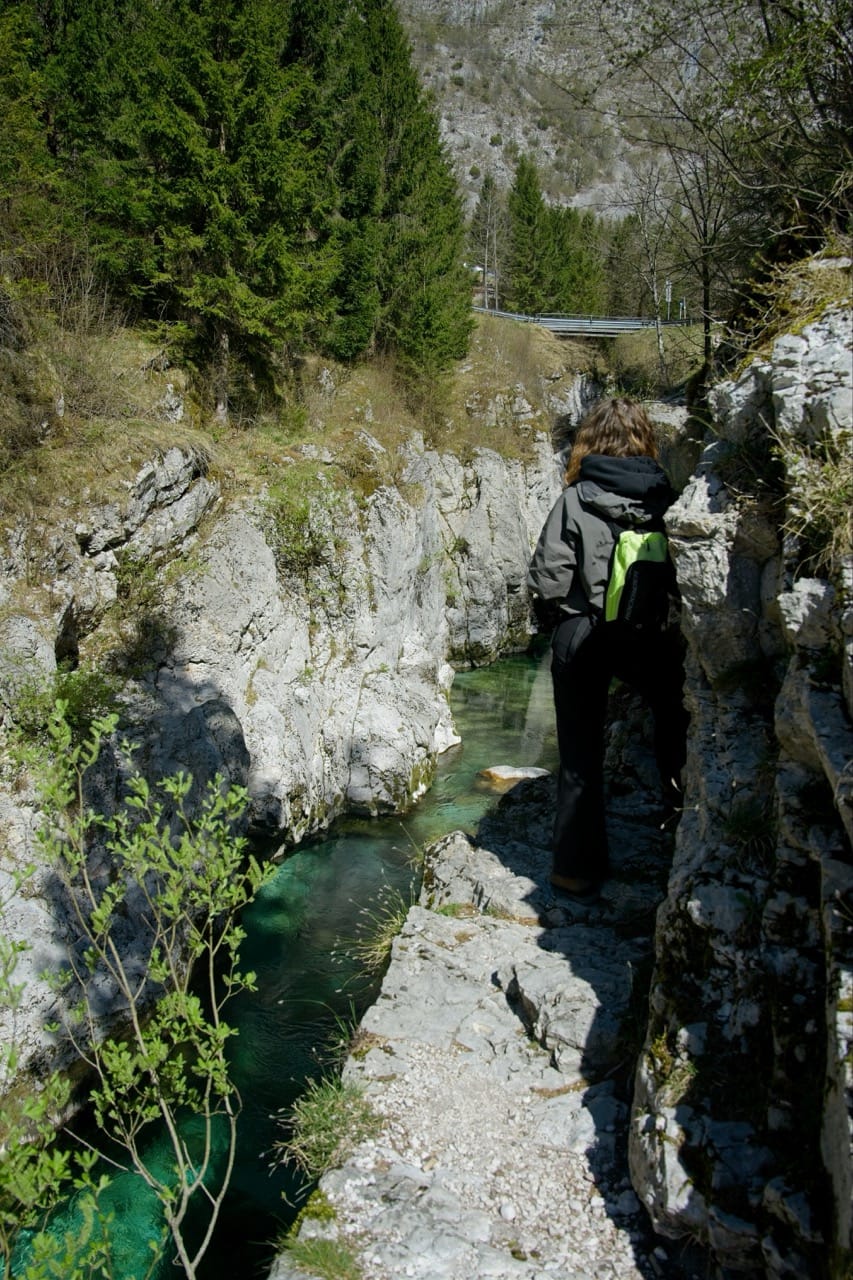
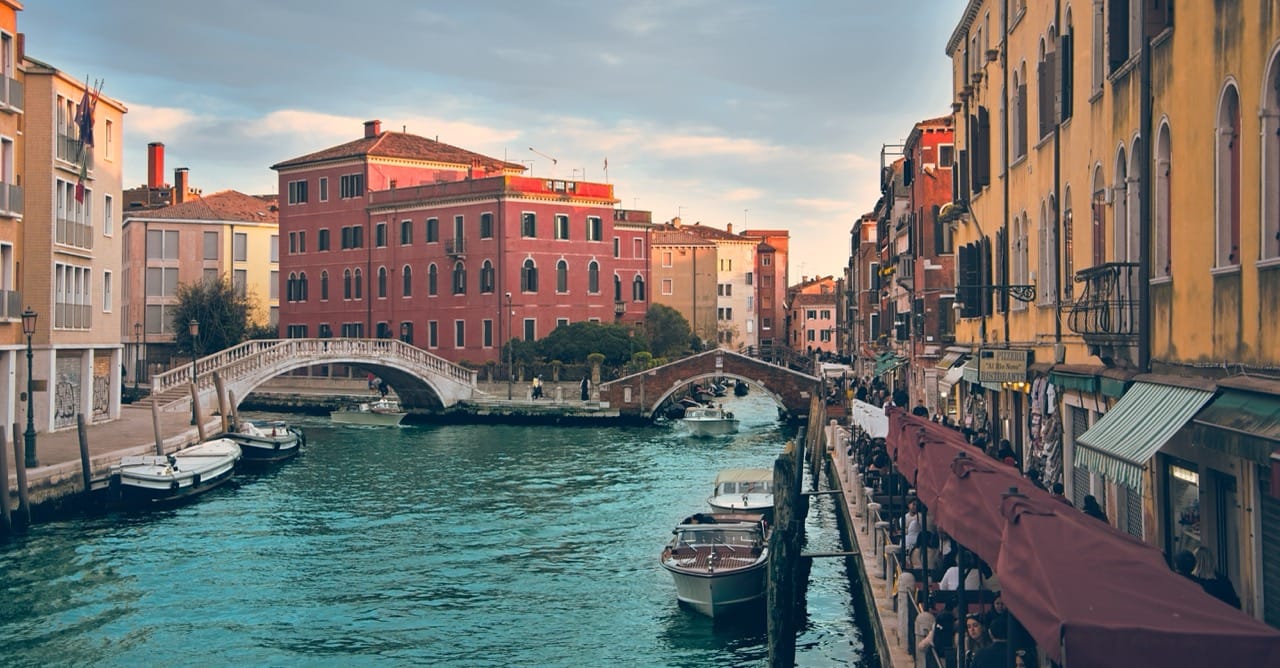
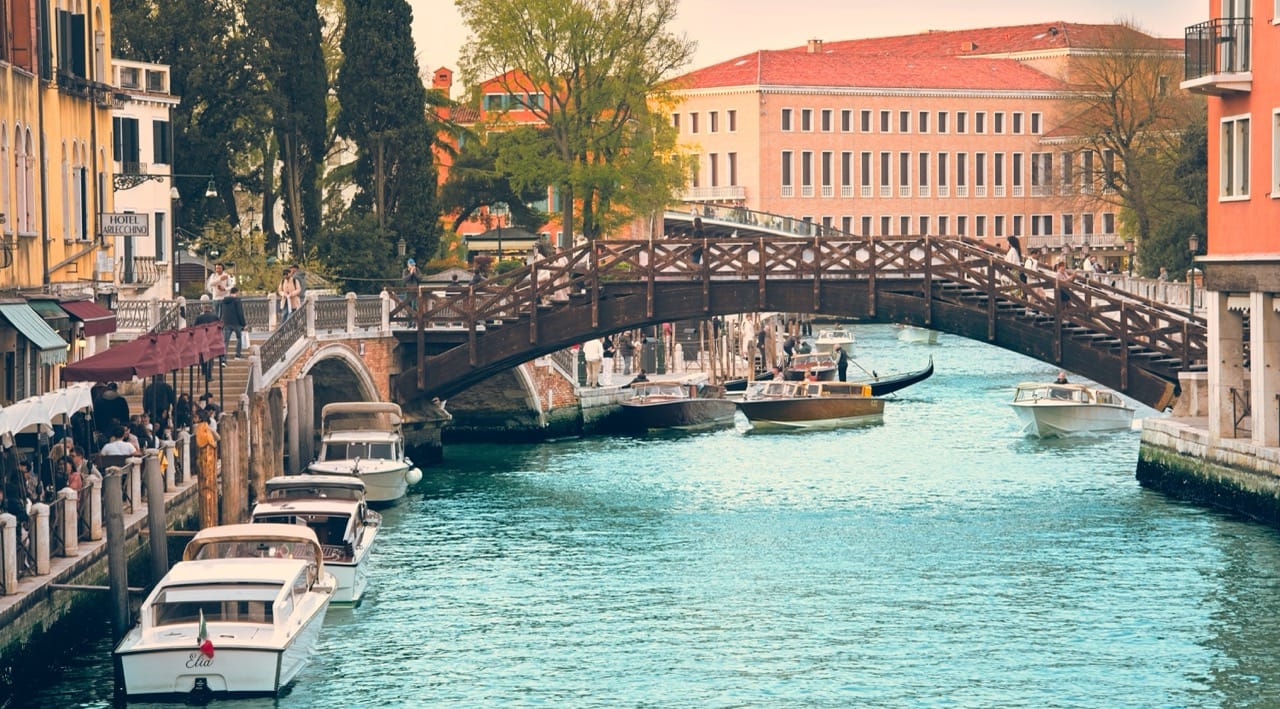
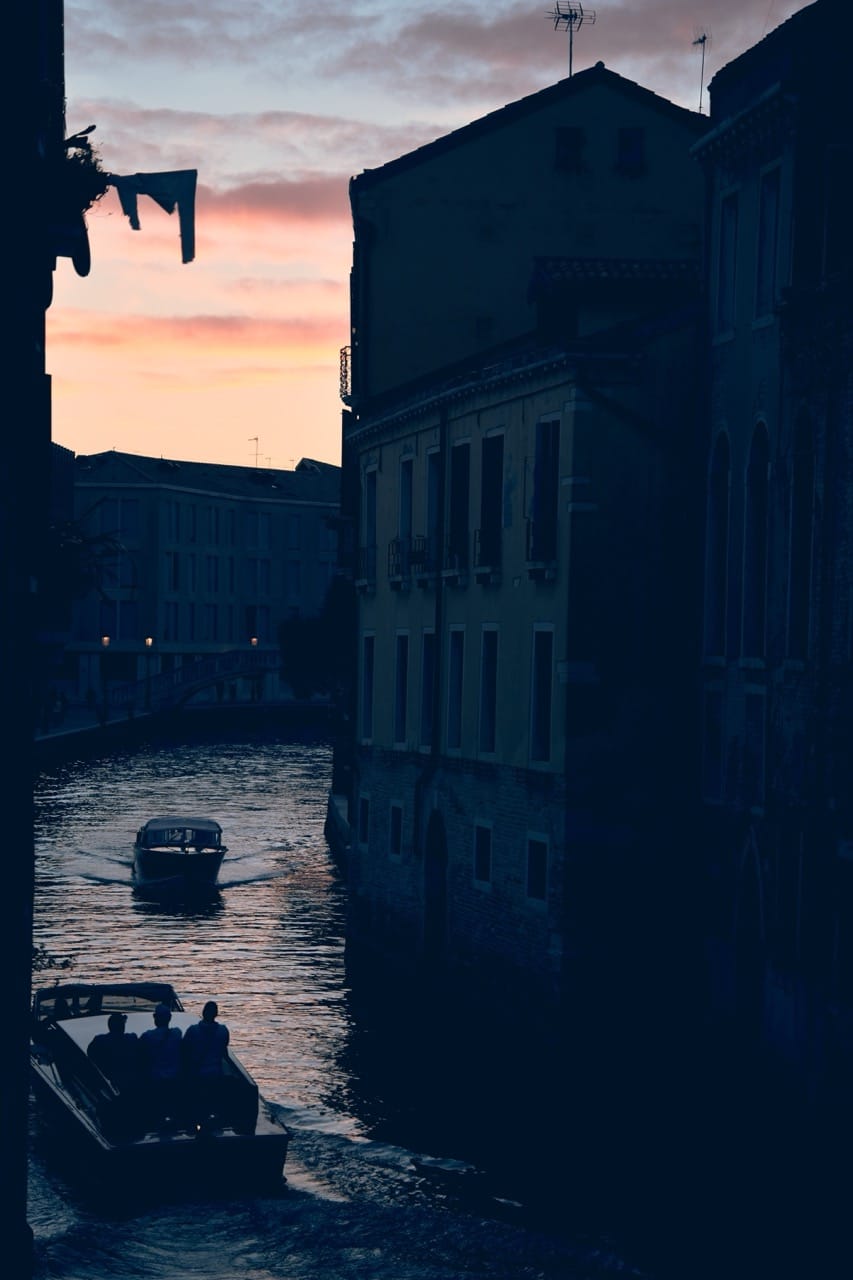
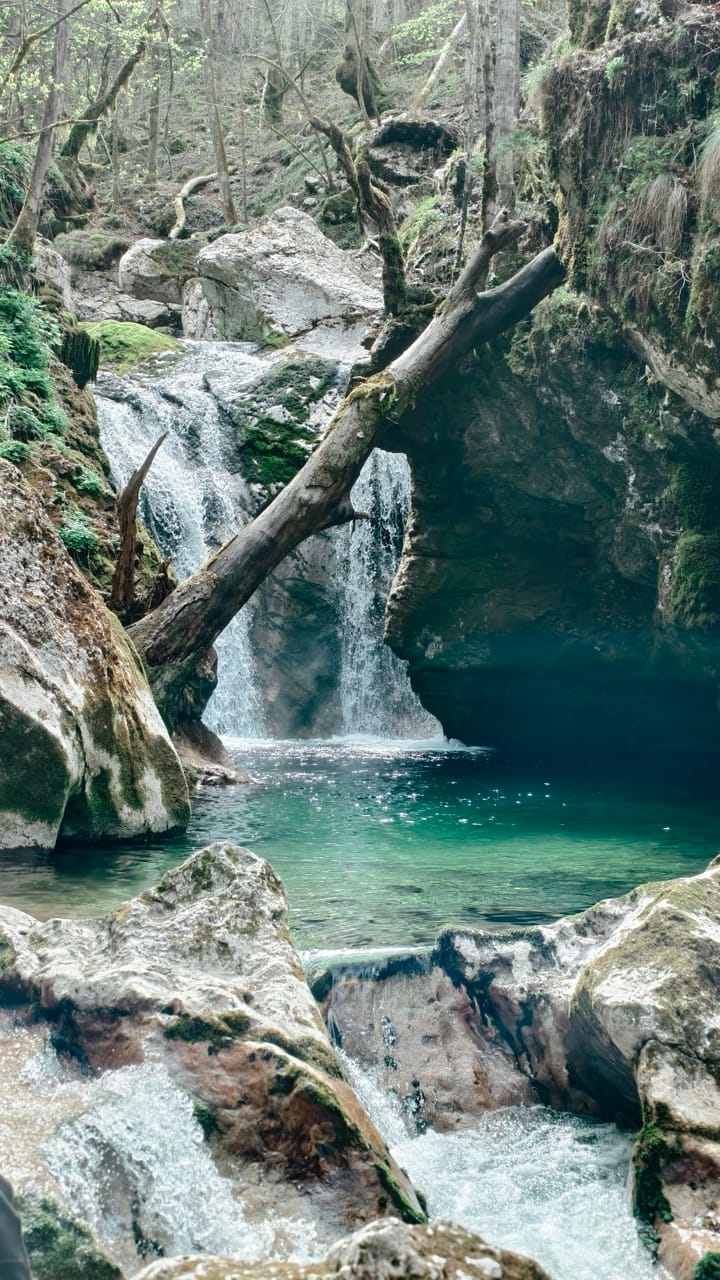
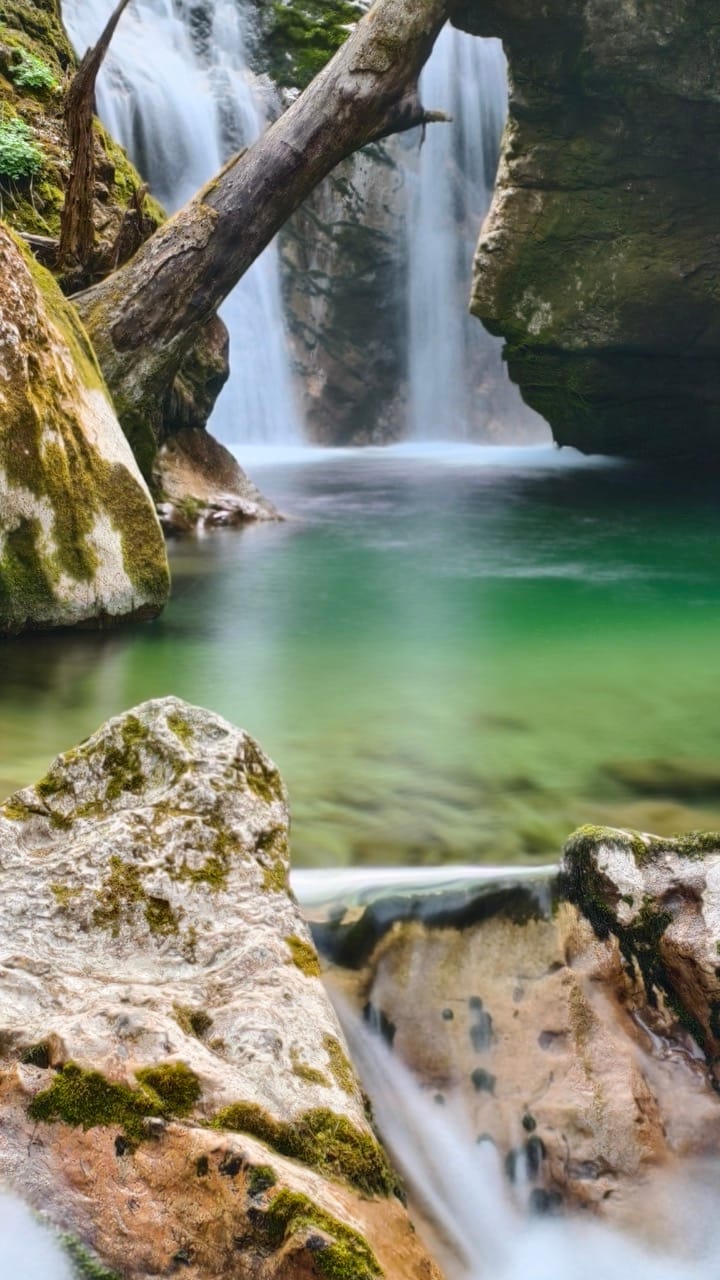
The surreal turquoise waters of the Soča River gorge.
Day 7: Venice from the Water & Medieval Brisighella
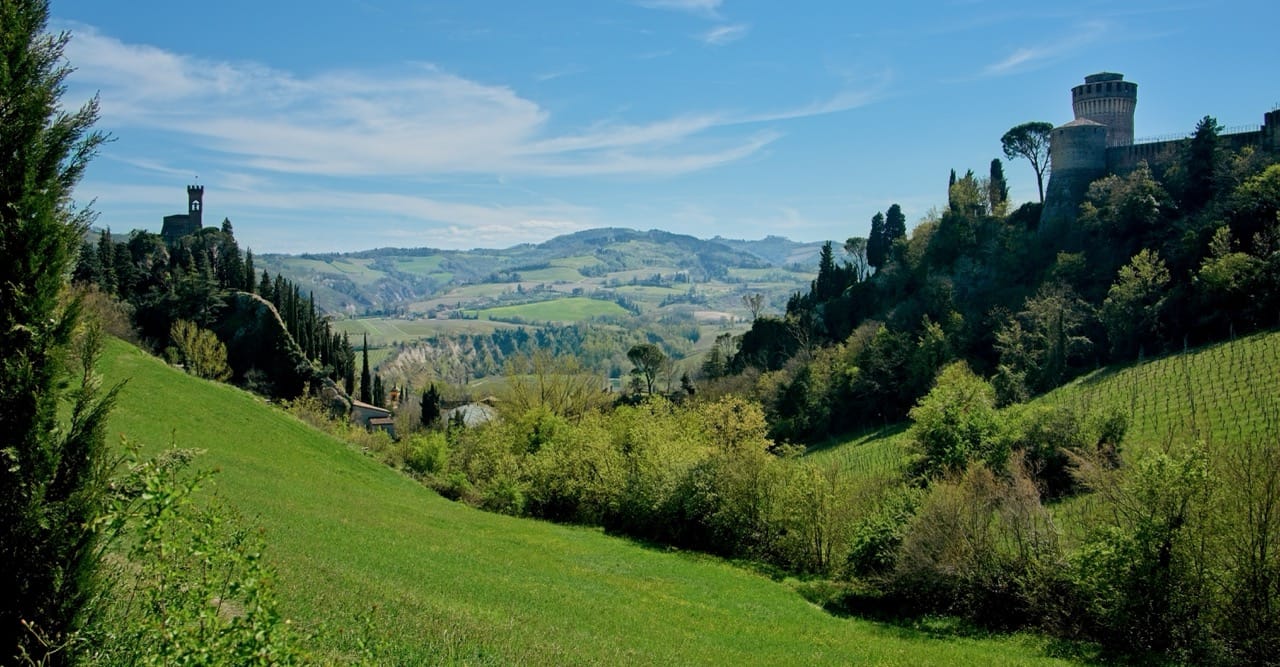
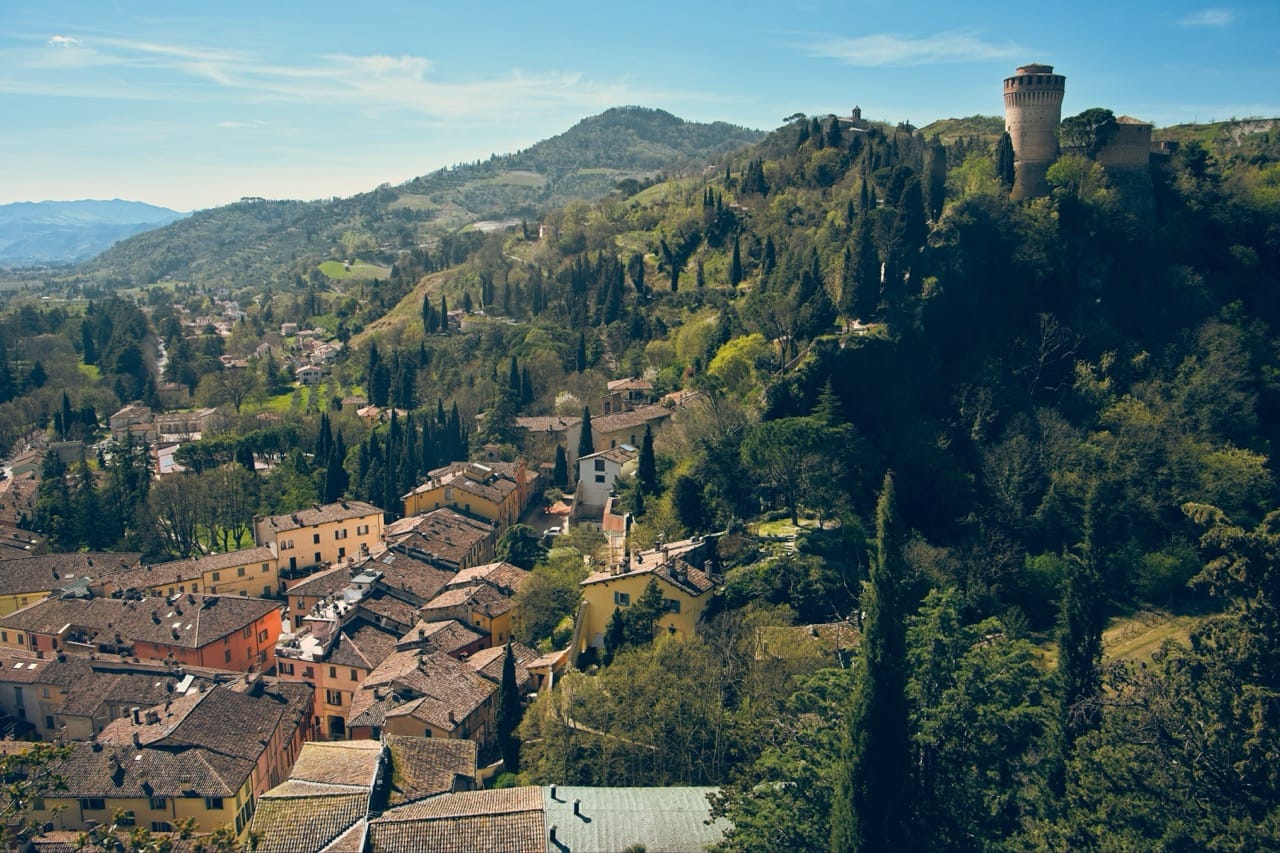
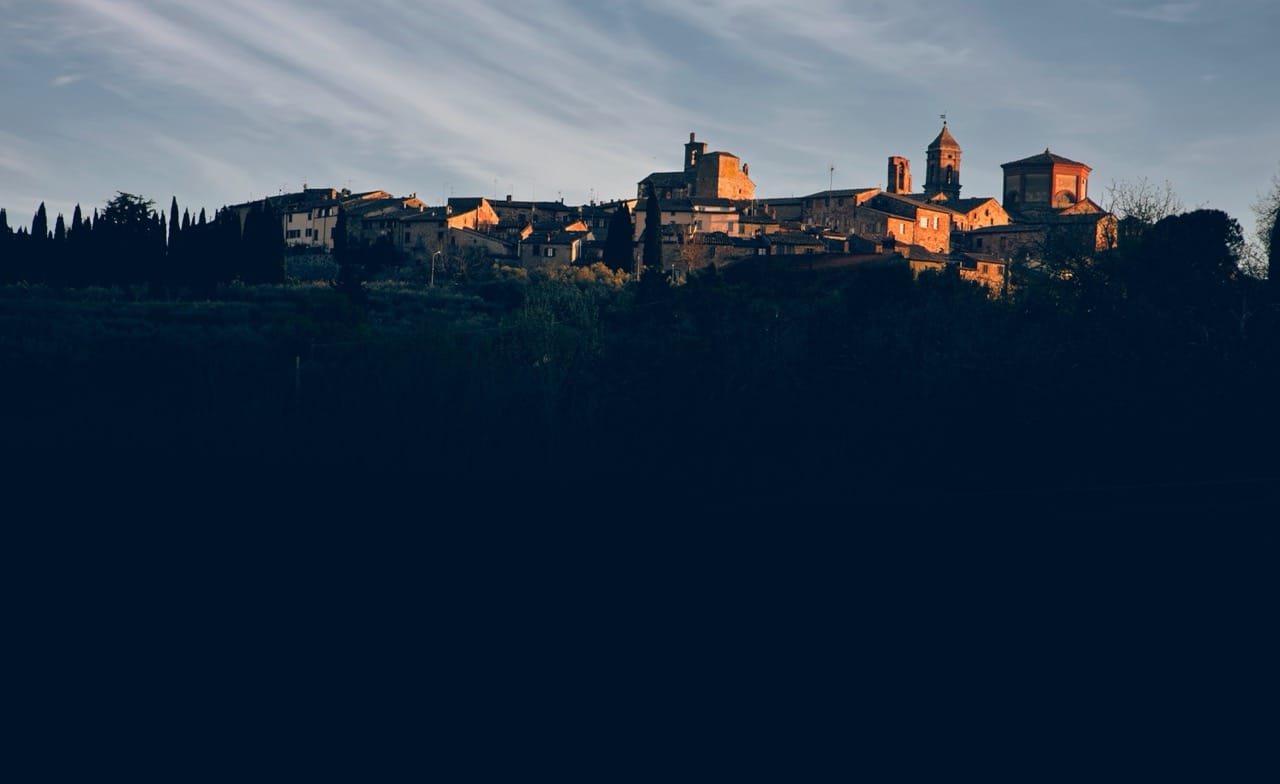
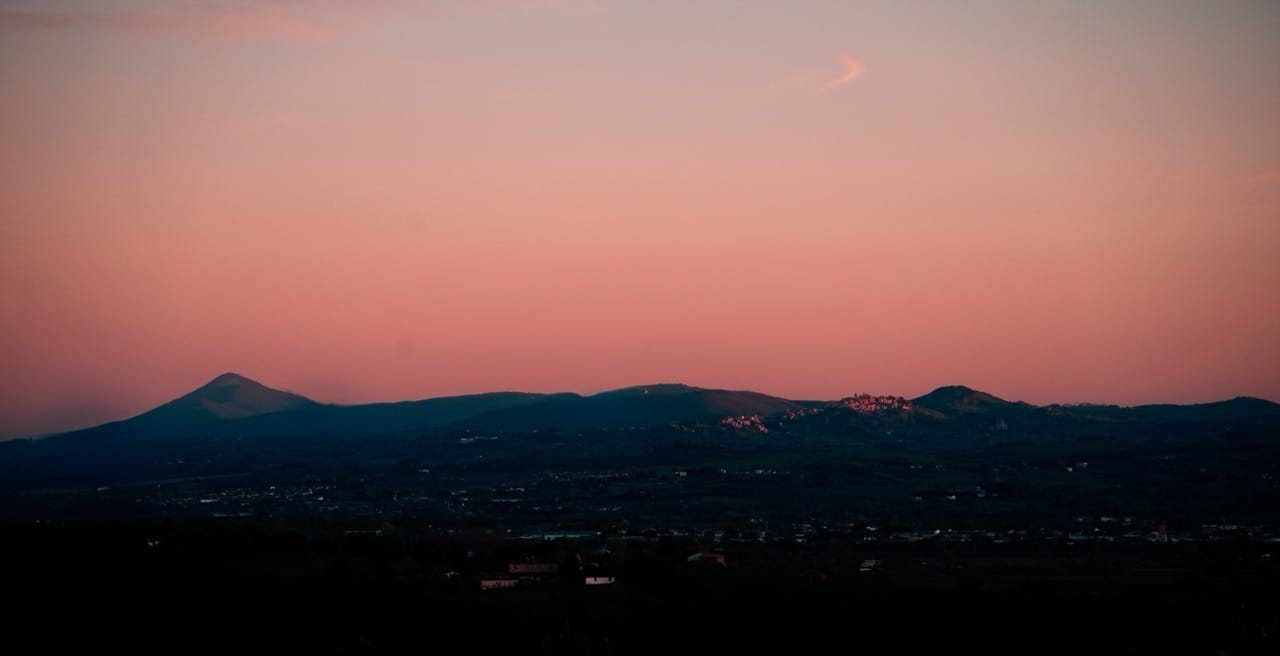
Approaching Venice by vaporetto across the morning lagoon felt like sailing straight into an oil painting. We wandered past the Bridge of Sighs, took in the soaring Gothic splendor of Piazza San Marco and the Doge's Palace, and watched gondolas slice through canal waters. Rejoining the vans in the afternoon, we stopped in Emilia-Romagna at Brisighella, famous for its elevated 14th-century Donkey's Path (Via degli Asini), before crossing into the rolling cypress hills of Tuscany.
Day 8: Val d'Orcia, Saturnia Hot Springs & Siena
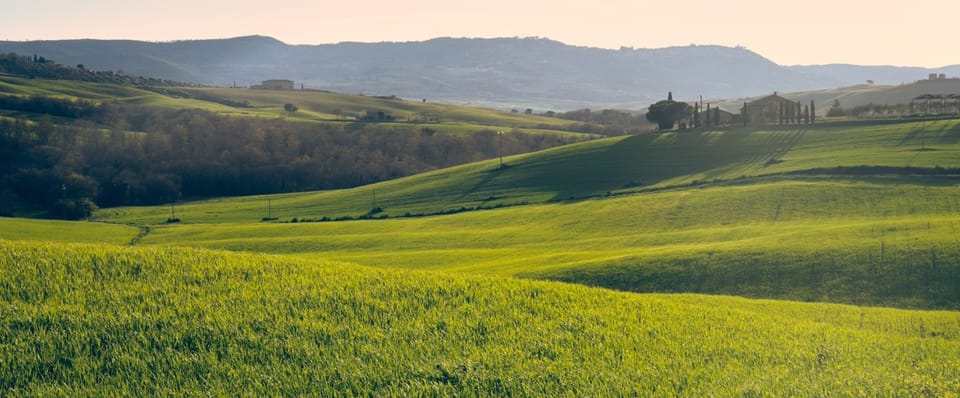
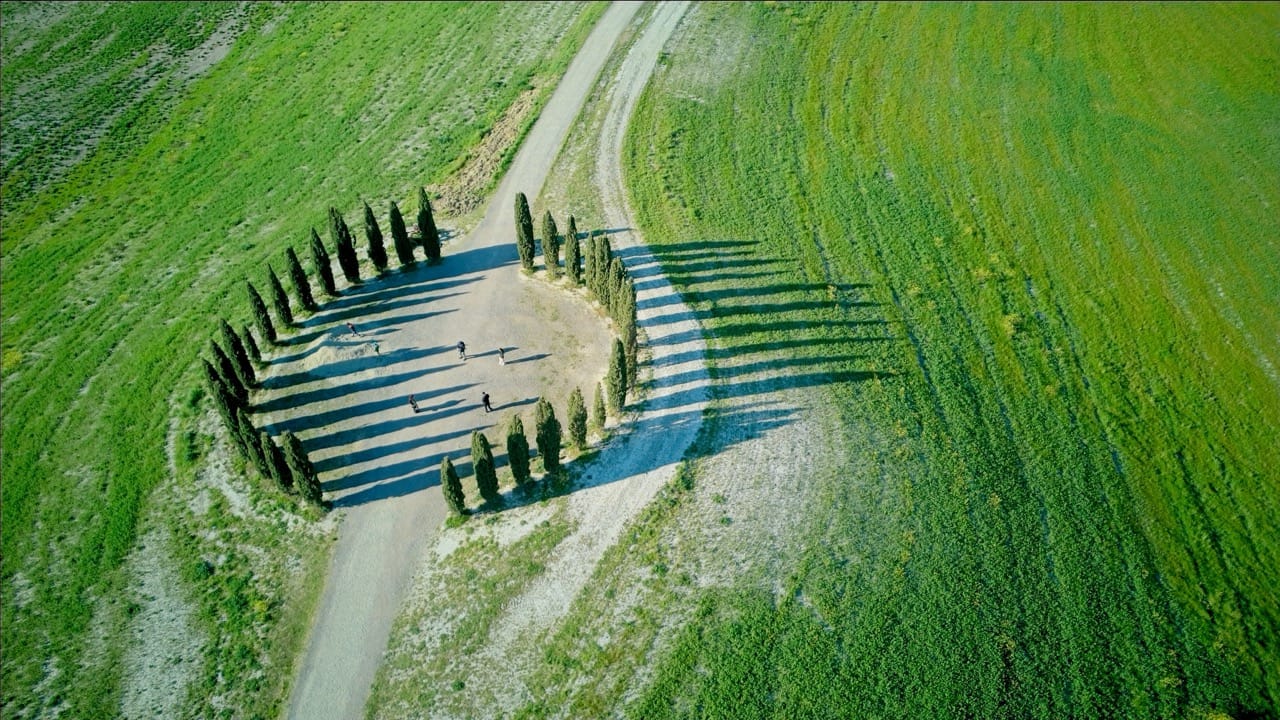
This was quintessential Tuscany. We photographed the iconic circular Cipressi di San Quirico and the symmetrical cypress avenue of Poggio Covili against vibrant spring green wheat fields. Midday brought pure relaxation at Cascate del Mulino in Saturnia, where we soaked in 37.5°C natural thermal waters cascading over white travertine terraces. We finished the afternoon in Siena, sitting in the shell-shaped Piazza del Campo beneath the Torre del Mangia and gazing at the striped marble facade of the Duomo.
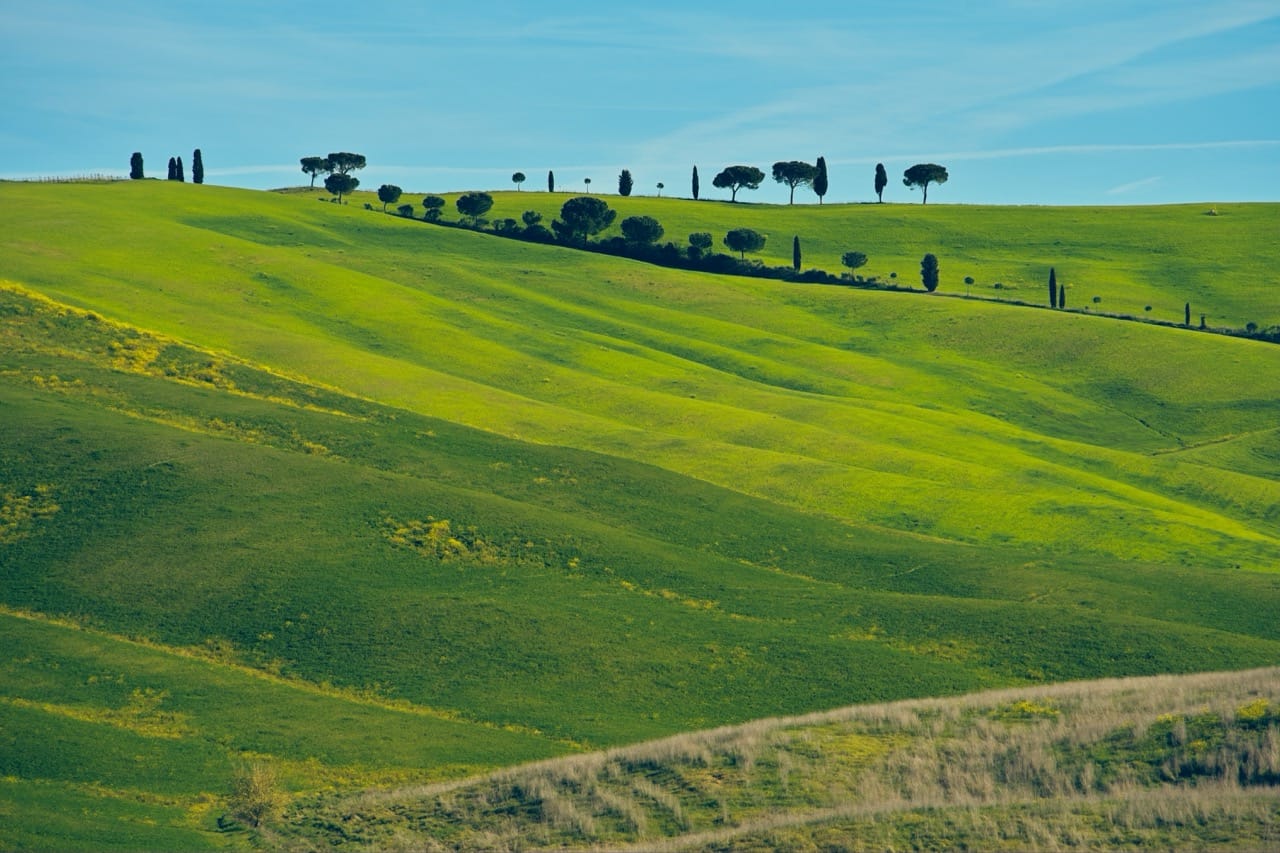
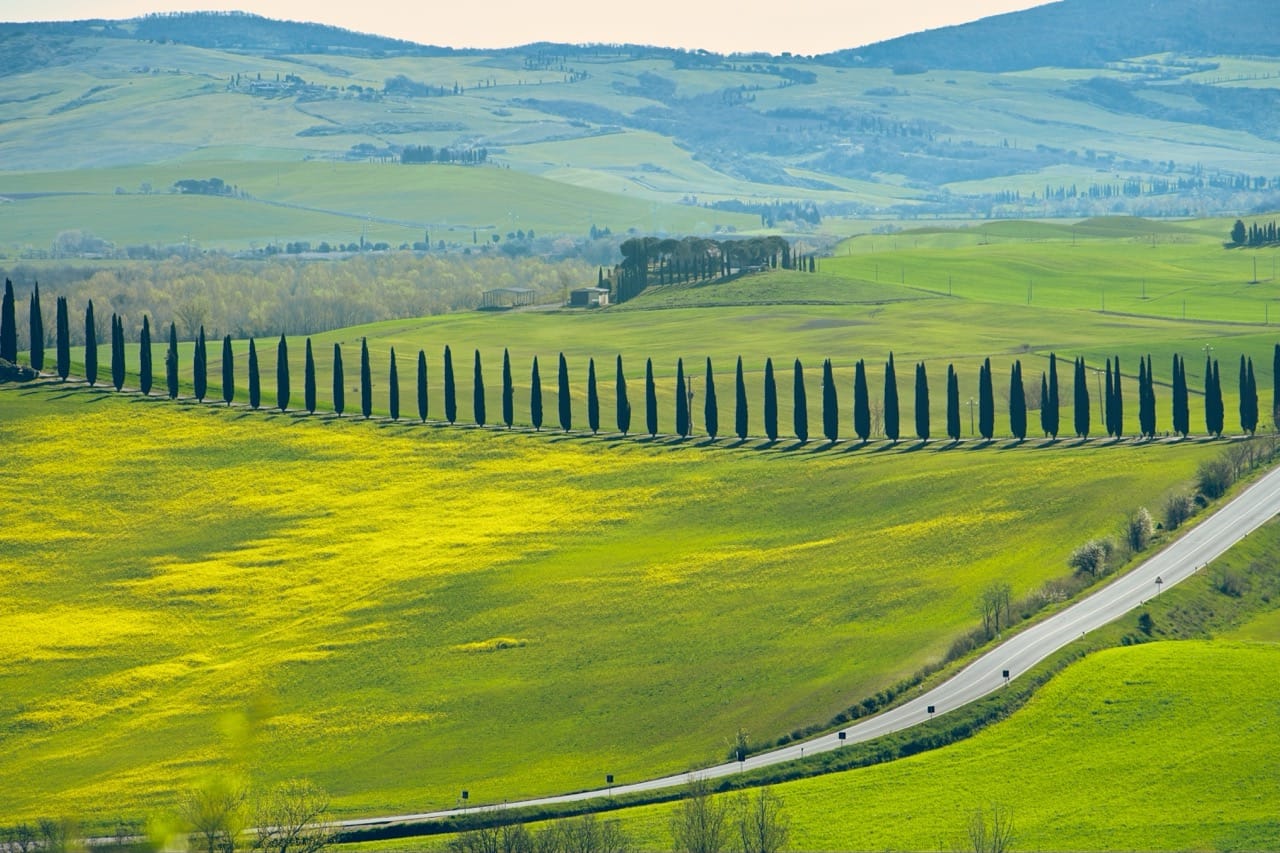
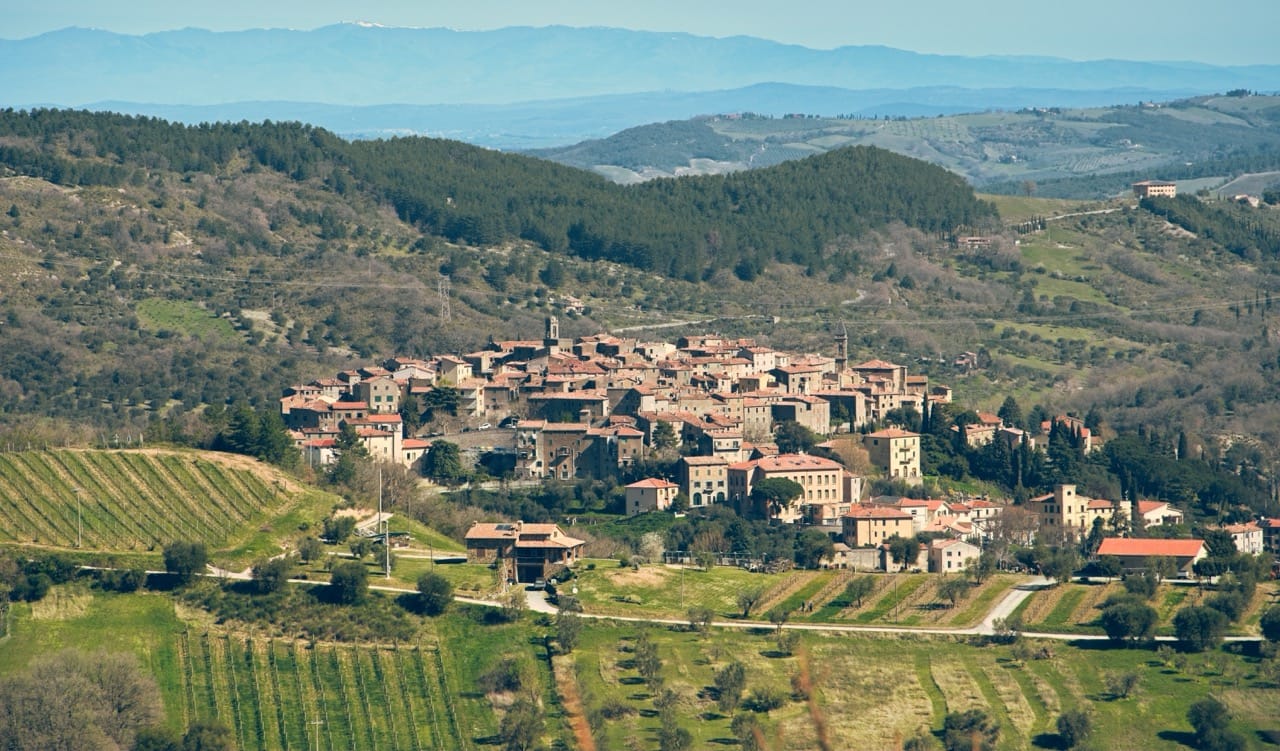
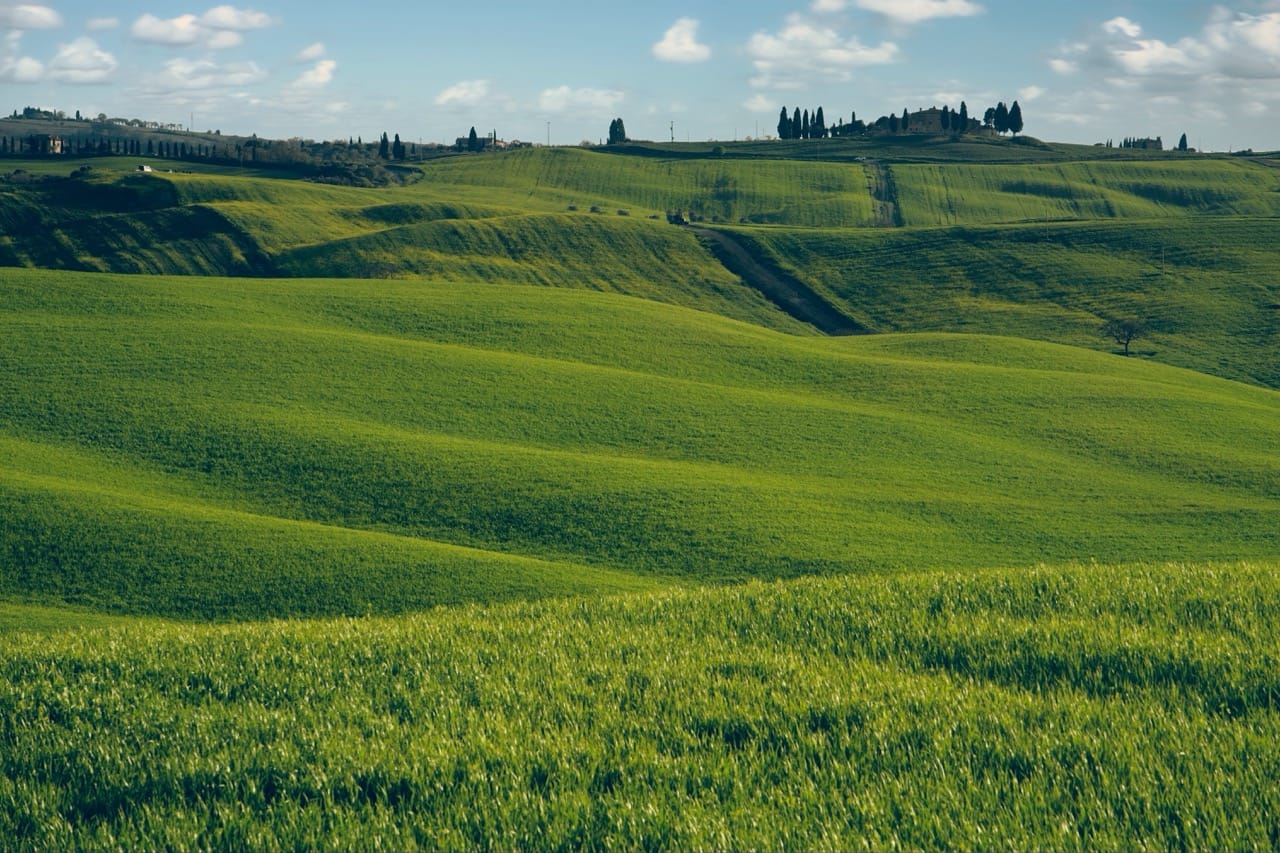
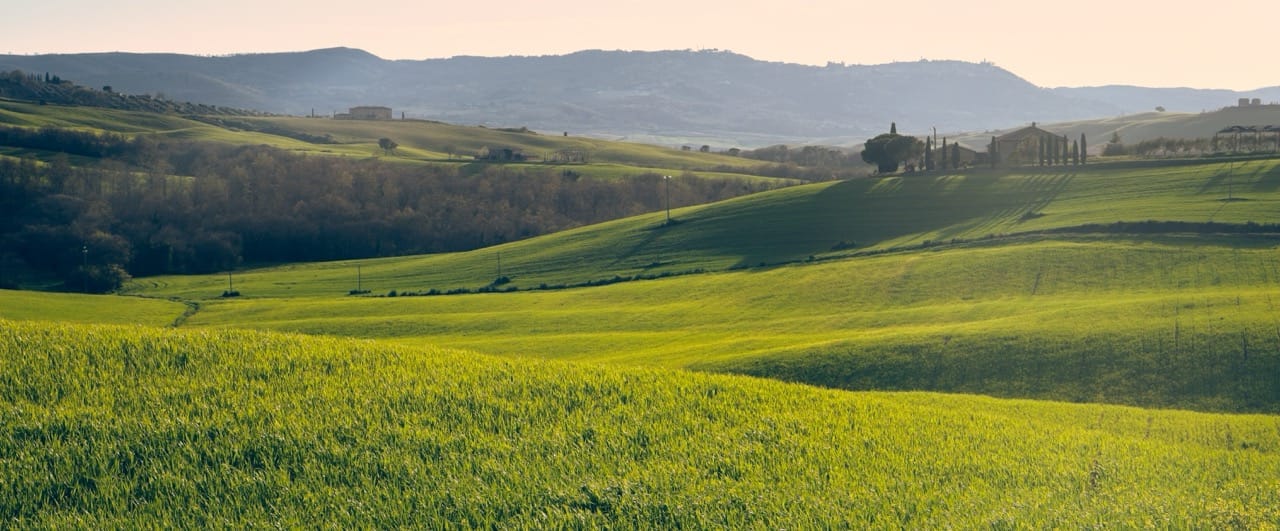
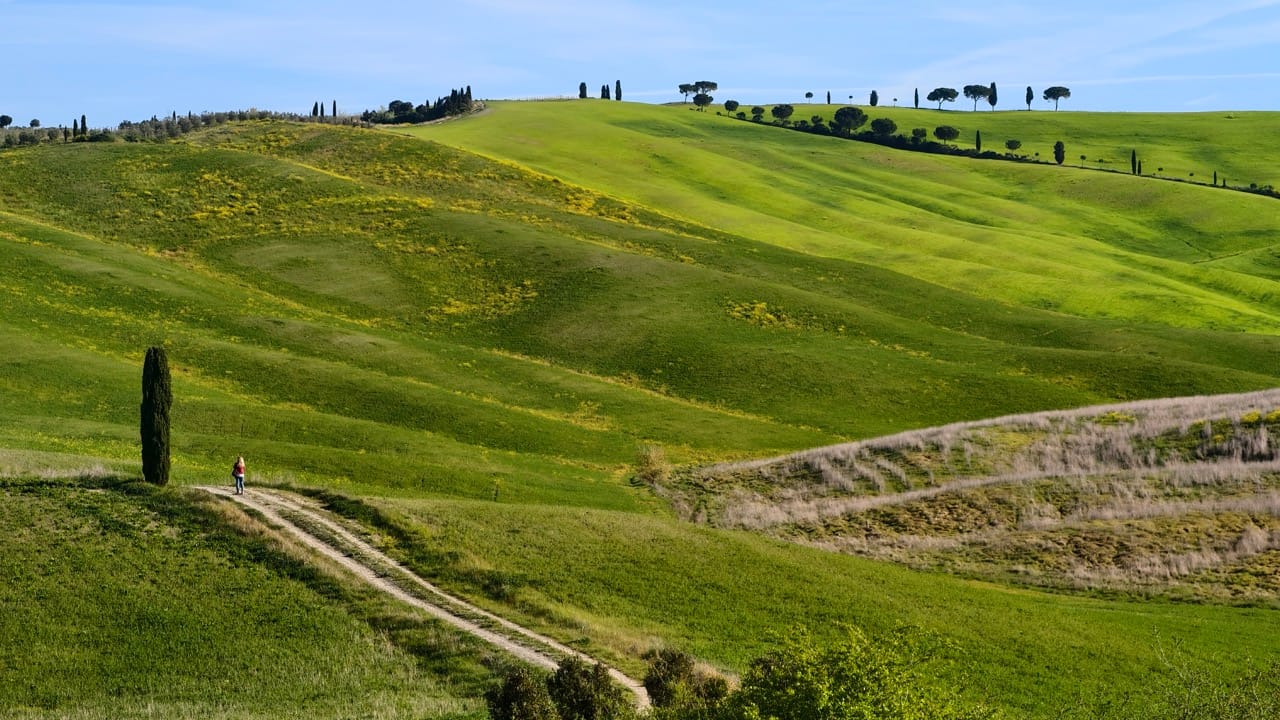
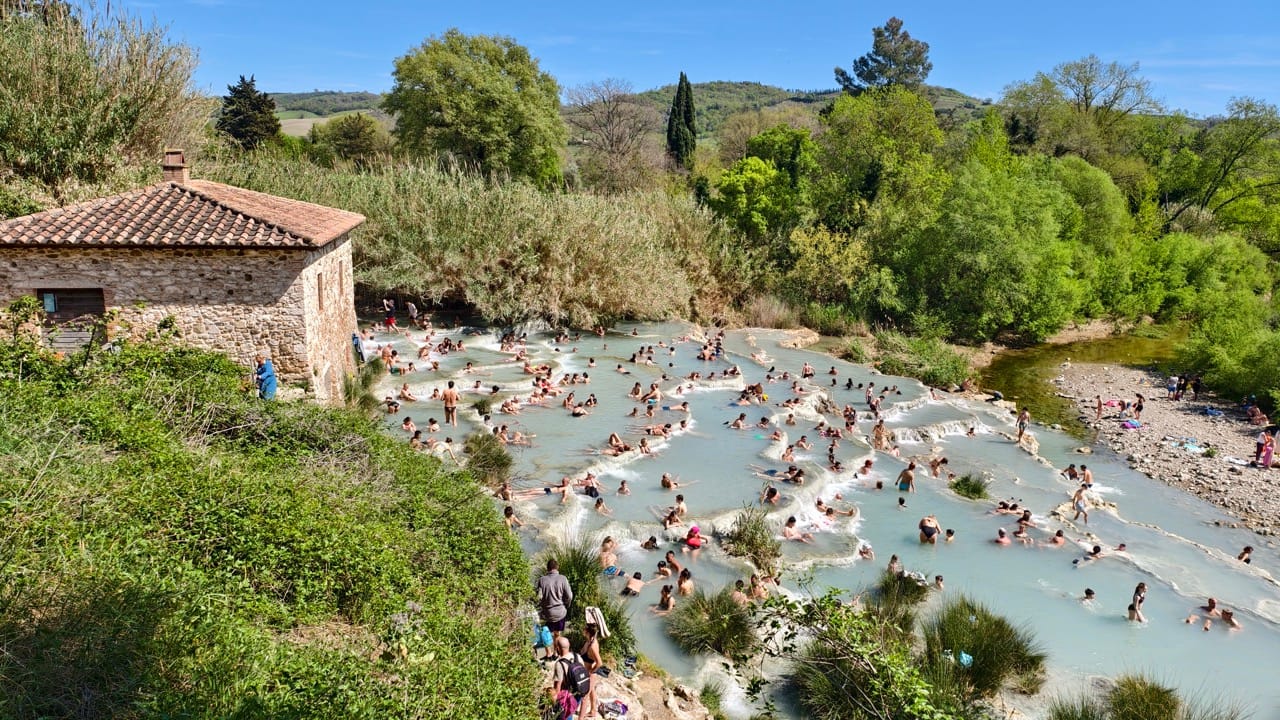
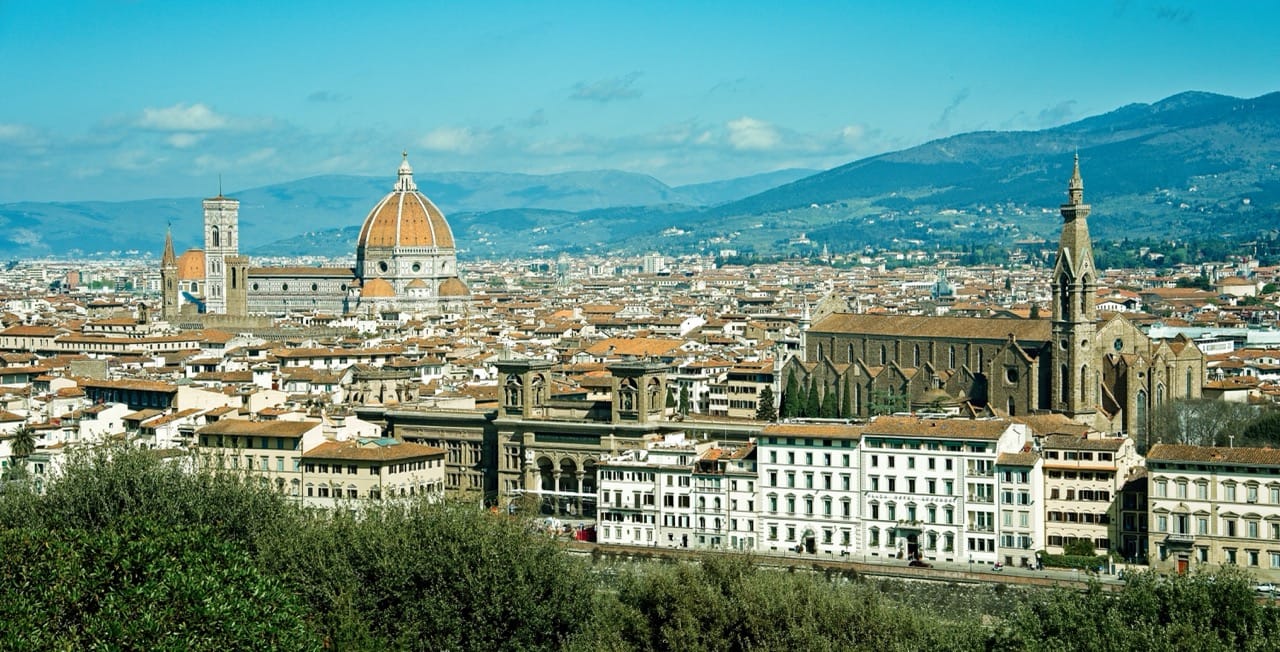
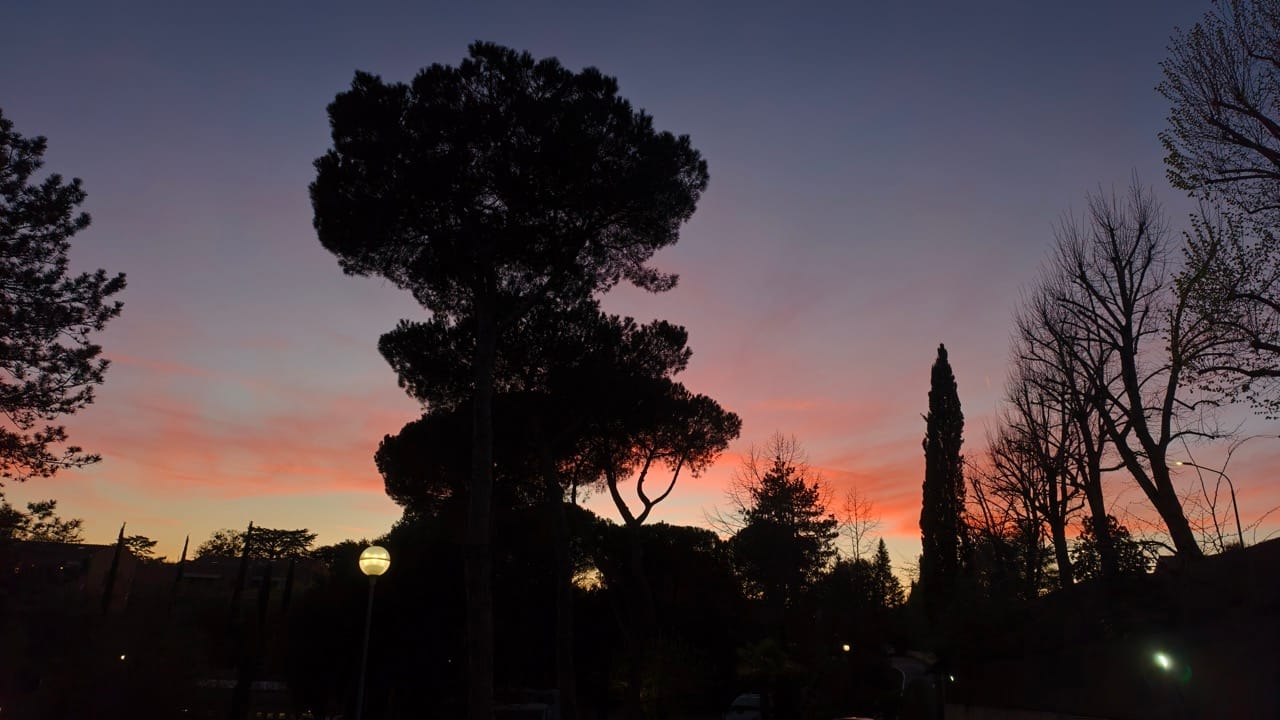
The iconic cypress avenues of Val d'Orcia in full spring bloom.
Part IV: Florence, Lake Garda & the Mighty Dolomites (Days 9–11)
Day 9: Florence from Above & North to Lake Garda
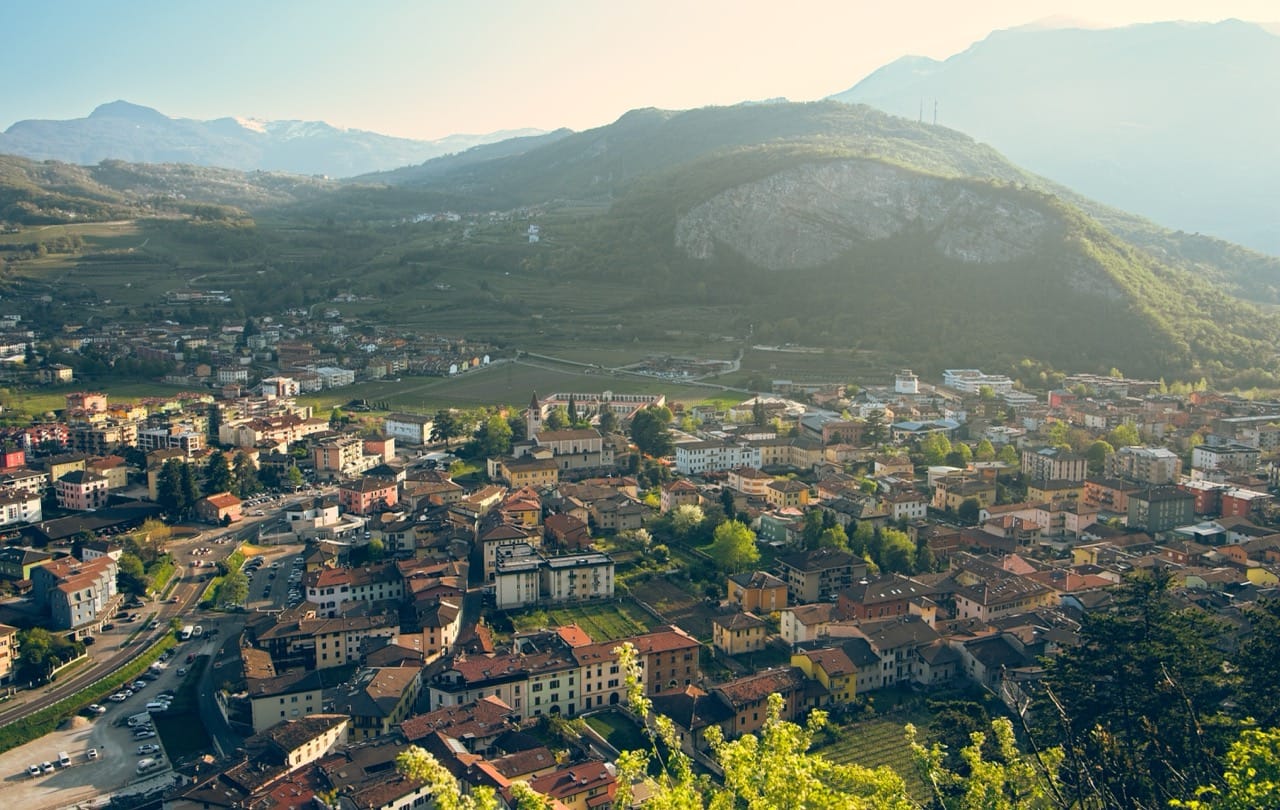
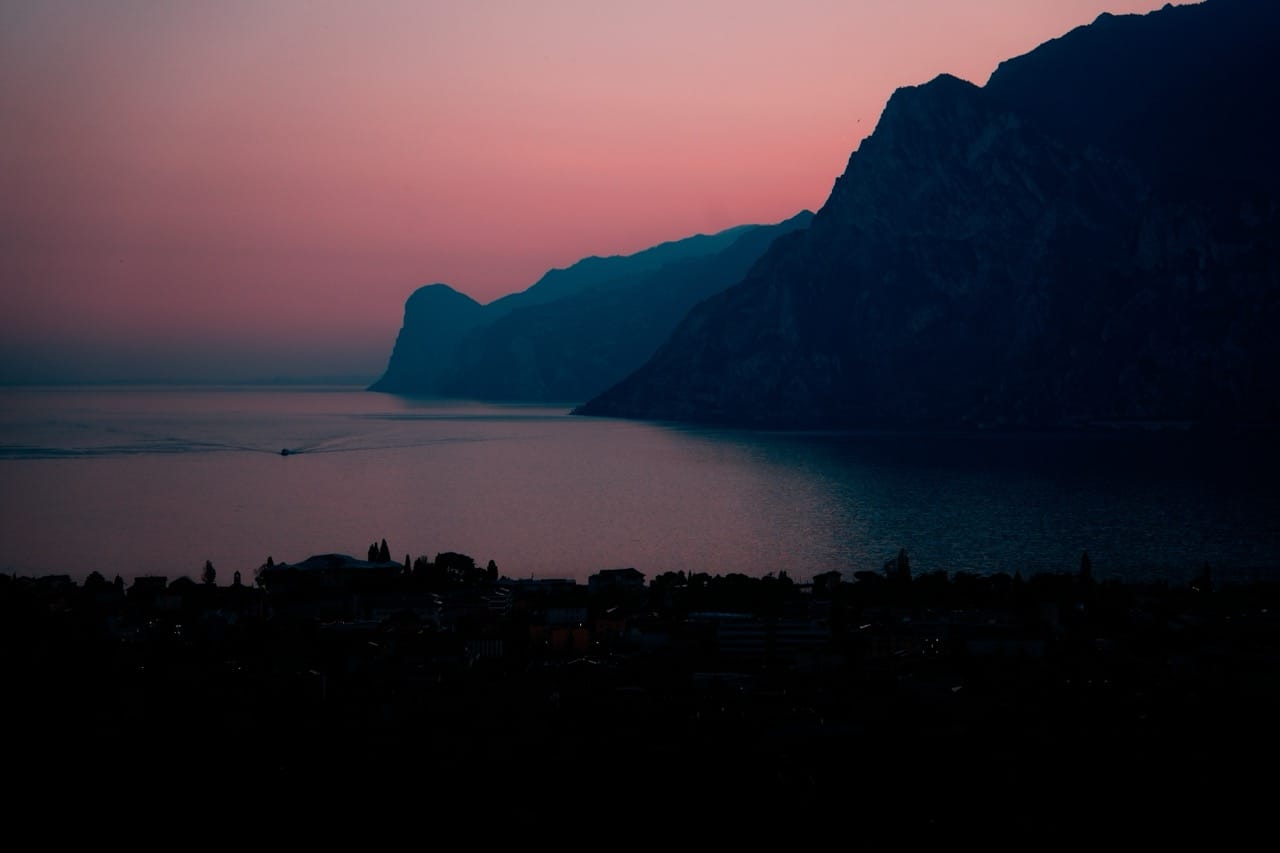
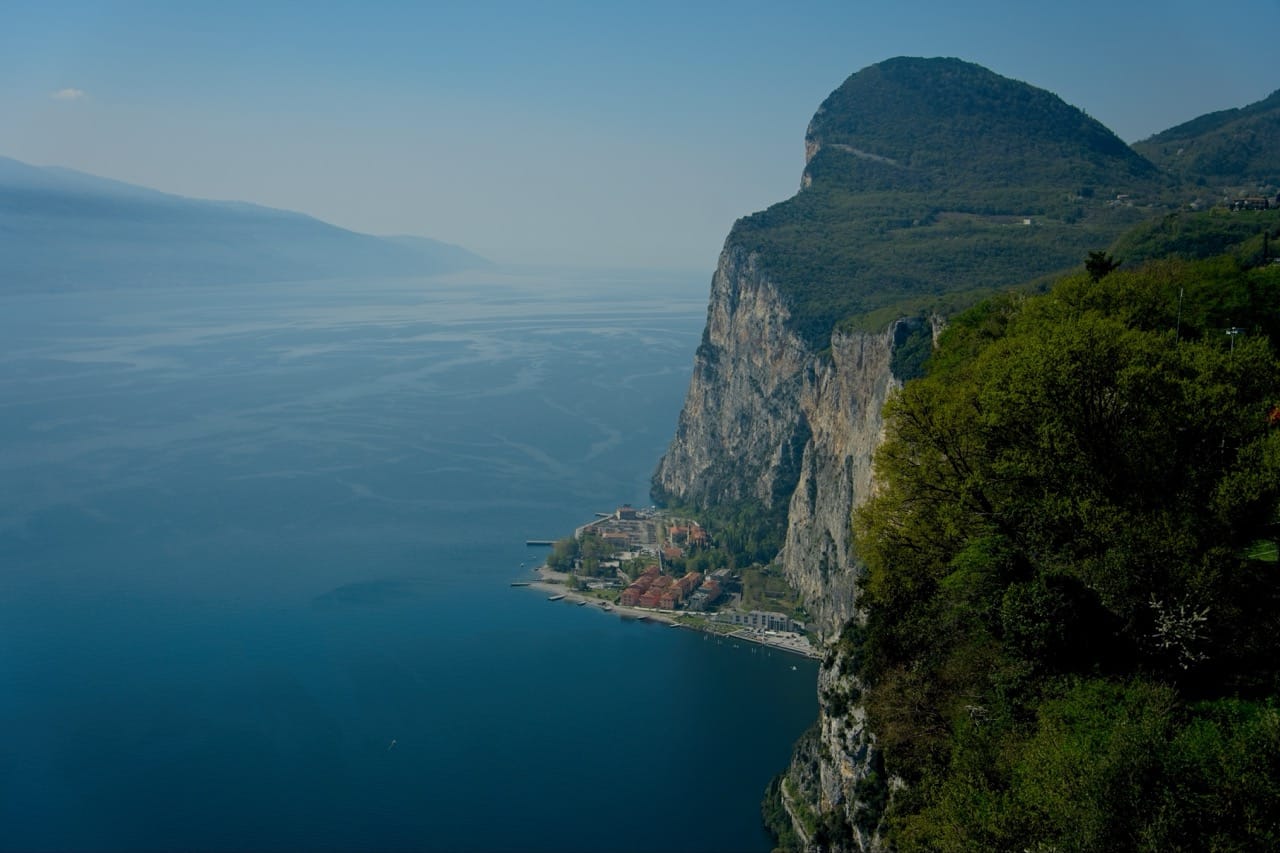
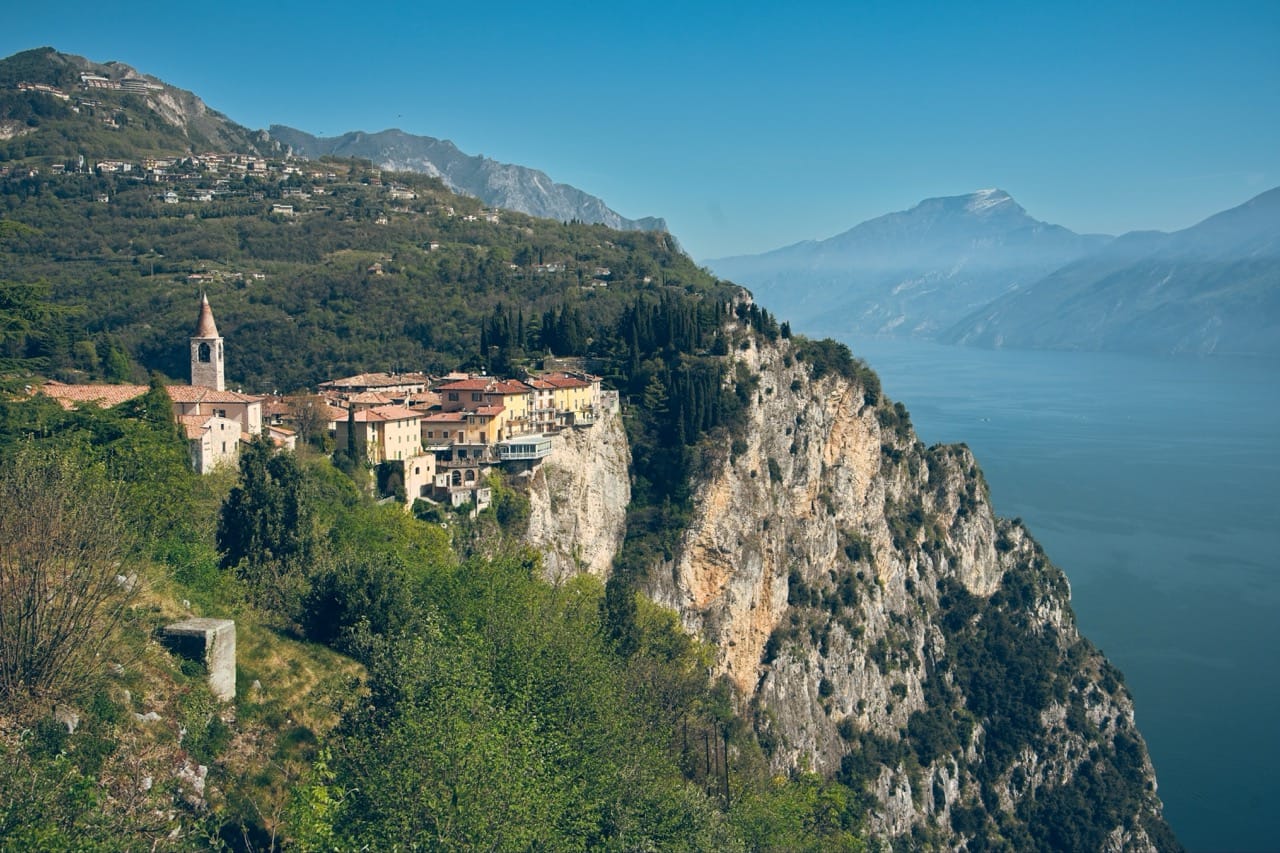
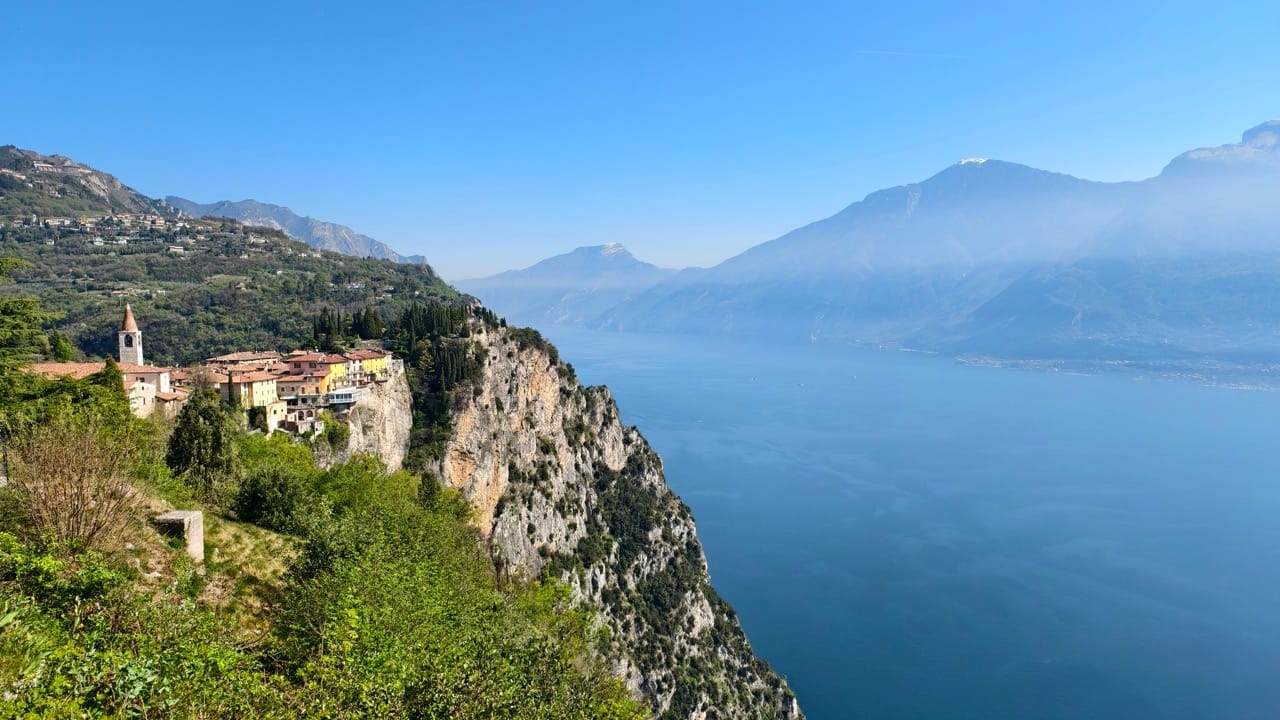
Standing on the terrace of Piazzale Michelangelo in Florence, the entire Renaissance skyline was laid bare: Brunelleschi's immense Duomo, Giotto's Campanile, and the ancient arches of the Ponte Vecchio spanning the Arno. Cutting north through the Apennine passes, we arrived at the fjord-like northern tip of Lake Garda, camping among ancient olive groves beneath towering limestone cliffs in Riva del Garda.
Day 10: Subterranean Gorges & Ascending into the Dolomites
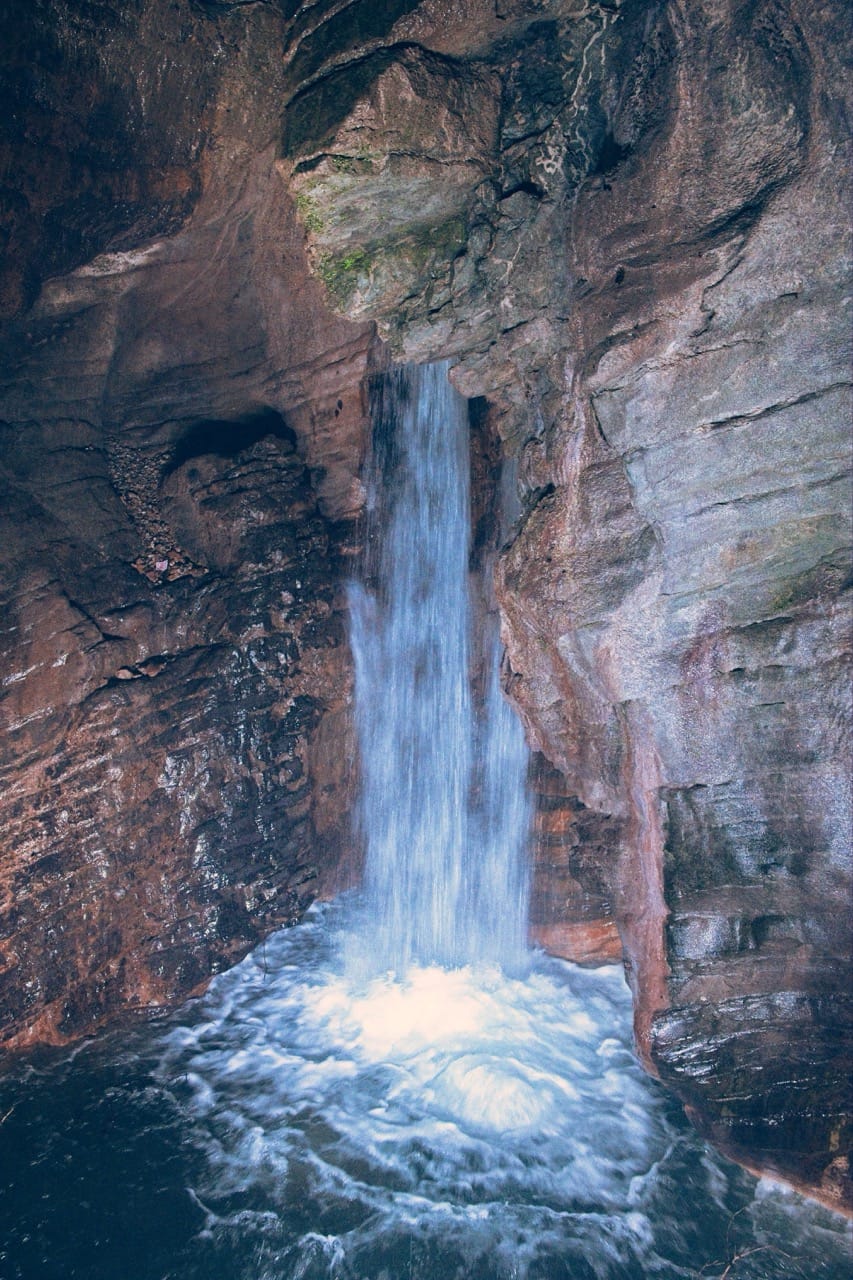
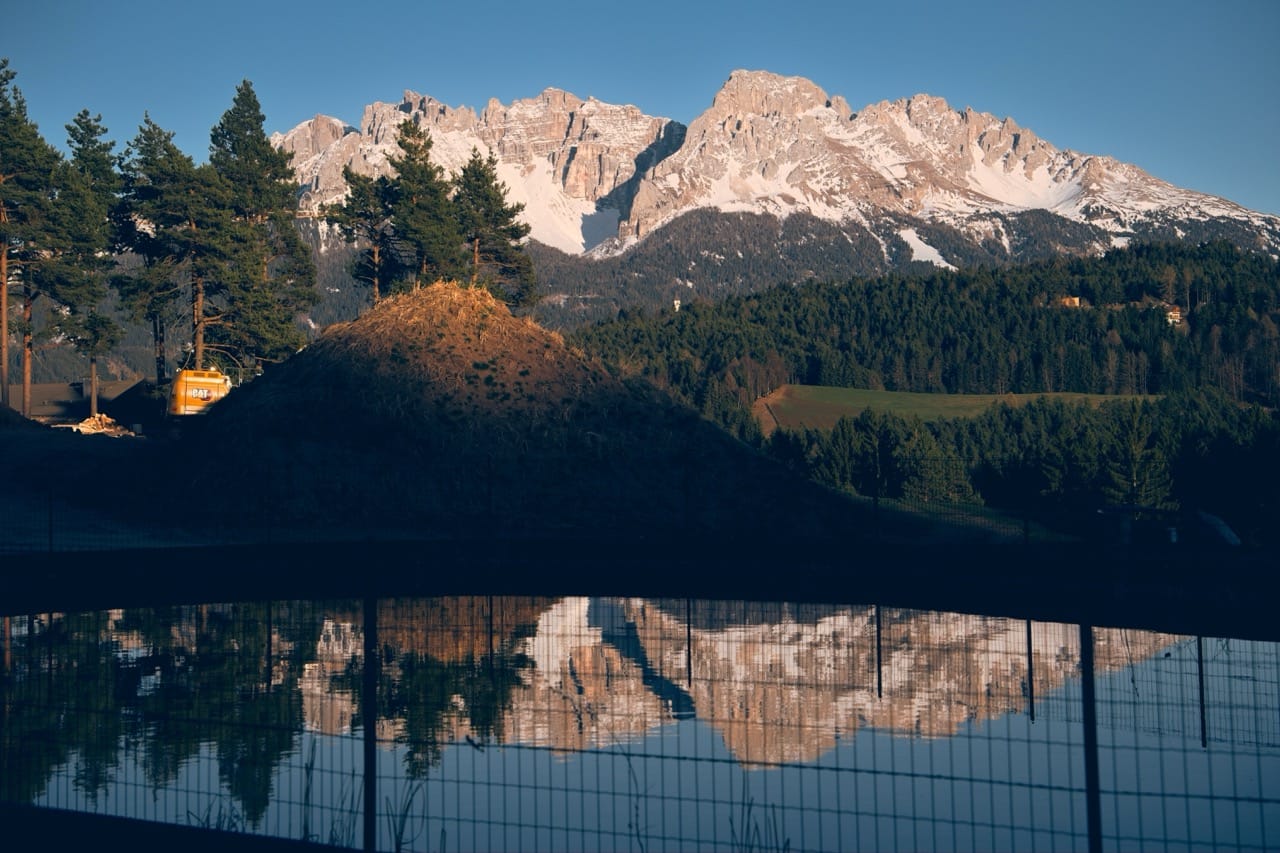
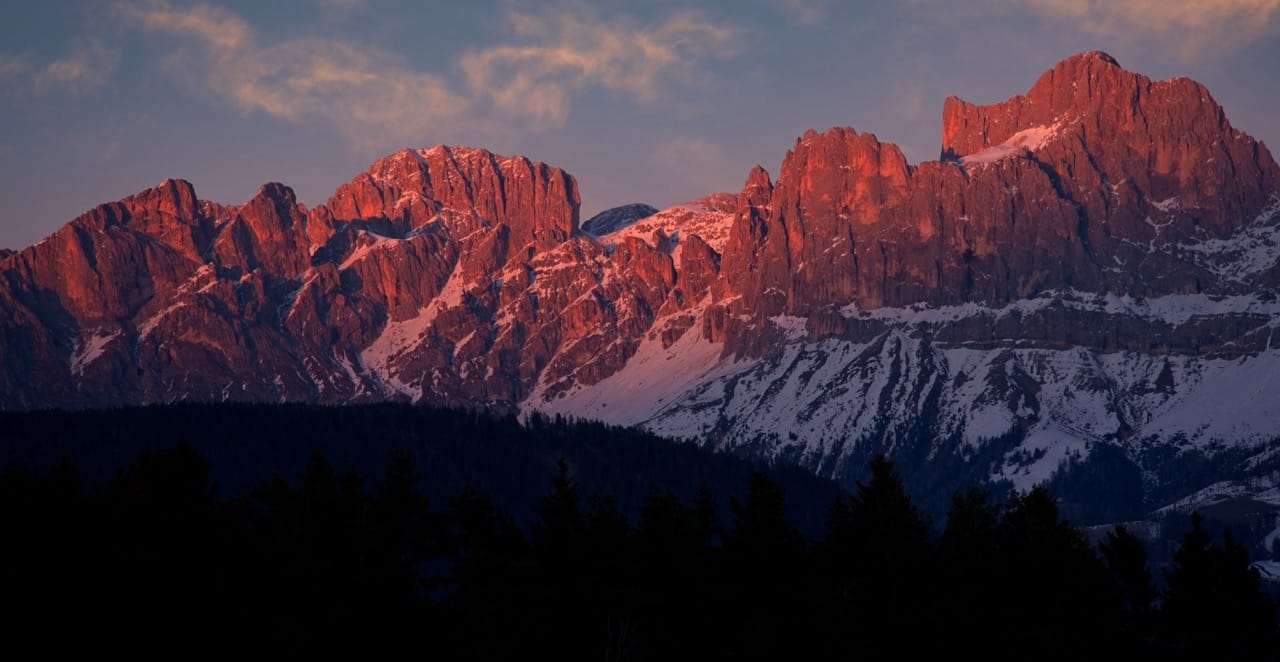
After peering into the roaring 100-meter chasm of Cascate del Varone and walking the shores of electric-blue Lago di Tenno, we stopped at the strange geological hoodoos of the Segonzano Earth Pyramids. Climbing steeply into South Tyrol, we set up camp at Nova Ponente (1,350m), where the setting sun lit up the pale limestone towers of the Latemar and Rosengarten massifs in shades of fire and rose.
Day 11: Lake Carezza, Sella Pass & Val di Funes
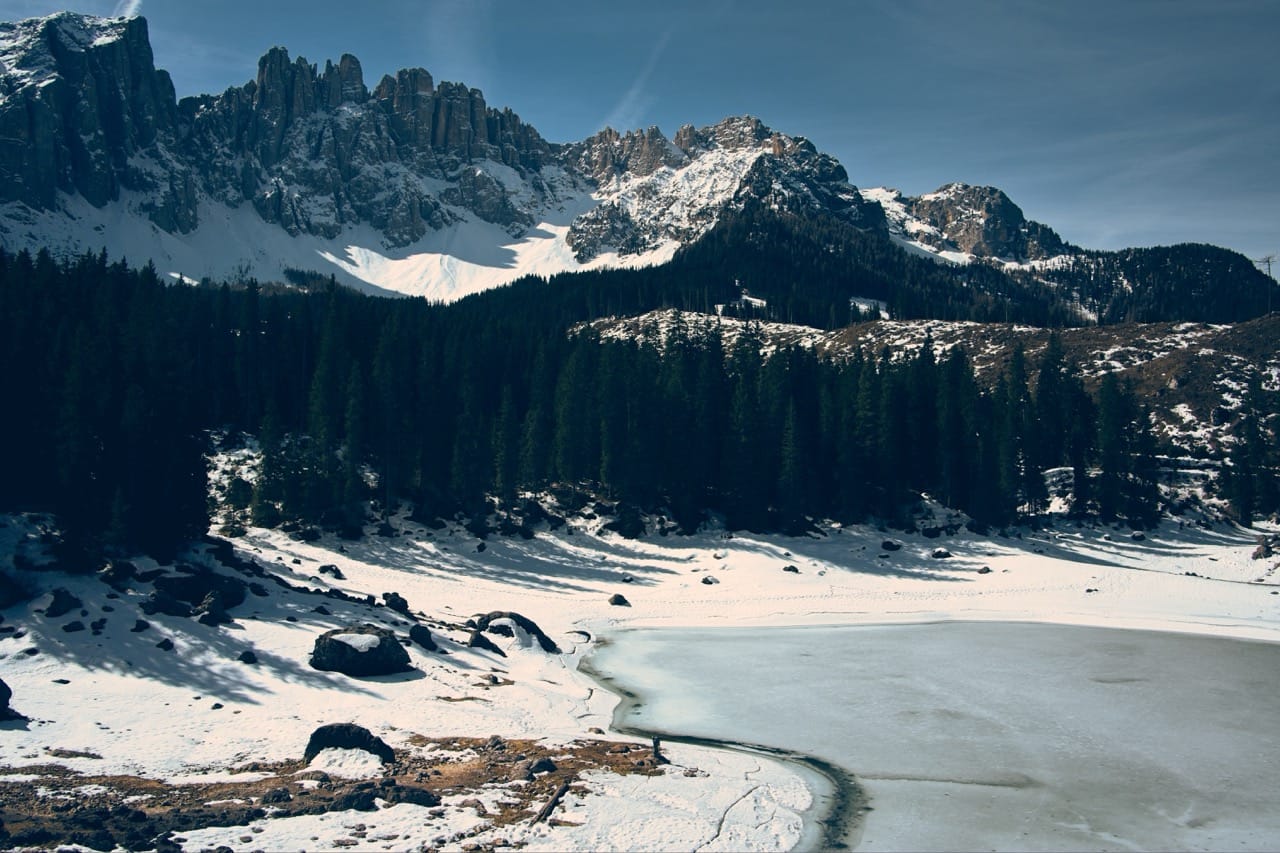
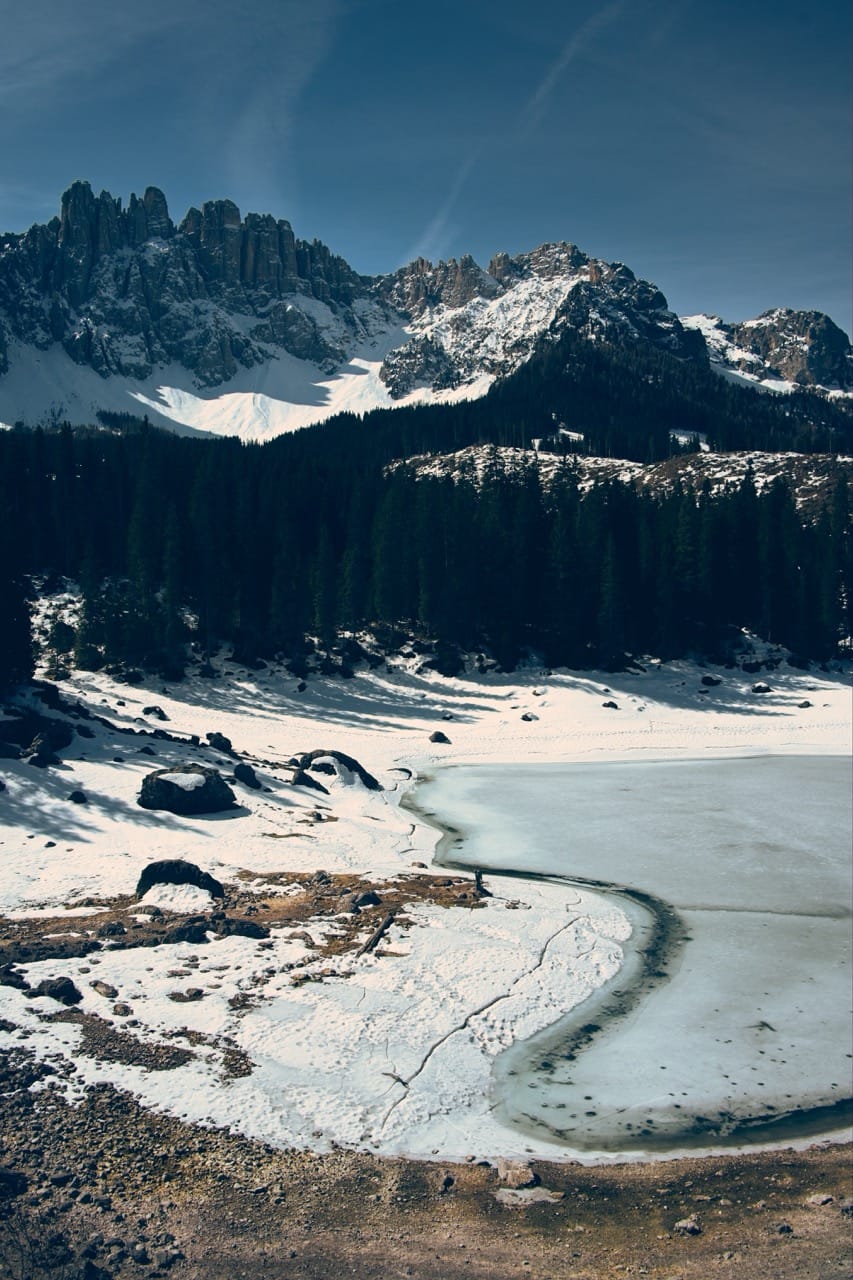
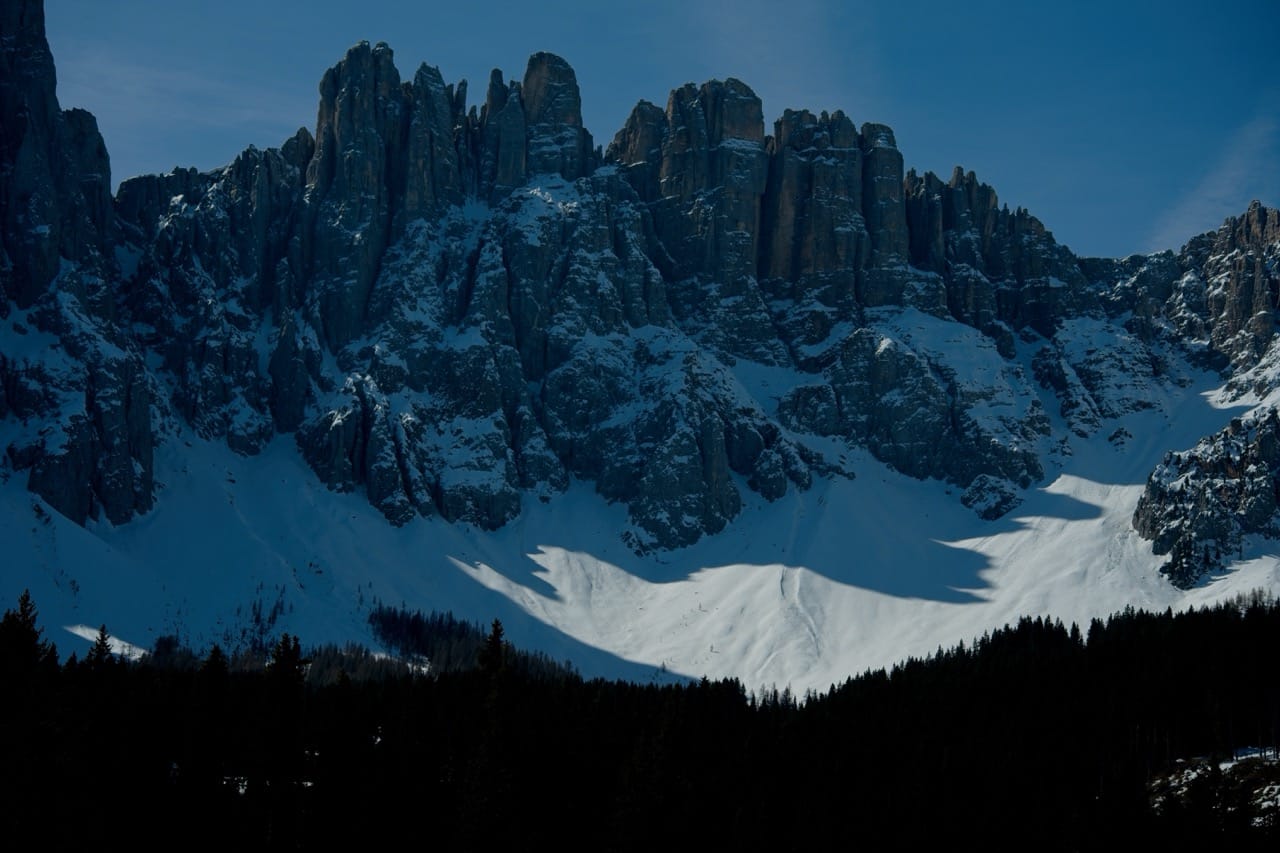
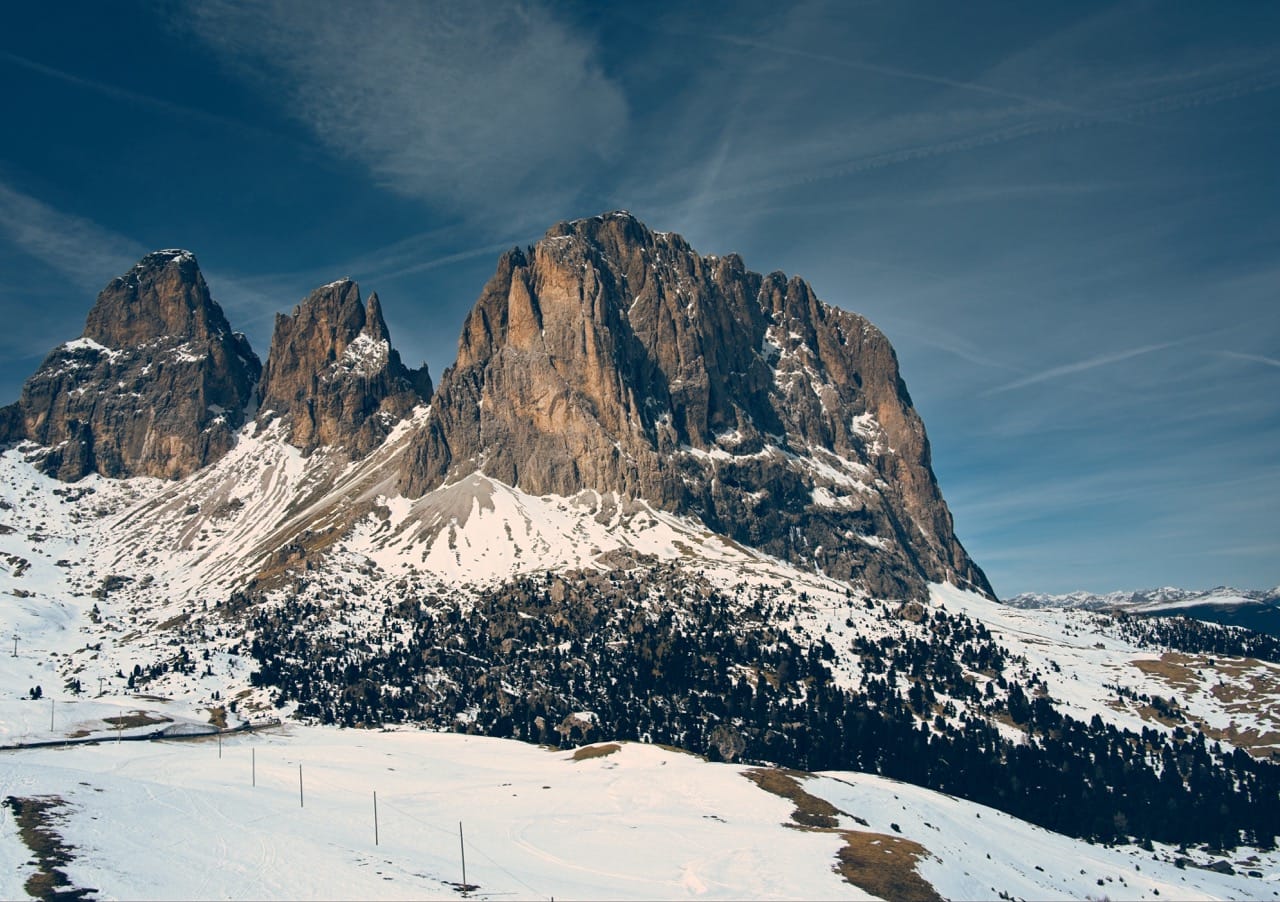
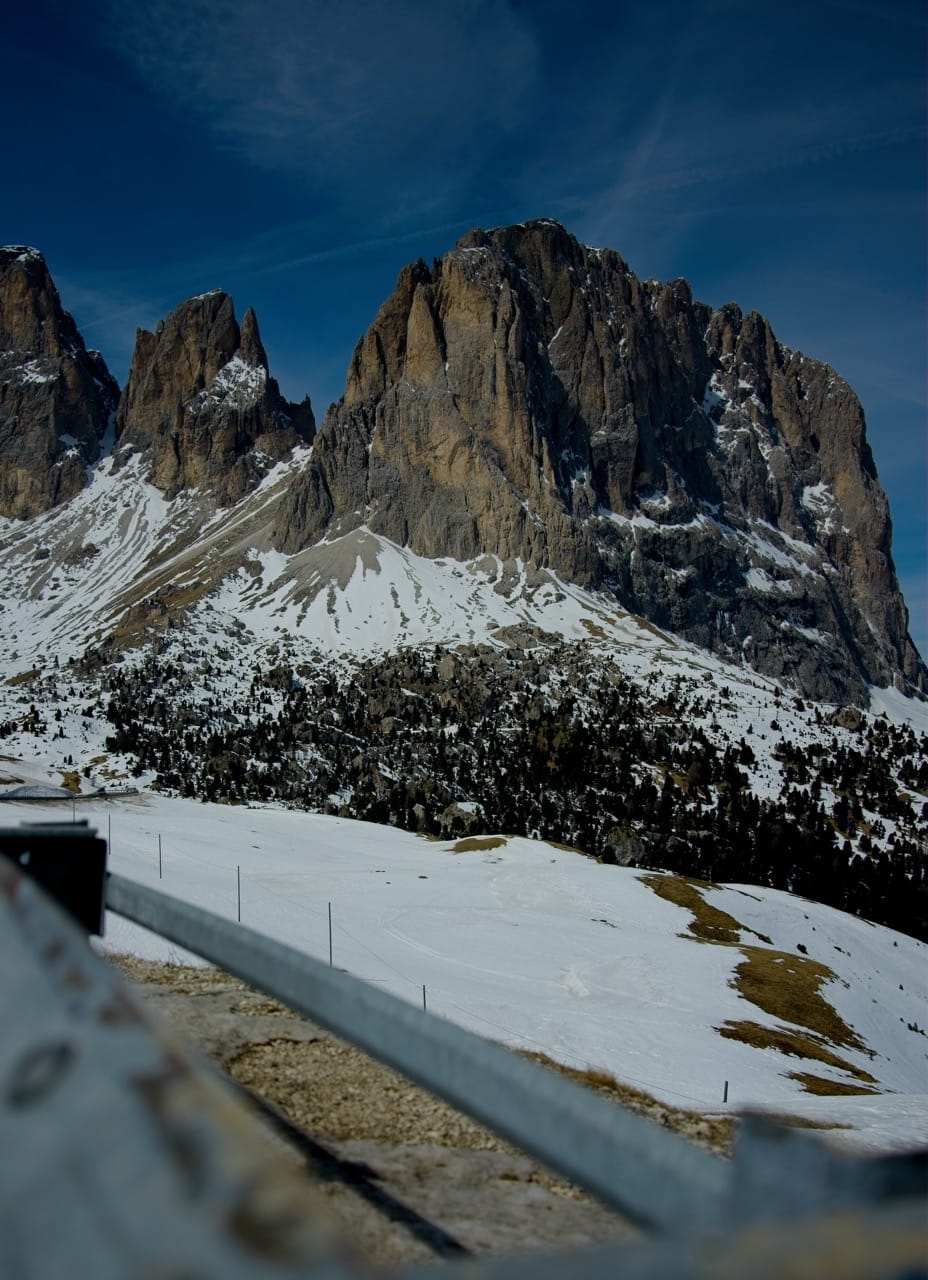
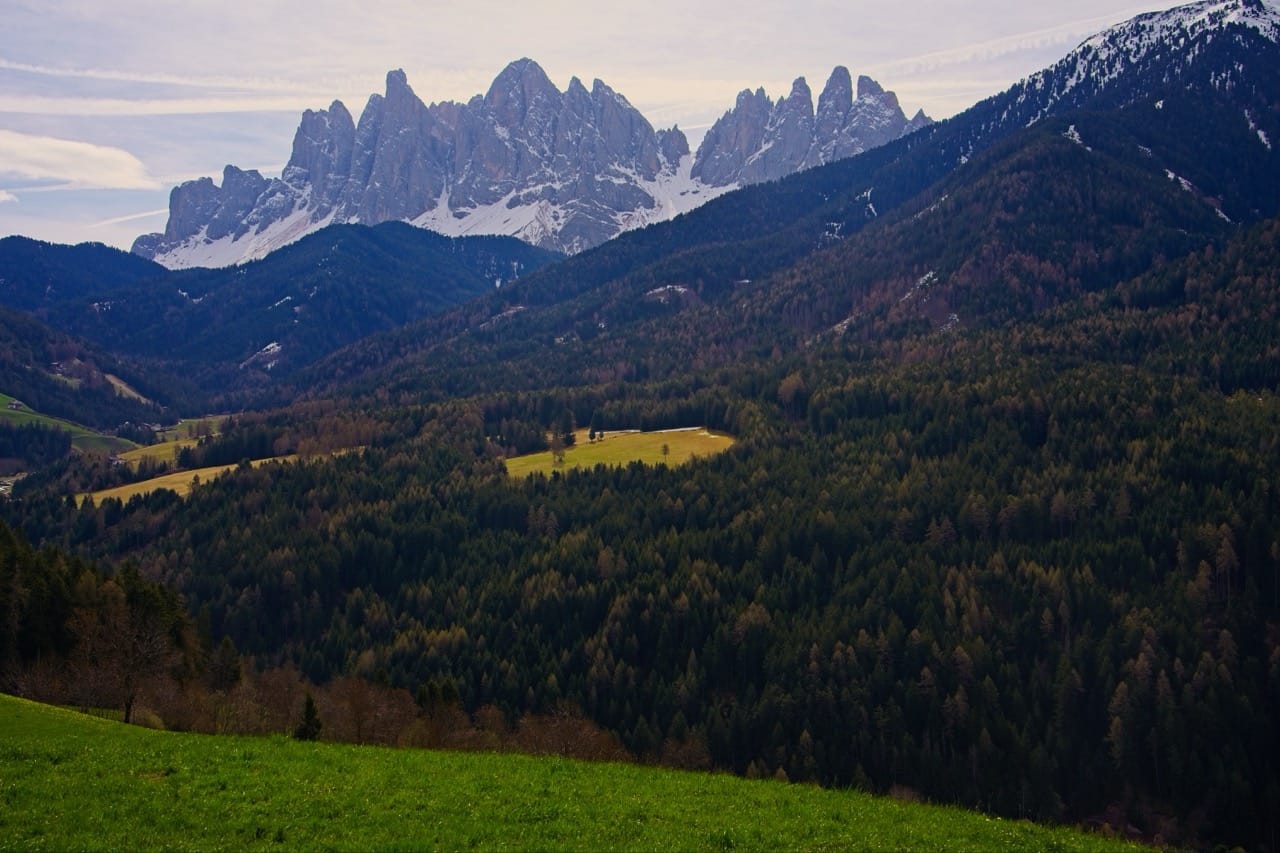
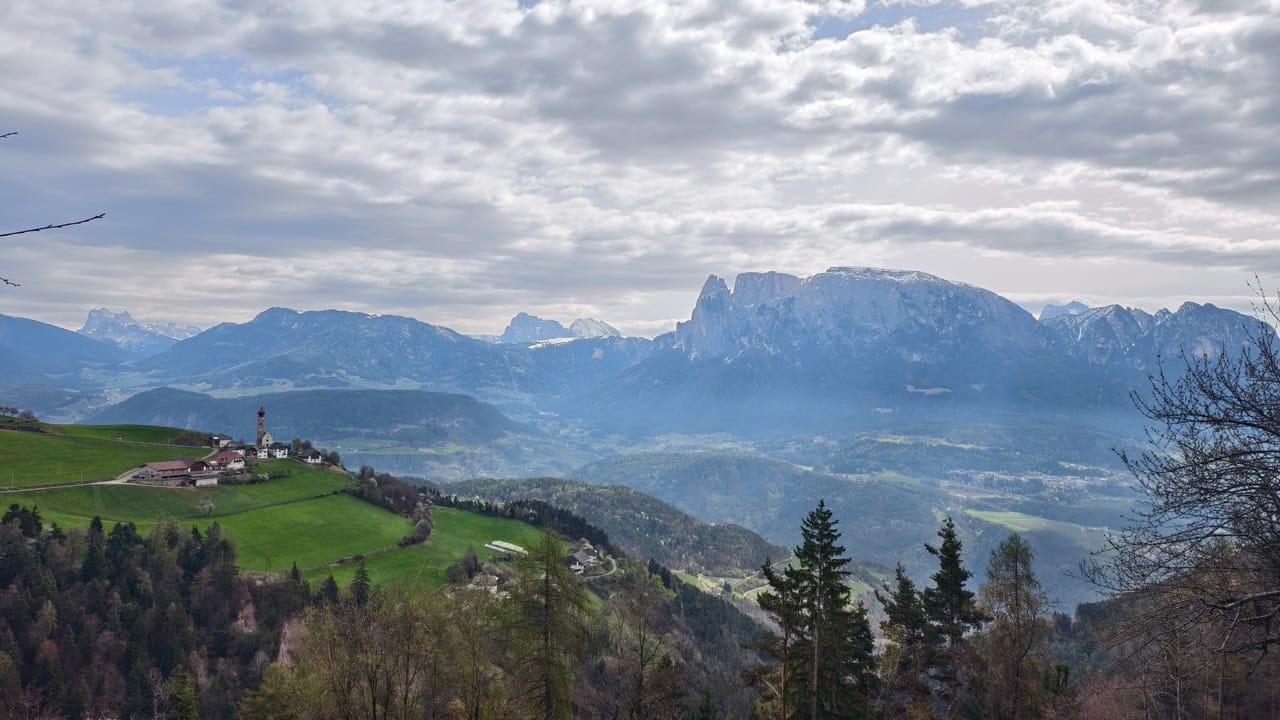
Our morning began at Lago di Carezza (Karersee), where the Latemar pinnacles mirrored in calm, emerald-rainbow waters. We piloted the campervans up the twisting switchbacks of Passo Sella (2,240m) and Passo Gardena (2,121m), stopping between giant roadside snow walls to build snowmen against the dramatic backdrop of the Sassolungo and Marmolada. In the afternoon, we reached Santa Maddalena in Val di Funes, where the famous village church sits nestled in rolling alpine meadows beneath the sheer 1,000-meter vertical needles of the Odle/Geisler group.
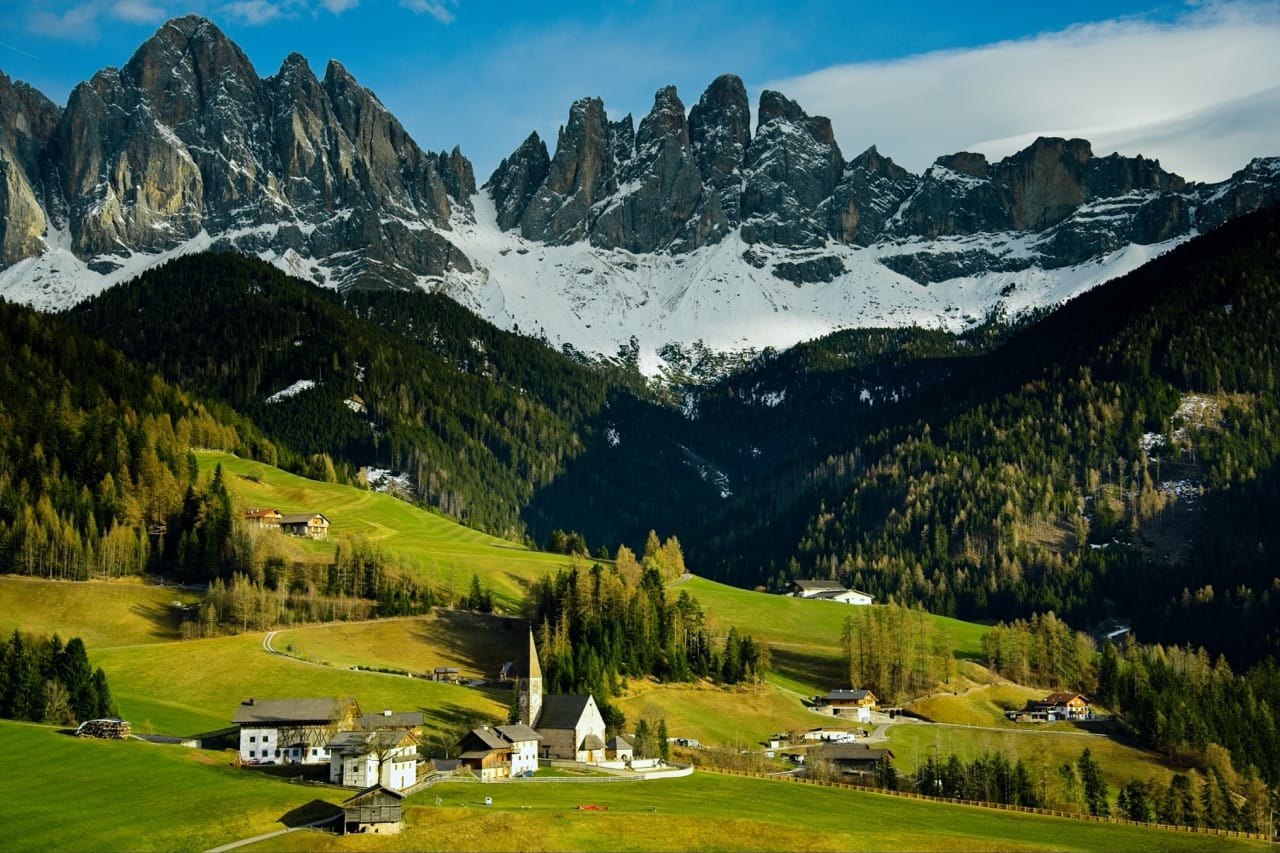
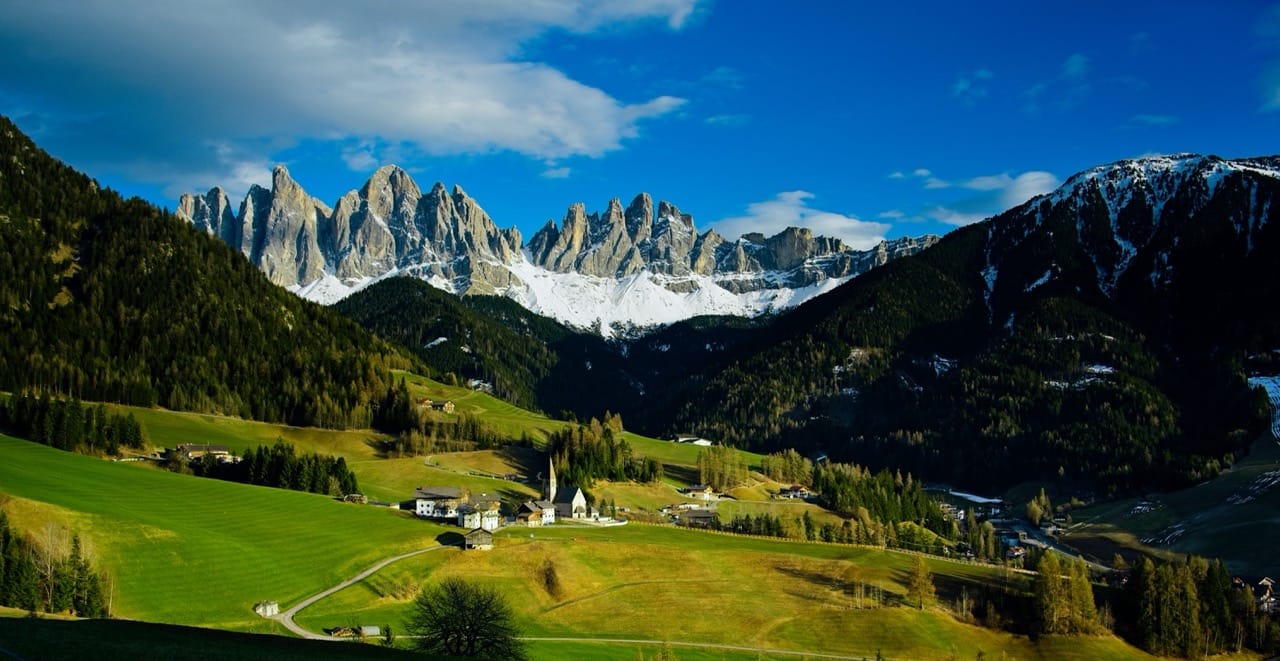
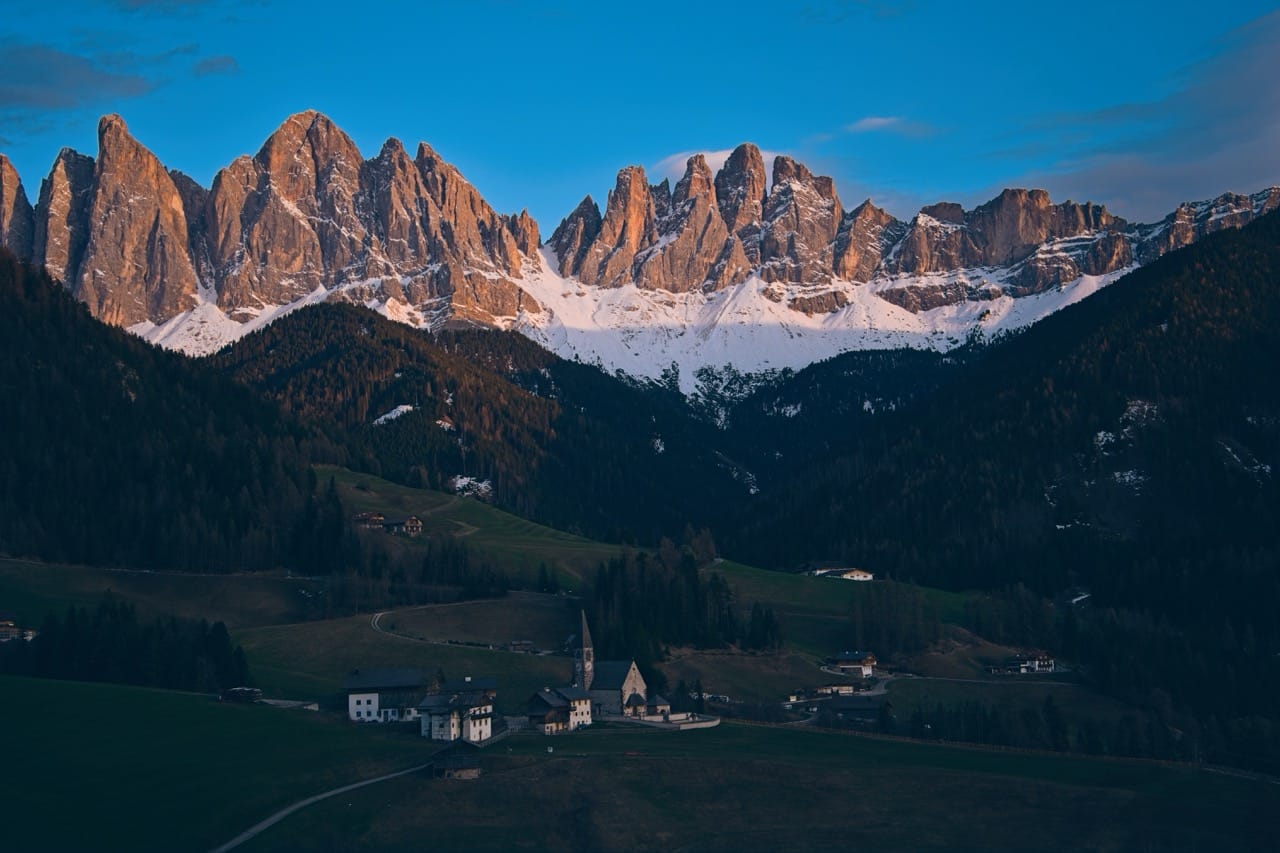
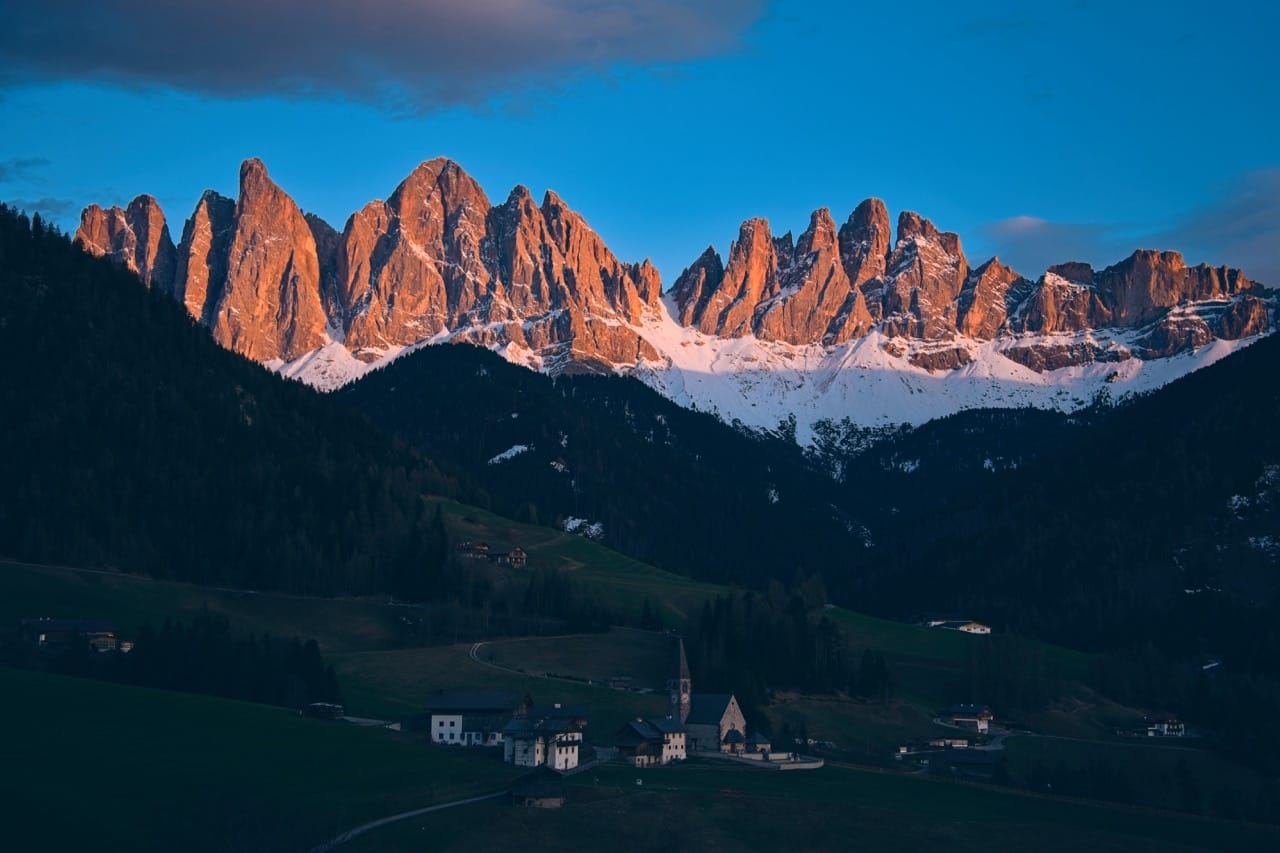
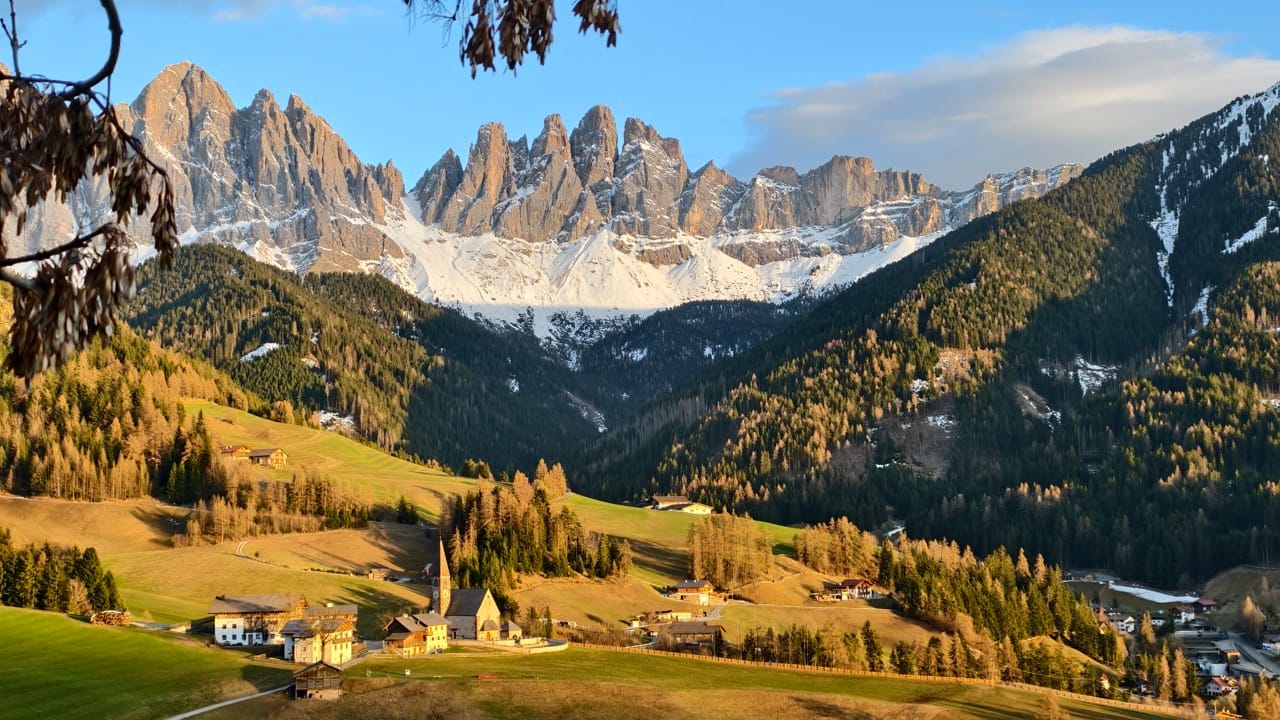
The quintessential postcard of the Dolomites: St. Magdalena framed by the Odle peaks.
Part V: The Final Stretch & Completing the Circle (Days 12–13)
Day 12: St. John in Ranui & the Ritten Earth Pyramids
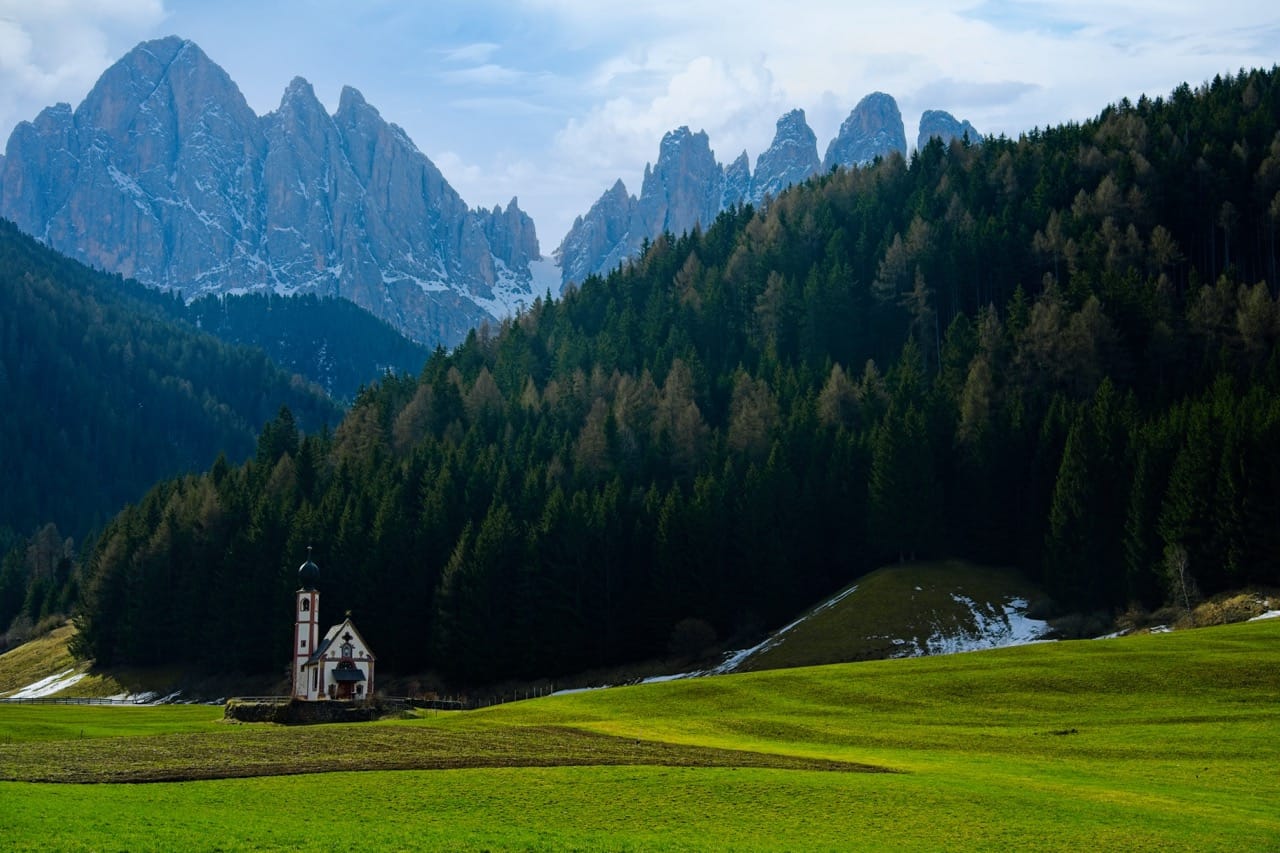
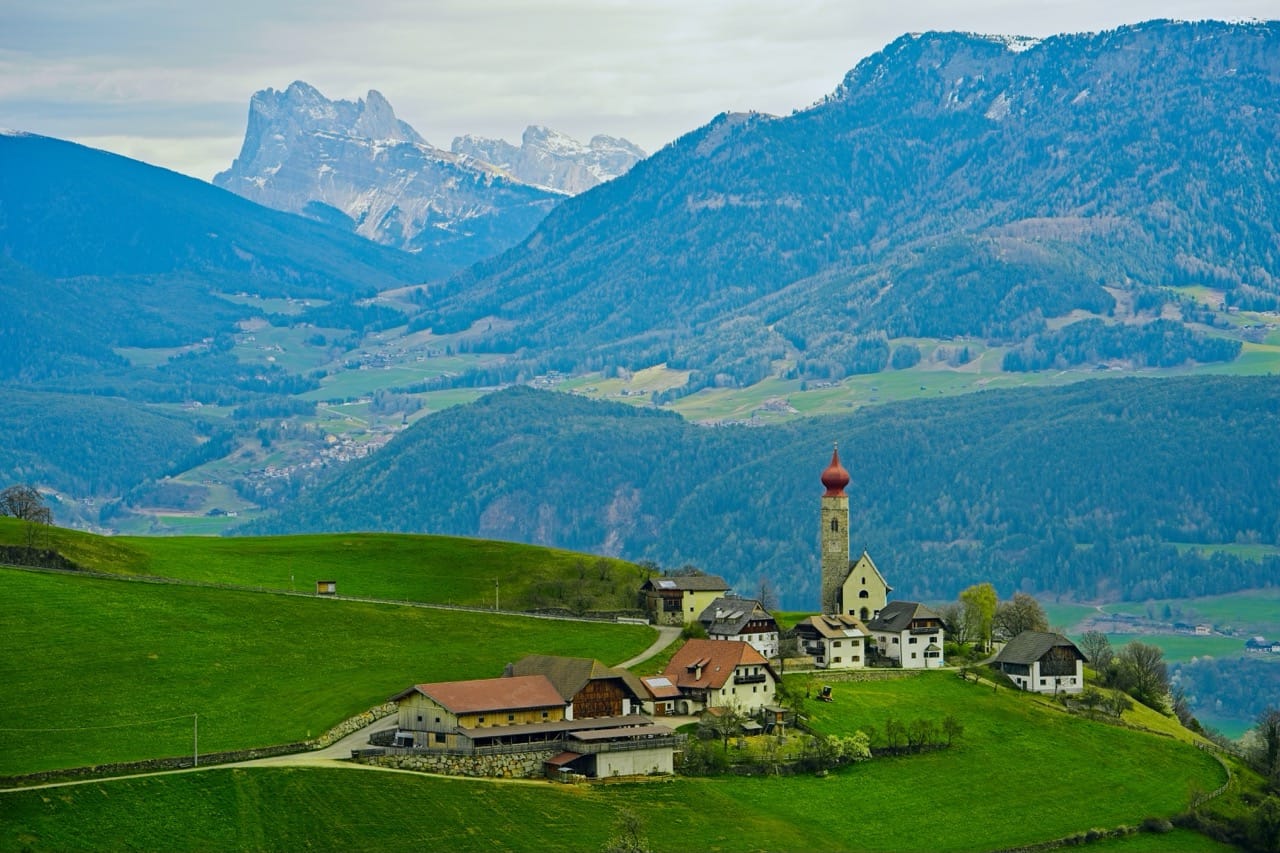
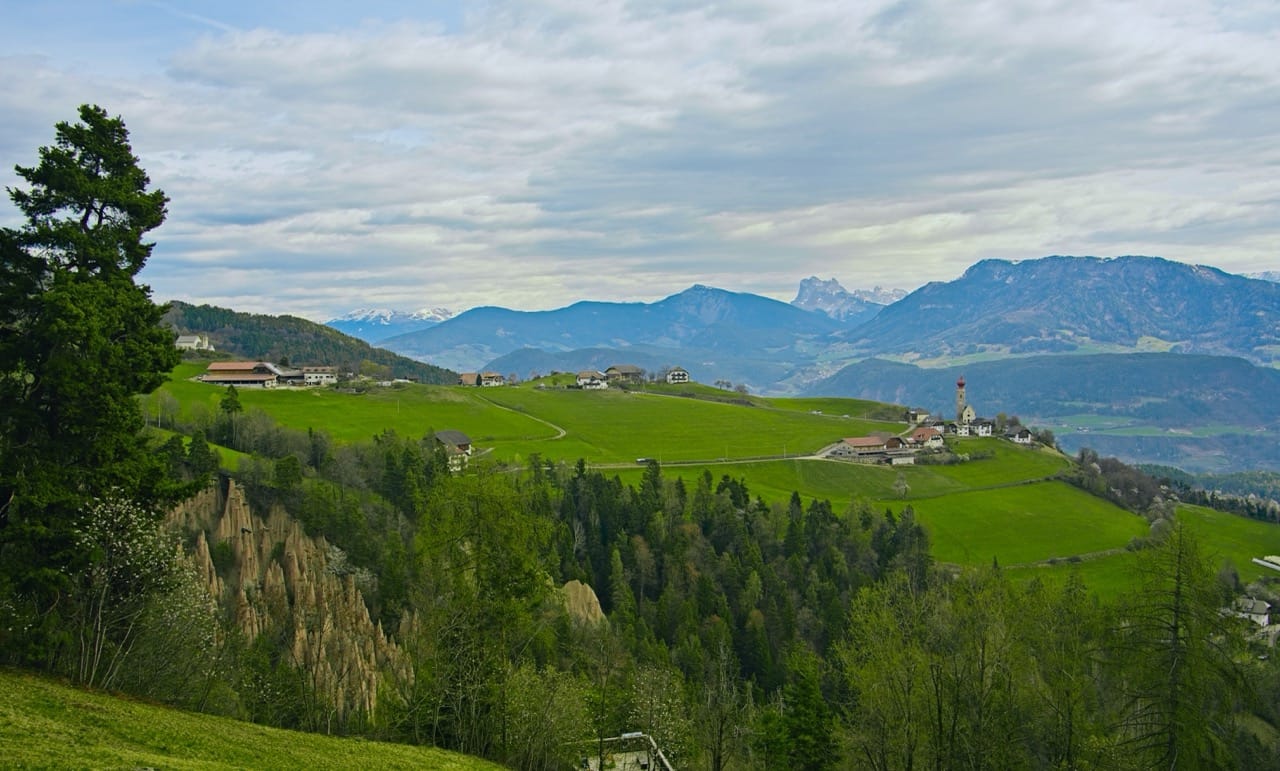
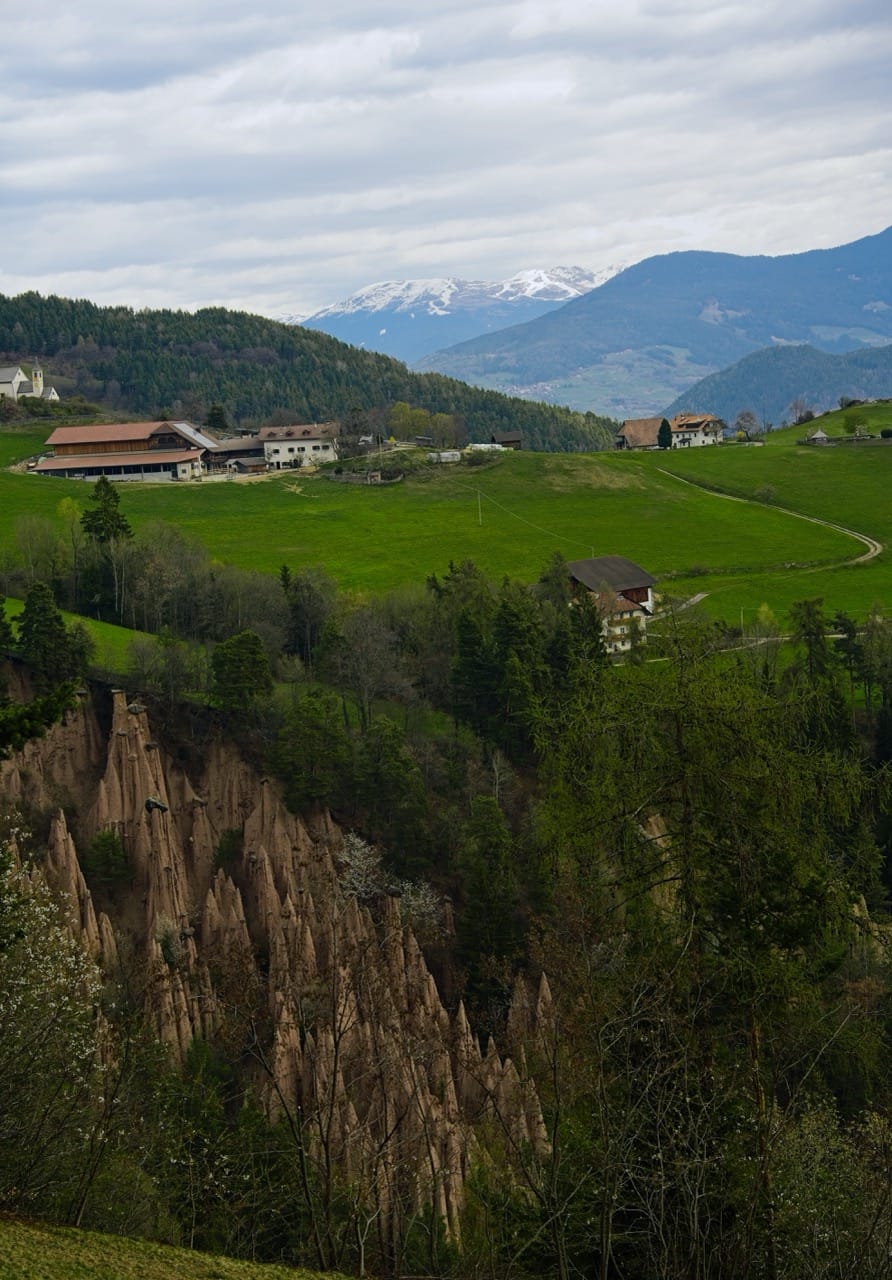
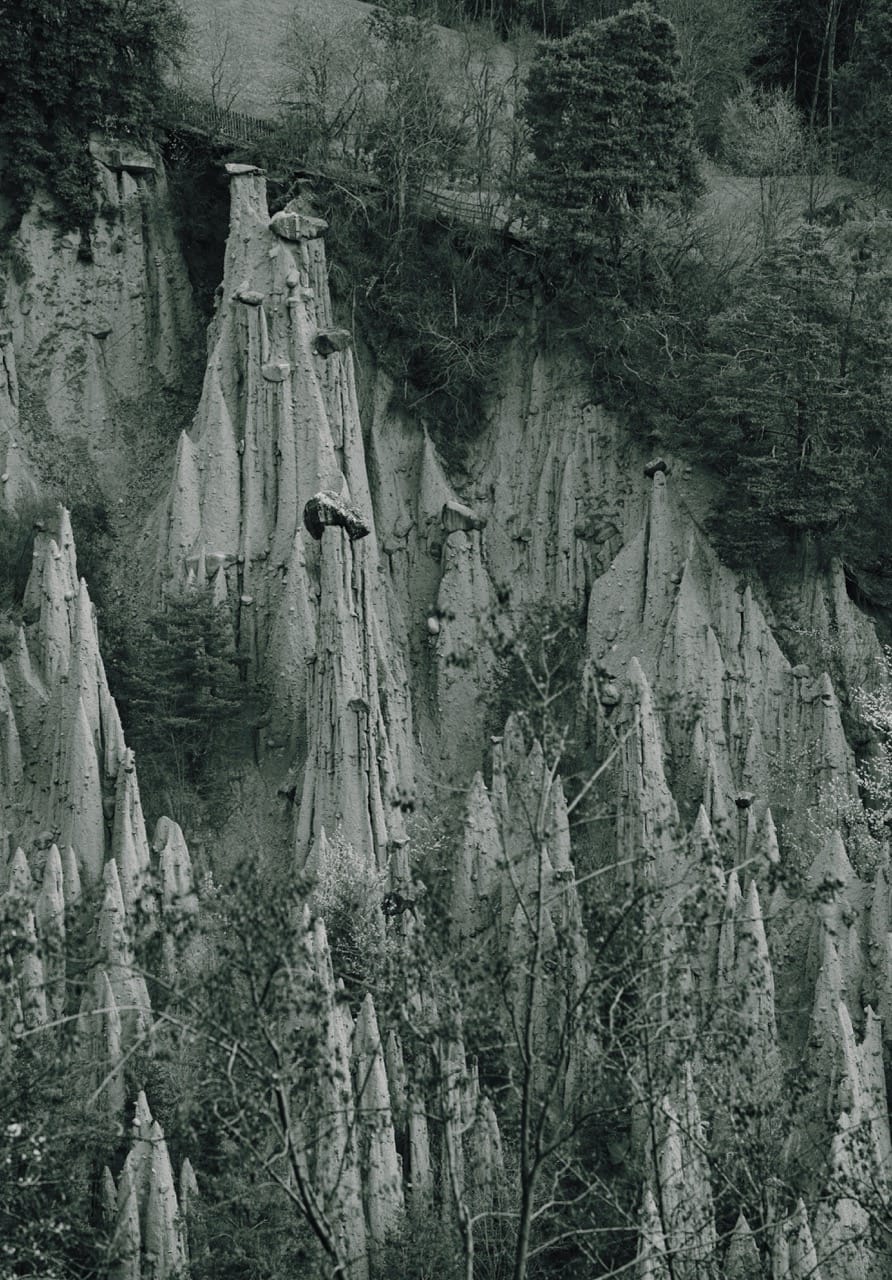
We greeted sunrise at the solitary baroque chapel of St. John in Ranui, whose slender onion dome stands isolated in green pastures before the jagged Odle wall. Next, we explored the tall, slender Earth Pyramids of Longomoso on the Ritten plateau, before climbing over the historic Brenner Pass into North Tyrol and crossing into Bavaria to spend our final night beside the Tennsee in Krün.
Day 13: Homeward Bound to Augsburg
A gentle morning drive past Garmisch-Partenkirchen and the Bavarian lakes brought us back to the Roadsurfer depot in Gersthofen. Handing back the keys was bittersweet: two weeks of shared meals, alpine hikes, campfire stories, and rolling bedrooms had come to an end. But the memories—etched into photographs, drone panoramas, and children's smiles—will stay with us forever.
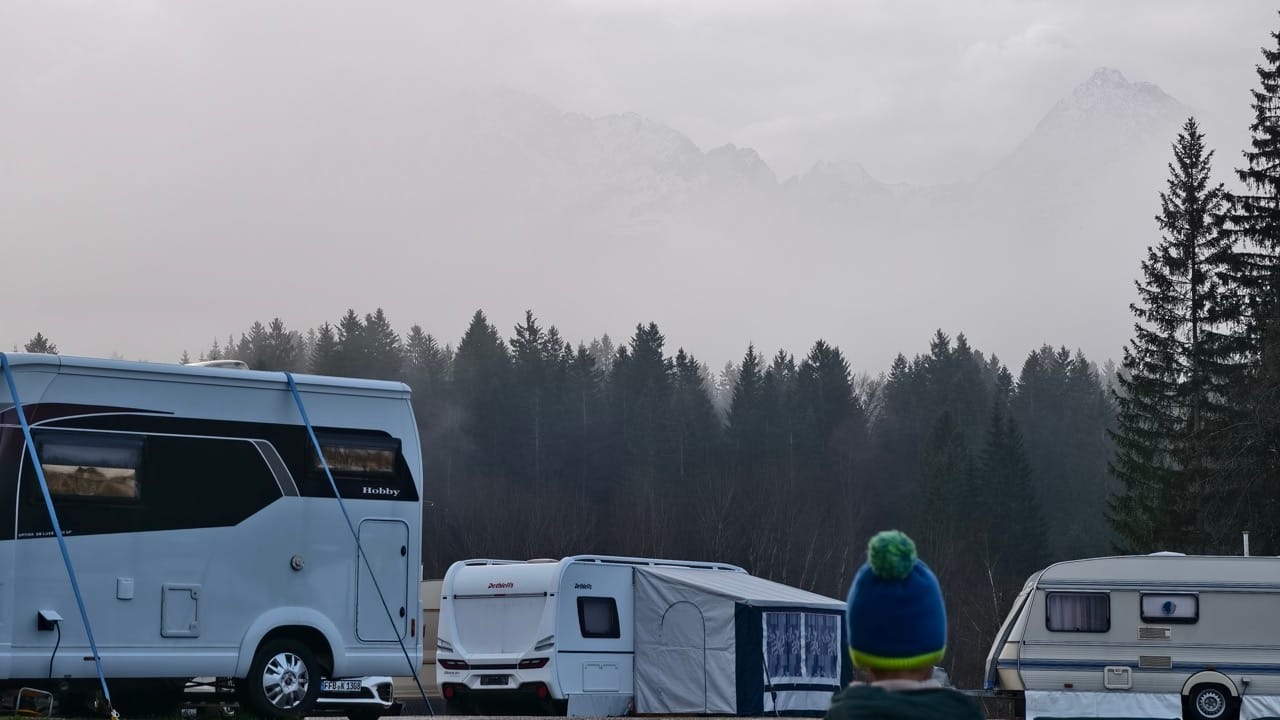
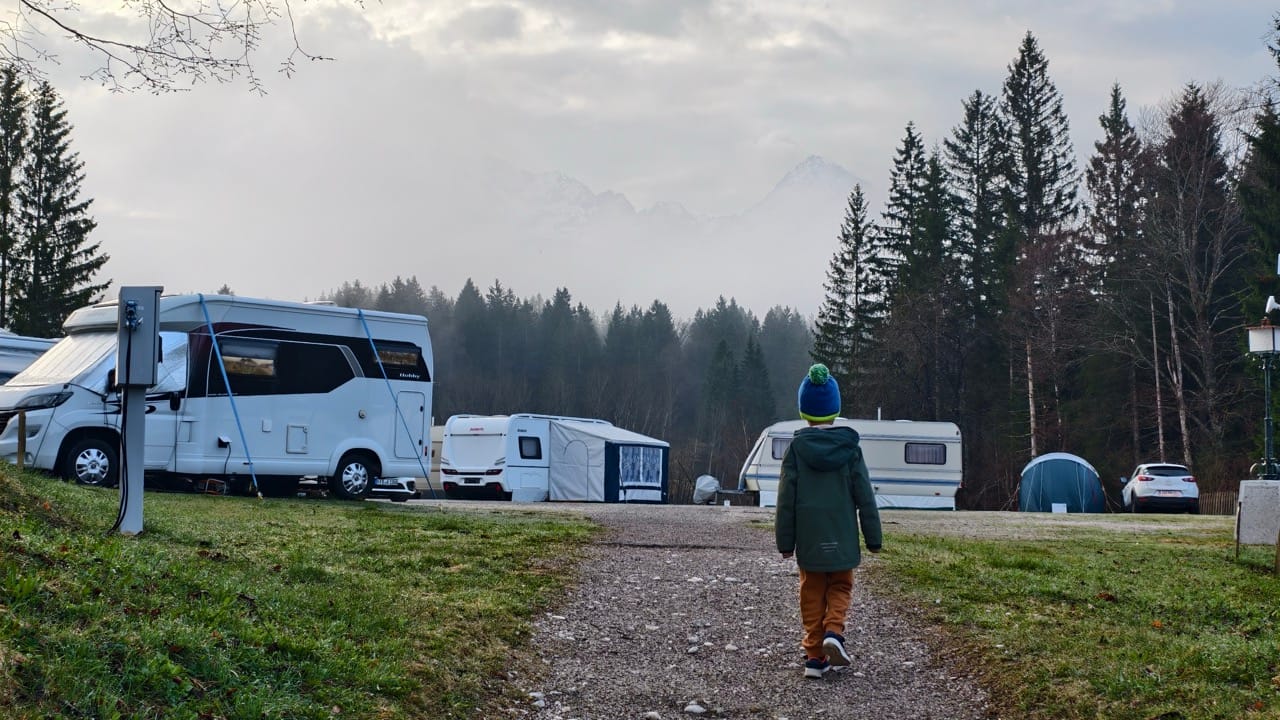
A campsite near Krün.
Practical Tips for a Family Campervan Trip in the Alps & Italy
1. Spring Travel Window: Traveling in early to mid-April provides uncrowded viewpoints at Lake Bled, Venice, and Val d'Orcia, with comfortable hiking temperatures. However, mountain passes (Sella, Gardena) will still have snow banks, so winter tires and warm layers are essential.
2. Vignettes & Tolls: Slovenia requires a digital e-vignette (available online), Austria requires a highway vignette, and Italian autostrades use distance-based toll booths. Register your license plates beforehand.
3. Campervan Cooking with Kids: Having fully equipped kitchens in both vans allowed us to cook hearty communal dinners (fresh pasta, curries, and warm breakfasts) right in the campsites, saving hundreds of euros while keeping bedtimes stress-free.
4. Campsite Booking: While spring allows for more spontaneity, popular spots near Venice (Punta Sabbioni) and the Dolomites (Nova Ponente / Val di Funes) are best reserved a few days ahead, particularly over Easter weekend.
Comments ()